 Pin It
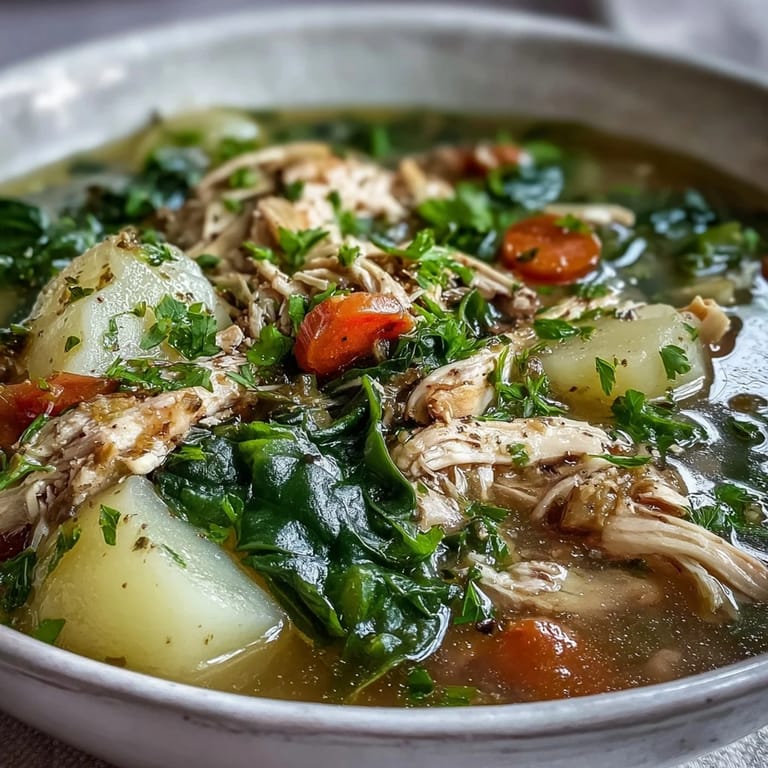
 There's something about a bowl of soup that makes everything feel manageable again. My neighbor brought this collard greens and chicken soup over during a particularly hectic week, and I still remember how the steam rose from the bowl like a small gift, carrying that unmistakable aroma of garlic and thyme. One spoonful and I was hooked—it tasted like care, like someone had actually thought about what would nourish both body and soul. I've made it countless times since, tweaking nothing, because some dishes arrive fully formed and perfect.
I made this for a small dinner party on a October evening when the weather had finally turned cool enough to justify hot soup without apology. My friend Sarah, who's usually skeptical of anything green, asked for seconds and then thirds, which felt like winning the lottery. That moment taught me that good food isn't about impressing anyone; it's about making something so honest and warm that people can't help but show up for it.
Ingredients
- Boneless, skinless chicken breasts (2, about 400 g): Look for ones that are roughly the same thickness so they cook evenly; if one side is much thicker, gently pound it flat.
- Collard greens (1 large bunch, about 300 g): Remove those tough stems without apology—they're bitter and woody, and the leaves are where the magic lives.
- Yukon Gold potatoes (2 medium, peeled and diced): These waxy potatoes hold their shape instead of dissolving into the broth, which matters more than you'd think.
- Carrots (2, peeled and sliced): Cut them into thin half-moons so they soften at roughly the same rate as everything else.
- Celery stalks (2, diced): This is your backbone—don't skip it, and don't use the leafy tops here; save those for stock.
- Onion (1 medium, diced): Yellow or white both work; the point is to build flavor before the broth goes in.
- Garlic cloves (3, minced): Mince these finely so they distribute through the soup rather than sitting in chunks you have to chew.
- Low-sodium chicken broth (1.5 liters or 6 cups): Taste your broth first; some are aggressively salted, and you'll adjust at the end anyway.
- Bay leaf (1): Fish this out before serving, or warn people to watch for it—nobody wants that surprise.
- Dried thyme (1 teaspoon): Thyme has a quiet earthiness that doesn't announce itself but holds everything together.
- Smoked paprika (1 teaspoon): This gives a subtle warmth and depth that feels more sophisticated than it looks.
- Black pepper (½ teaspoon): Fresh ground if you can manage it; pre-ground pepper tastes like sawdust by comparison.
- Salt (1 teaspoon, or to taste): Start conservative and taste your way to balance.
- Olive oil (2 tablespoons): Good olive oil isn't wasted here; it carries flavor through the whole pot.
- Lemon juice (from ½ lemon): This final squeeze brings everything into focus, the way a good ending brings a story together.
- Fresh parsley (for garnish, optional): Parsley isn't just decoration; it adds a bright, grassy note that makes you want another spoonful.
Tired of Takeout? 🥡
Get 10 meals you can make faster than delivery arrives. Seriously.
One email. No spam. Unsubscribe anytime.
Instructions
- Build your flavor base:
- Heat olive oil in a large soup pot over medium heat and add onion, carrots, and celery. Let them soften for 5 to 6 minutes, stirring occasionally—you're looking for the edges to turn translucent and the kitchen to smell golden and patient.
- Wake up the garlic:
- Add minced garlic and cook for just 1 minute, stirring constantly so it doesn't catch and turn bitter. One minute is all garlic needs to release its sweetness.
- Introduce the main players:
- Add the whole chicken breasts, diced potatoes, and all your seasonings—the bay leaf, thyme, smoked paprika, salt, and pepper. Pour in the chicken broth and stir once or twice to distribute everything evenly.
- Let it come to life:
- Bring everything to a boil, then immediately turn the heat down to a gentle simmer. Cover the pot and let it cook undisturbed for 20 minutes—this is when the chicken becomes impossibly tender and the potatoes soften.
- Shred and return:
- Remove the cooked chicken breasts with tongs or a slotted spoon and place them on a cutting board. Using two forks, pull the meat apart into tender shreds, then slide everything back into the pot where it belongs.
- Add the greens:
- Stir in your chopped collard greens and let them simmer uncovered for 10 to 12 minutes. Watch them transform from dark and crinkled to tender and bright—don't walk away, because overcooked greens turn to disappointment.
- Finish with brightness:
- Squeeze in the lemon juice and taste carefully. Salt has a way of hiding in warm broth until you add acid, so adjust both as needed.
- Serve with generosity:
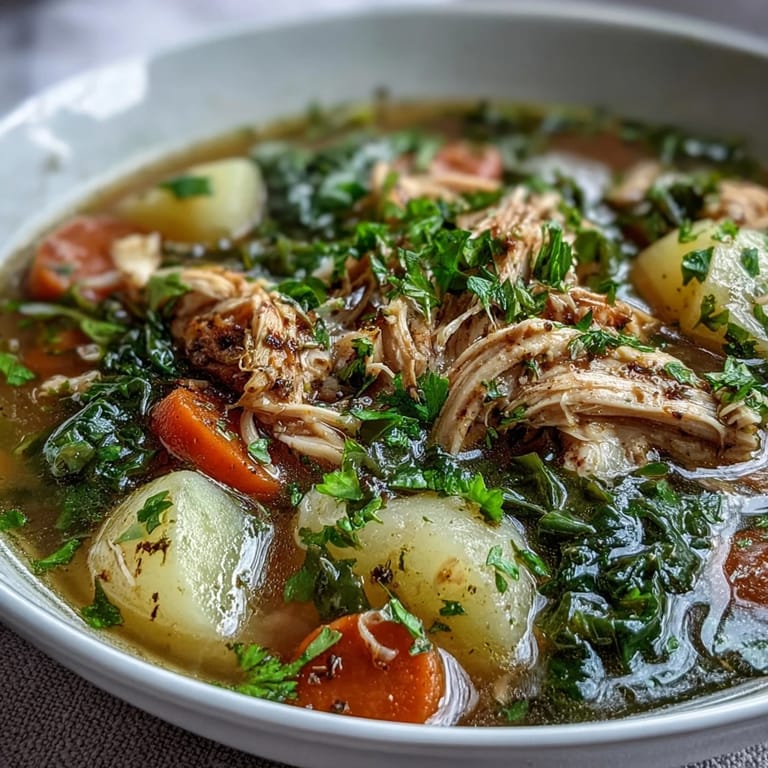
- Ladle the soup into bowls, scatter parsley on top if you have it, and let people eat while it's still steaming.
 Pin It
 My daughter once asked why homemade soup tastes different from the canned version, and I realized I didn't have a good answer beyond 'love' or 'intention'—words that sound silly until you're standing at the stove at 6 p.m., exhausted but watching something become nourishing anyway. This soup made that conversation possible.
Why This Soup Works Year-Round
There's a misconception that soup is seasonal, reserved for winter when the weather turns cold and everyone suddenly wants warm things. But this particular combination is clever—the brightness of lemon and fresh parsley keeps it from feeling heavy even in summer, while the smoked paprika and thyme give it enough depth that it satisfies on cold mornings. I've served it in every season and it's never once felt out of place, which is the mark of a truly versatile dish.
The Collard Green Question
Collard greens can intimidate people who grew up eating them cooked to gray submission, drowning in butter and rendered pork. This recipe treats them differently—with respect but not reverence, allowing them to be tender without becoming mushy. The key is understanding that collards are sturdy enough to handle the simmering, but they still need you to pay attention. Cook them too long and you lose the brightness; cook them too short and they stay tough and bitter.
Make It Your Own
I've seen people add everything from white beans to rice, from ham bone to a Parmesan rind, and every version has been excellent. The foundation is strong enough to support whatever your pantry or your mood demands. One friend added a splash of apple cider vinegar instead of lemon, and it shifted the whole thing into something more complex and surprising.
- If you want to stretch this into vegetarian territory, skip the chicken and use vegetable broth with a can of white beans stirred in at the end for protein.
- A Parmesan rind simmered with the broth adds an umami depth that quietly elevates everything without announcing itself.
- Serve this with crusty bread to soak up the broth, or over rice if you want something more substantial than a simple bowl.
 Pin It
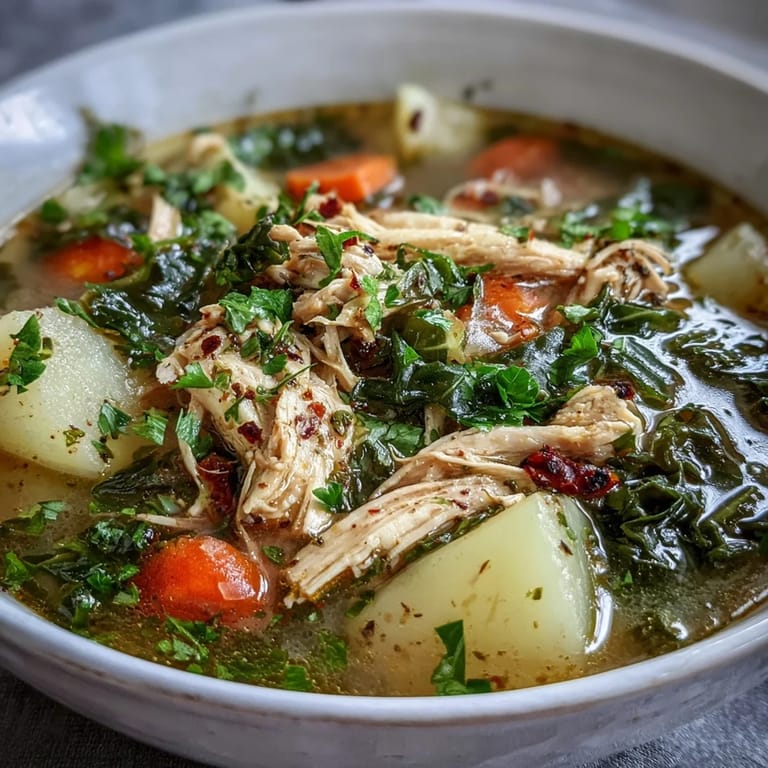
 This soup has become my answer to the question 'what do I make when someone needs feeding?' It's nourishing without being fussy, familiar without being boring, and it tastes even better the next day when all the flavors have learned to live together. That feels like enough.
Recipe FAQs
- → Can I use other greens instead of collard greens?
Absolutely. Kale or Swiss chard work beautifully as substitutes. Both hold up well during simmering and offer similar nutritional benefits. Just adjust cooking time slightly—kale may need a few minutes less, while chard cooks down more quickly.
- → How do I store and reheat leftovers?
Cool completely and store in airtight containers for up to 4 days in the refrigerator. The flavors often deepen overnight. Reheat gently over medium-low heat, adding a splash of broth if the soup has thickened. Avoid boiling to prevent the chicken from becoming tough.
- → Can I make this in a slow cooker?
Yes. Sauté the vegetables first, then transfer everything to your slow cooker. Cook on low for 6-7 hours or high for 3-4 hours. Add the collard greens during the last hour of cooking to maintain their texture and vibrant color.
- → What can I serve with this soup?
Crusty bread or warm rolls are perfect for soaking up the flavorful broth. For a heartier meal, serve over brown rice or with a side of cornbread. A simple green salad with vinaigrette balances the richness beautifully.
- → Is this suitable for meal prep?
Excellent choice. Portion into individual containers and freeze for up to 3 months. Thaw overnight in the refrigerator before reheating. The potatoes may soften slightly after freezing, but the overall texture remains satisfying.
- → How can I add more protein?
Stir in a can of drained white beans or chickpeas during the last 15 minutes of cooking. Alternatively, add extra chicken thighs or switch to bone-in pieces for richer flavor and more meat per serving.