 Pin It
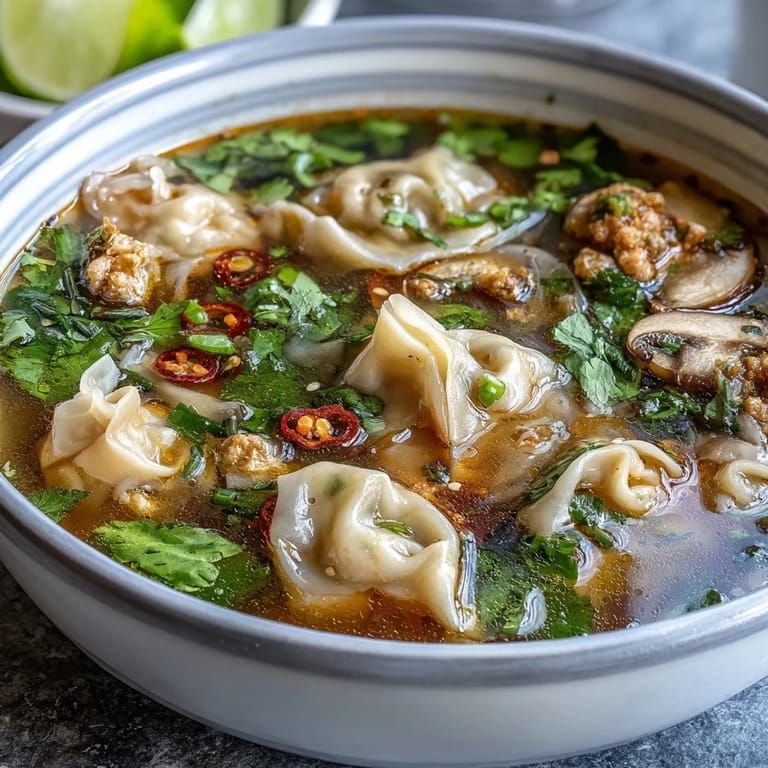
 The first time I made Tom Yum Wonton Soup was during a particularly rainy week when I was craving something that would warm me from the inside out. My tiny apartment kitchen filled with the piercing scent of lemongrass and lime as I experimented with combining two of my favorite Asian soup traditions. The fragrant steam fogged up my glasses as I leaned over the pot, tasting and adjusting the delicate balance between sour, spicy, and savory notes.
Last winter, my friend Min came over feeling under the weather, and I immediately knew this soup would help. We sat at my kitchen counter as I folded wontons, showing her the technique my neighbor had taught me. The kitchen windows completely steamed up as the aromatic broth simmered, and Min laughed when I dramatically crushed lemongrass stalks to release their essential oils. By the time we ate, her congestion had cleared from just inhaling the fragrant steam.
Ingredients
- Lemongrass and Kaffir Lime Leaves: These are non-negotiable for authentic tom yum flavor, giving that distinctive citrusy aroma that makes the whole kitchen smell incredible.
- Wonton Wrappers: Look for these in the refrigerated section of Asian markets or many regular grocery stores, and keep them covered with a damp cloth while working or they dry out quickly.
- Fish Sauce: This provides the umami backbone of the broth, so try not to substitute it if possible, a little goes a long way in developing complex flavor.
- Ground Pork: I prefer a slightly fattier blend for juicier wontons, but chicken works beautifully too if you prefer a lighter option.
- Galangal: Its woody citrus notes are different from ginger, though ginger makes a workable substitute if galangal is hard to find in your area.
Tired of Takeout? 🥡
Get 10 meals you can make faster than delivery arrives. Seriously.
One email. No spam. Unsubscribe anytime.
Instructions
- Create Your Wonton Magic:
- Mix the ground pork with seasonings until just combined, being careful not to overwork the meat or your wontons will be tough. Place a small teaspoon of filling in the center of each wrapper, wet the edges, and seal them tightly, pressing out any air pockets.
- Infuse Your Aromatic Broth:
- Bring your chicken stock to a gentle simmer and add those fragrant Thai ingredients, letting them slowly release their essential oils. The kitchen will start filling with this incredible citrusy, spicy aroma that signals the soup is building its character.
- Build Flavor Layers:
- After removing the woody aromatics, add mushrooms and tomatoes which absorb and enhance the broth. The tomatoes will slowly break down, adding a subtle sweetness that balances the sour lime.
- Balance The Elements:
- This is where you become the artist, adjusting fish sauce for salt and umami, lime juice for sourness, and sugar to round everything out. Trust your taste buds here and remember you can always add more, but cant take away.
- Cook With Care:
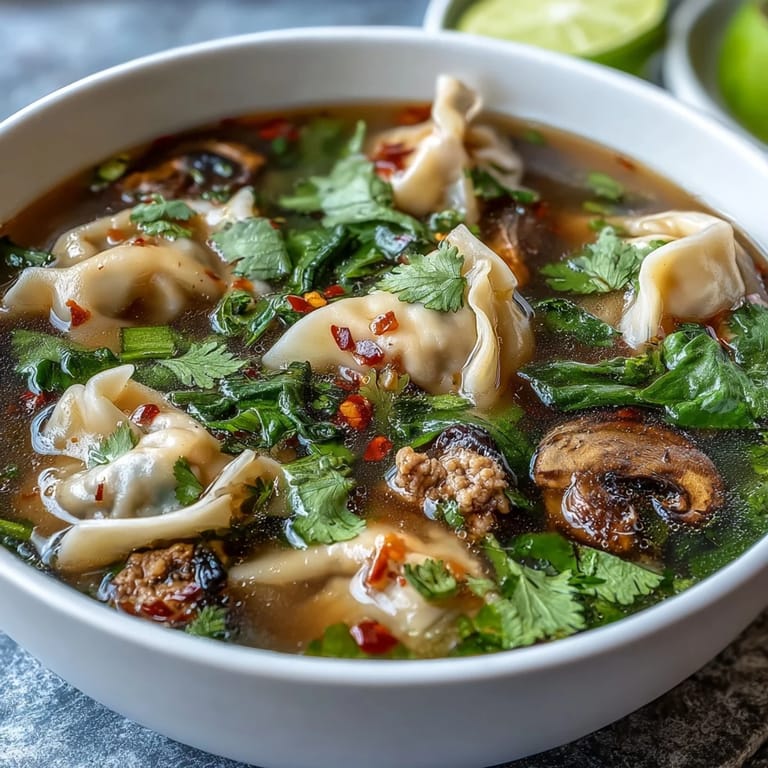
- Slide your wontons into the gently simmering broth and watch for them to float, indicating theyre done. Resist the urge to stir vigorously or youll break these delicate pockets.
- Add The Delicate Touches:
- Greens go in at the very end, just wilting them to preserve their color and nutrients. The bright green against the reddish broth creates a feast for the eyes as well as the palate.
- Garnish Generously:
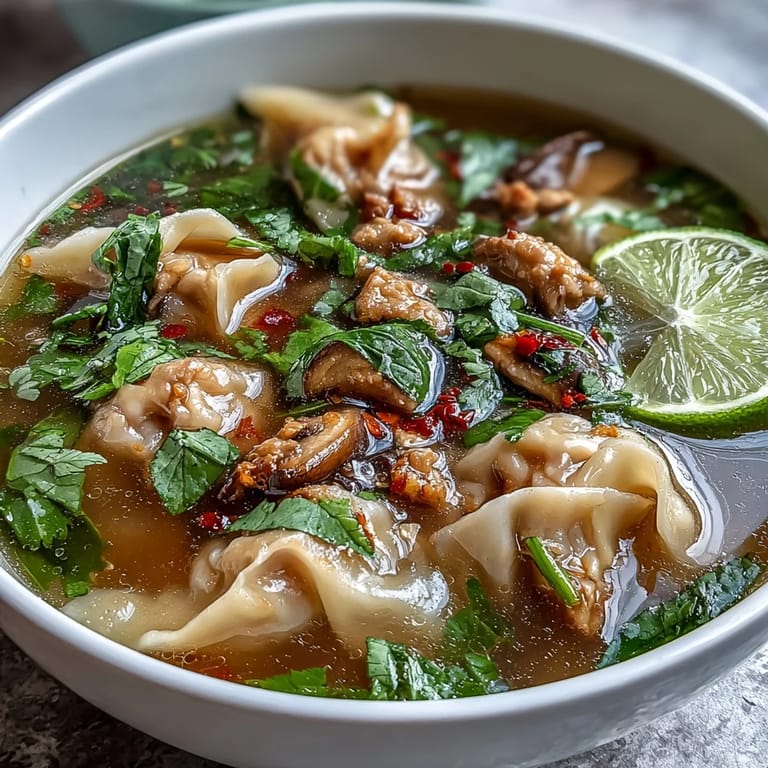
- Fresh herbs, a squeeze of lime, and perhaps a drizzle of chili oil allow everyone to customize their bowl. These final touches bring brightness and complexity to each spoonful.
 Pin It
 My neighbor brought over her elderly mother who had just arrived from Thailand and barely spoke English. I nervously served her this fusion soup, worried about what this Thai grandmother would think. She took one sip, closed her eyes, and then looked at me with the warmest smile before exclaiming something in Thai and taking another eager spoonful. Her daughter translated that her mother said it reminded her of home but with a delightful surprise. That moment of cross-cultural connection over a steaming bowl remains one of my favorite cooking memories.
Making It Your Own
Some nights when Im short on time, I use store-bought wontons and focus on making an exceptional broth. Other times, I make double batches of wontons and freeze half for future meals. The freezing step actually improves the texture, making them slightly more springy and substantial in the soup. When family members request different spice levels, I serve the soup mild and provide a small dish of sliced fresh chilies or chili oil on the side so everyone can customize their bowl.
Seasonal Adaptations
In summer, I lighten this soup by adding more lime juice and serving it with extra fresh herbs from my windowsill garden. Winter versions get heartier with extra mushrooms and sometimes glass noodles added to the broth. Spring calls for tender baby vegetables like snap peas or asparagus tips added in the final minute of cooking. Fall is perfect for adding a handful of shredded cabbage or kale, which adds earthy notes that complement the aromatic broth beautifully.
Troubleshooting Your Soup
The beauty of this soup is how forgiving it can be once you understand the basic balance of flavors. If your broth tastes flat, its usually missing acid, so add more lime juice. If its too sour, a pinch more sugar will round things out. If its not savory enough, fish sauce is your friend, adding just a few drops at a time.
- If your wontons burst during cooking, your broth was likely boiling rather than gently simmering.
- Cloudy broth usually means your stock was boiled too vigorously, so keep it at a gentle simmer throughout.
- If the flavors seem muted even after adjusting seasonings, try adding a few fresh herbs or a squeeze of lime right before serving to brighten everything up.
 Pin It
 This soup has become my go-to comfort food that somehow works year-round, adapting to whatever ingredients I have on hand while maintaining its soul-warming properties. Whether youre fighting off a cold, impressing dinner guests, or simply treating yourself to something special on a quiet evening, these fragrant bowls deliver both nourishment and joy.
Recipe FAQs
- → Can I make the wontons ahead of time?
Absolutely. Prepare and fill the wontons, then freeze them on a baking sheet before transferring to a bag. Cook directly from frozen, adding 1-2 minutes to the cooking time.
- → What can I use instead of fish sauce?
Soy sauce or tamari works well as a substitute. For a closer match to the umami depth, try a mixture of soy sauce with a tiny amount of mushroom soy or a splash of vegetarian oyster sauce.
- → How spicy is this soup?
The spice level is medium with 2 red chilies, but it's easily adjustable. Start with one chili, taste the broth, and add more gradually. Removing the seeds reduces heat significantly while preserving flavor.
- → Can I use store-bought wontons?
Yes, frozen pork or shrimp wontons from Asian markets work perfectly. Add them during step 5 and cook according to package instructions, usually 3-4 minutes until they float.
- → How do I store leftovers?
Store the broth and vegetables separately from the wontons for best results. Reheat the broth and cook fresh wontons, or add leftover wontons during the last 2 minutes of reheating to prevent them from becoming soggy.