 Pin It
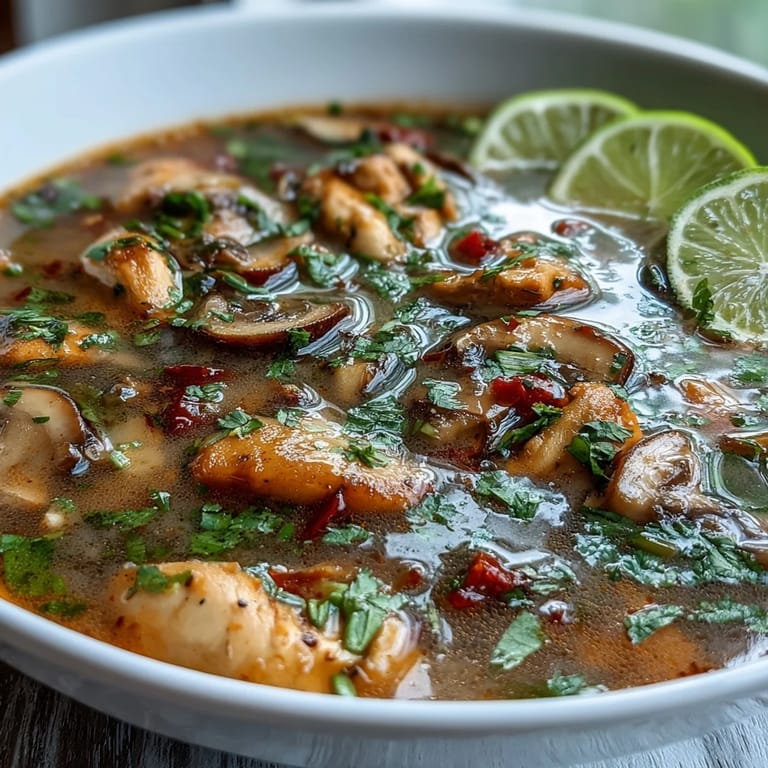
 The first time I made Tom Yum chicken was during a particularly dreary Seattle winter when my soul needed something vibrant and alive. The fragrance that filled my kitchen that evening - sharp citrus, aromatic lemongrass, and the subtle heat of chilies - transported me far from the rain-soaked streets outside my window. My hands smelled of lime and galangal for hours afterward, a sensory reminder that sometimes the most powerful travel happens right in our own kitchens.
Last autumn, my friend Min visited from Bangkok and watched me prepare this soup with an amused expression. She gently corrected my technique for bruising lemongrass, showing me how to use the weight of the knife rather than hacking at it like an amateur lumberjack. We sat at my kitchen counter, steam rising from our bowls, as she told stories of eating similar soups from street vendors back home, the flavors in my version surprisingly close to what she remembered.
Ingredients
- Lemongrass: The woody, citrusy backbone that gives Tom Yum its distinctive character - I learned to smash it thoroughly with the flat side of my knife to release its essential oils.
- Birds Eye Chilies: These tiny peppers pack serious heat, but crushing them just slightly lets them infuse the broth without making it overwhelmingly spicy.
- Makrut Lime Leaves: These glossy leaves contain aromatic compounds you simply cannot substitute - I keep them in my freezer since finding them fresh can be challenging.
- Galangal: Often confused with ginger but with a sharper, more citrusy flavor profile that's crucial for authentic Tom Yum.
- Fish Sauce: This provides the deep umami foundation for the soup - I once tried to skip it and the result was noticeably flat and one-dimensional.
Tired of Takeout? 🥡
Get 10 meals you can make faster than delivery arrives. Seriously.
One email. No spam. Unsubscribe anytime.
Instructions
- Prepare Your Aromatics:
- Bruise the lemongrass, galangal, and lime leaves with the back of your knife - youll hear a satisfying crack as the fibers break, releasing their fragrant oils. This simple step transforms these ingredients from tough, inedible items to flavor powerhouses.
- Create Your Flavor Base:
- Bring your stock to a rolling boil before adding the bruised aromatics and chilies. The steam should carry the scent of citrus and spice, filling your kitchen with that unmistakable Tom Yum perfume.
- Add Your Proteins:
- Slide in your chicken pieces and onion, watching as the meat gradually turns opaque in the fragrant broth. Keep the simmer gentle here - rapid boiling will toughen the chicken.
- Incorporate Vegetables:
- When you add the mushrooms and tomatoes, notice how they absorb the flavors while contributing their own earthiness and slight acidity. The tomatoes should just begin to soften but maintain their shape.
- Balance The Flavors:
- This is the most crucial step - add fish sauce for salt and depth, lime juice for brightness, and just enough sugar to round everything out. Trust your taste buds to tell you when youve hit that perfect sour-salty-spicy harmony.
- Finish With Freshness:
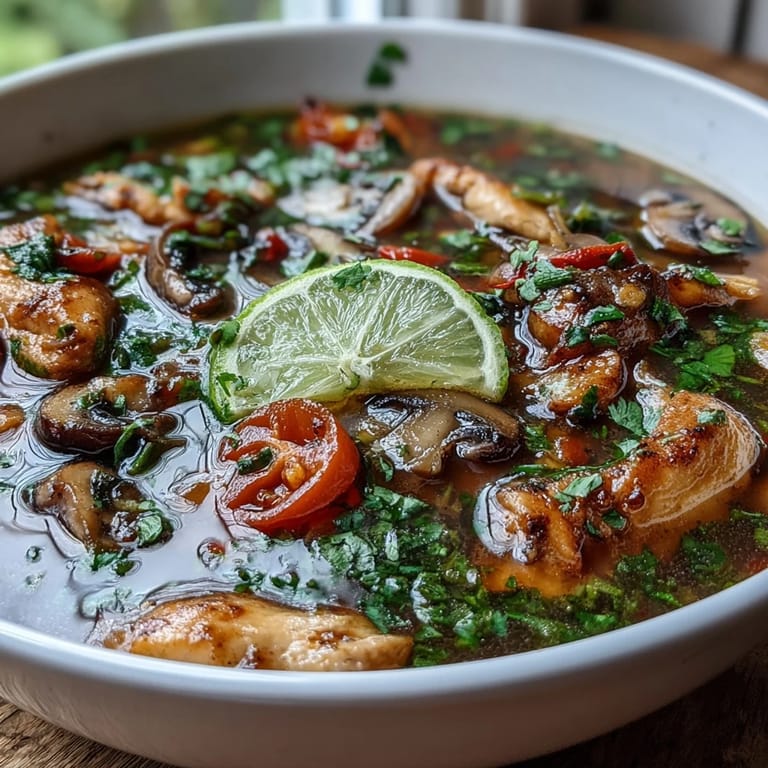
- Ladle the steaming soup into bowls and crown with fresh herbs. The contrast between the hot soup and cool, fresh cilantro creates a beautiful sensory experience.
 Pin It
 On a particularly stressful day last year, I came home feeling completely drained and made this soup almost on autopilot. As I sat down with my bowl, the first spoonful hit me with such a wave of comfort that I felt my shoulders physically drop away from my ears. My neighbor knocked on the door, drawn by the aroma, and ended up staying for dinner - that spontaneous sharing of food turned the whole evening around.
Adapting For Different Tastes
My partner prefers a milder version of this soup, so I often reserve some of the broth before adding chilies, then make one spicy portion and one gentle version. For guests who cant handle heat but still want the experience, I serve extra lime wedges which help tame the spice while enhancing the sour notes that make Tom Yum so refreshing.
Making It A Complete Meal
While traditionally served as a starter, I often transform this soup into a full dinner by adding extra vegetables like baby bok choy or broccoli florets during the last few minutes of cooking. The vegetables absorb the complex flavors while adding substance, texture and nutrition to the meal, turning what might be an appetizer into a satisfying one-pot dinner.
Storage And Leftovers
This soup actually develops deeper flavor overnight, making it one of those rare dishes that might taste even better the next day. The lemongrass and galangal continue to infuse the broth, creating an even more aromatic base, though you might need to brighten it with a fresh squeeze of lime before serving again.
- Store any leftover soup in an airtight container in the refrigerator for up to 3 days, keeping the fresh garnishes separate until serving.
- When reheating, do so gently on the stovetop rather than microwaving to preserve the delicate flavors and prevent the chicken from becoming tough.
- If you find the flavors have intensified too much, dilute with a splash of chicken stock to restore balance.
 Pin It
 Whether youre fighting off a cold, seeking comfort on a rainy day, or simply craving something vibrant and alive, this Tom Yum chicken delivers warmth that goes beyond temperature. Its a reminder that sometimes the most meaningful connections to other cultures come through the simple act of cooking with care and attention.
Recipe FAQs
- → What makes Tom Yum authentic?
Authentic Tom Yum relies on the holy trinity of Thai aromatics: lemongrass, galangal, and makrut lime leaves. These ingredients create the distinctive citrusy, floral base. Fresh birds eye chilies provide authentic heat, while fish sauce and lime juice deliver the perfect sour-salty balance that defines this beloved soup.
- → Can I make it less spicy?
Absolutely. Start by reducing the birds eye chilies to just one or remove the seeds for milder heat. You can also omit them entirely and serve chili oil on the side. The soup remains delicious even without the spice, as the aromatic herbs and lime still provide incredible depth of flavor.
- → What protein alternatives work well?
Shrimp is the traditional substitute, creating Tom Yum Goong. Add shrimp during the last 3-4 minutes of cooking to prevent overcooking. Firm tofu works beautifully for a vegetarian version, and even pork slices or fish fillets can replace chicken while maintaining the soup's character.
- → Can I prepare this in advance?
The broth base can be made 1-2 days ahead and stored in the refrigerator. However, add the vegetables and fresh garnishes just before serving to maintain their texture and vibrant appearance. The flavors often develop and deepen overnight, making leftovers even more delicious the next day.
- → How do I achieve the perfect flavor balance?
Taste and adjust is key. Start with the recommended amounts, then add more lime juice for sourness, fish sauce for saltiness, or sugar if too acidic. The goal is a harmonious blend where no single element overpowers the others. Remember that flavors intensify slightly as the soup sits.
- → What is the difference between clear and creamy Tom Yum?
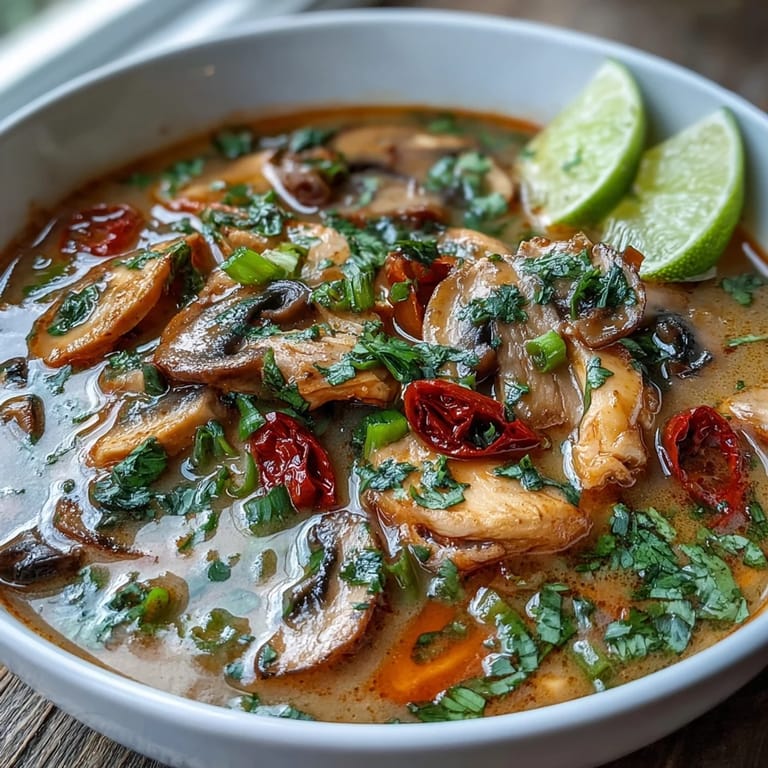
Clear Tom Yum features a light, brothy consistency that highlights the fresh herbs and spices. Creamy Tom Yum incorporates evaporated milk or coconut milk, creating a richer, velvety texture that tempers the heat. Both versions are authentic—the choice depends on personal preference and regional variations.