 Pin It
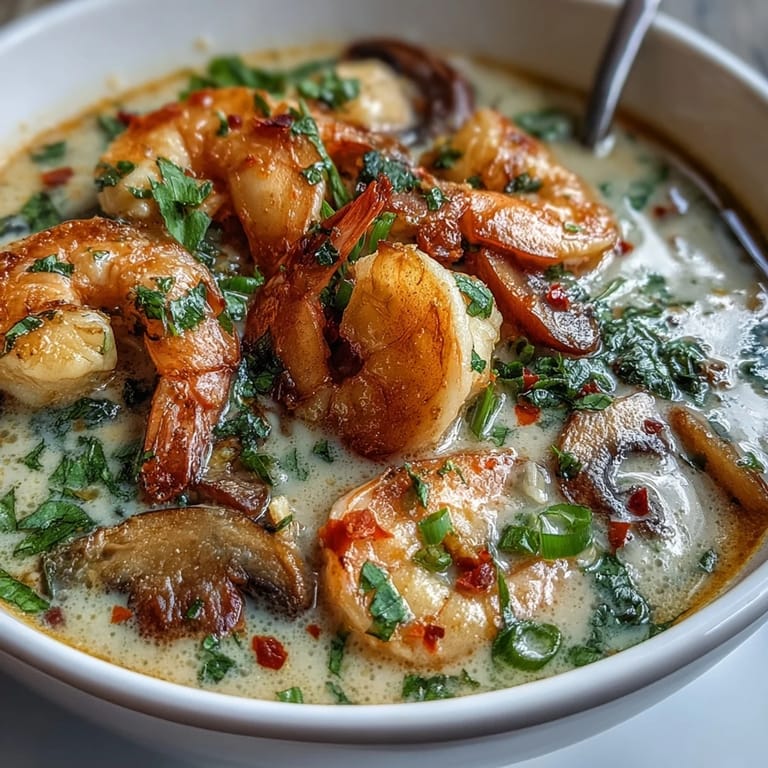
 The first time I made Thai coconut shrimp soup was during a torrential downpour that trapped me indoors for the weekend. The apartment windows fogged as fragrant lemongrass and coconut milk simmered on the stove, creating a steamy tropical escape while rain pelted the windows. I remember closing my eyes as I took that first spoonful - instantly transported to the bustling streets of Bangkok despite being thousands of miles away. Sometimes the most transportive culinary experiences happen right in your own kitchen.
Last winter, I served this soup to friends who stopped by unexpectedly during a snowstorm. We huddled around the kitchen island with steaming bowls, the conversation momentarily pausing with each spoonful as everyone savored the contrasting flavors. My normally reserved neighbor actually closed her eyes and sighed after the first taste, which I consider the highest form of culinary praise.
Ingredients
- Lemongrass: The woody, citrusy backbone of this soup that infuses the broth with its distinctive aroma - look for firm stalks and remember to smash them before adding to release their oils.
- Coconut milk: Opt for full-fat canned coconut milk rather than the refrigerated beverage version for that silky texture that makes this soup so luxurious.
- Red curry paste: The shortcut ingredient that provides instant depth of flavor - I keep a jar in my fridge at all times now after discovering how versatile it is.
- Shrimp: They cook incredibly quickly and absorb the flavors of the broth beautifully - I prefer wild-caught for both flavor and environmental reasons.
- Fish sauce: This umami-rich liquid might smell potent in the bottle but transforms into magical savory notes in the finished dish.
Tired of Takeout? 🥡
Get 10 meals you can make faster than delivery arrives. Seriously.
One email. No spam. Unsubscribe anytime.
Instructions
- Build the aromatic base:
- Heat a splash of oil in a large pot and add the onion, garlic, lemongrass, ginger, and chili. The kitchen will immediately fill with a perfumed cloud that signals good things are coming.
- Bloom the curry paste:
- Stir in the red curry paste and cook until it becomes fragrant, about one minute. This quick sauté helps release the essential oils in the spices.
- Create the broth:
- Pour in the coconut milk and chicken broth, then add those aromatic lime leaves if using. Bring everything to a gentle simmer, allowing the flavors to meld together.
- Add the vegetables:
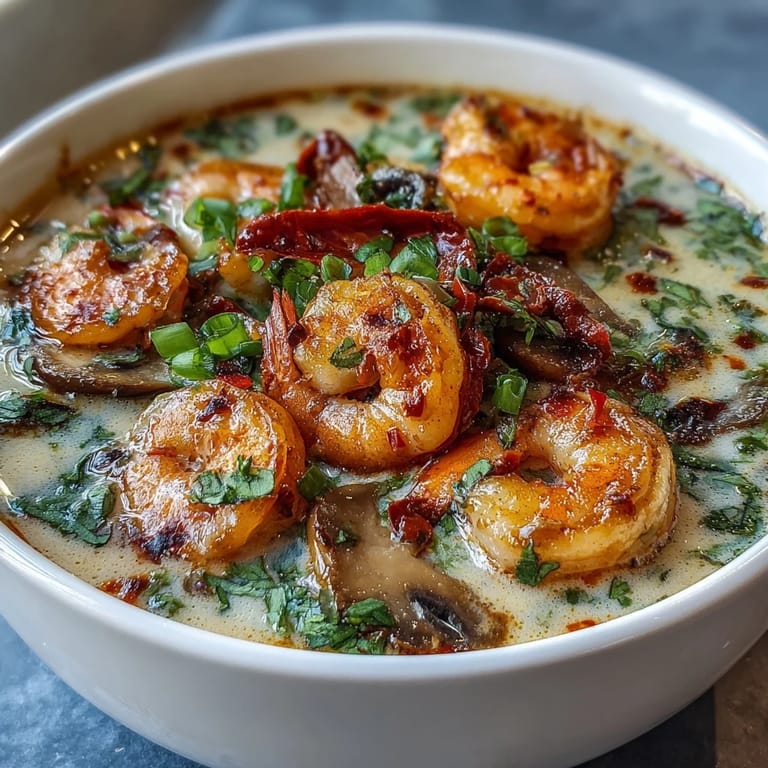
- Toss in the mushrooms and let them simmer until just tender, about 5 minutes. They should still have a pleasant bite rather than becoming too soft.
- Cook the shrimp:
- Add those beautiful shrimp and watch them transform from translucent gray to coral pink in just 2-3 minutes. Be careful not to overcook them or theyll become rubbery.
- Balance the flavors:
- Stir in fish sauce for saltiness, sugar for sweetness, and lime juice for acidity. This trio creates that characteristic Thai balance that makes you want to keep eating.
- Strain out aromatics:
- Fish out the lemongrass stalks, ginger slices, and lime leaves as they've done their job. No one wants to bite into a woody piece of lemongrass.
- Serve with fresh garnishes:
- Ladle the soup into bowls and top with cilantro, green onions, and lime wedges. The fresh herbs provide a bright contrast to the rich broth.
 Pin It
 I once prepared this soup for a friend recovering from a nasty cold, and she texted me later saying it cleared her sinuses better than any medicine. The combination of chili heat, aromatic lemongrass, and soothing coconut broth seems to have healing properties beyond mere sustenance. Now whenever anyone in my circle falls ill, they not-so-subtly hint about craving this particular soup.
Making It Your Own
Dont be afraid to adjust the heat level according to your preference. My sister loves spice and adds thinly sliced Thai bird chilies directly to her bowl, while my father-in-law prefers a milder version with just a hint of warmth. The recipe works beautifully either way, and Ive found the baseline as written pleases most palates while still delivering authentic flavor.
Vegetarian Adaptation
For a plant-based version that still delivers on flavor, cubes of firm tofu work wonderfully in place of shrimp. I accidentally discovered that mushroom broth rather than vegetable broth provides a more complex umami foundation when making the vegetarian version. And dont forget to swap in soy sauce or coconut aminos for the fish sauce to keep it truly meat-free.
Serving Suggestions
While this soup is substantial enough to serve as a complete meal, I often pair it with simple sides when hosting dinner. The cooling contrast of cucumber salad with rice vinegar dressing beautifully balances the soups warmth, while steamed jasmine rice can stretch the meal for hungrier guests.
- For a complete Thai-inspired meal, serve alongside fresh spring rolls with peanut dipping sauce.
- Keep lime wedges at the table so everyone can adjust the brightness to their taste preference.
- If serving as a starter, use smaller portions in pretty cups rather than full bowls to avoid filling guests up before the main course.
 Pin It
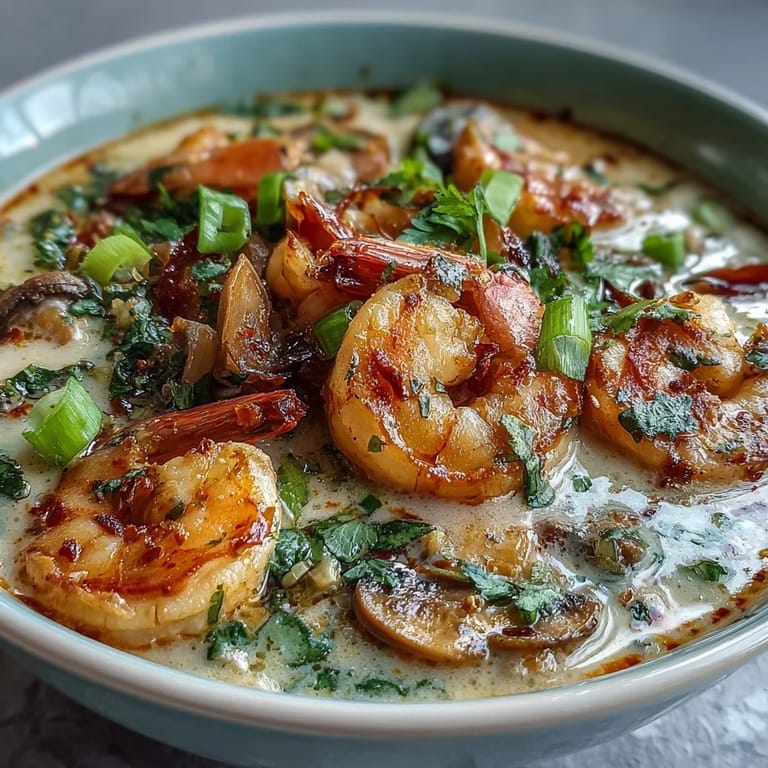
 Whether its the coldest day of winter or a rainy summer evening, this Thai coconut shrimp soup brings a moment of comfort and excitement to the table. Sometimes the most remarkable culinary journeys begin right in your own kitchen.
Recipe FAQs
- → Can I make this soup vegetarian?
Yes. Substitute shrimp with firm tofu cubes and replace fish sauce with soy sauce or a vegetarian alternative. The soup will still be rich and flavorful.
- → How spicy is this soup?
The spice level depends on the red curry paste brand and whether you add fresh chili. Start with less curry paste if you prefer mild heat, then adjust to taste.
- → Can I freeze leftovers?
The broth freezes well for up to 3 months. For best results, freeze without shrimp and add fresh shrimp when reheating to prevent rubbery texture.
- → What can I serve with this soup?
Jasmine rice is the classic accompaniment. You can also serve with crusty bread, rice noodles, or enjoy it on its own as a satisfying light meal.
- → Where can I find kaffir lime leaves and lemongrass?
Look in the produce section of Asian markets or well-stocked grocery stores. Dried kaffir lime leaves work in a pinch, though fresh is preferred.
- → Can I use curry powder instead of paste?
Red curry paste provides authentic flavor and depth. Curry powder will work but lacks the complex notes of shrimp paste, galangal, and other traditional ingredients.