 Pin It
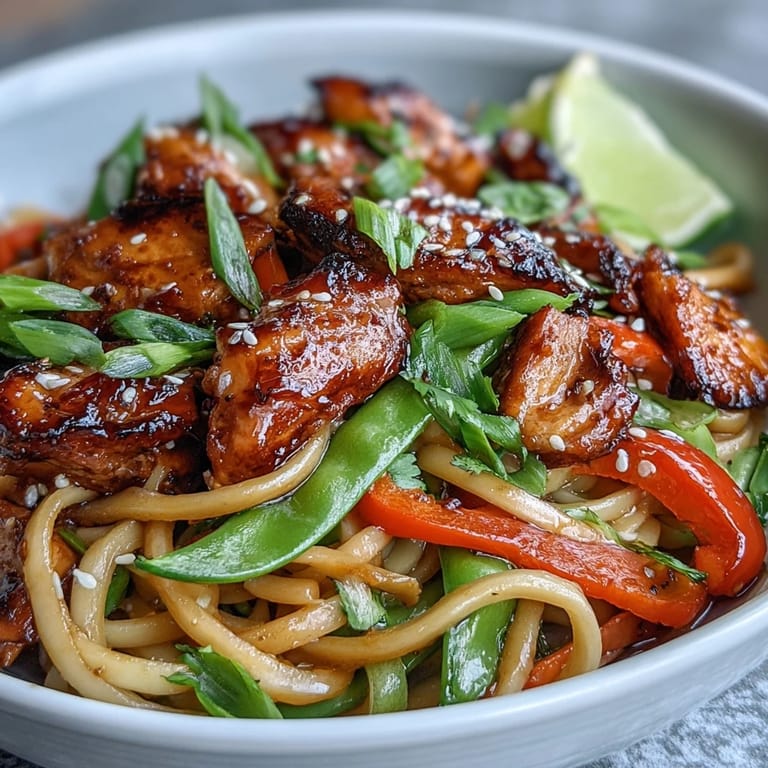
 There's something about the smell of sesame oil hitting a hot pan that makes everything else fade away. I stumbled onto this bowl recipe during a midweek scramble when I had chicken, noodles, and a handful of vegetables staring at me from the fridge. What started as a quick dinner became the dish I now make whenever I want something that feels both comforting and exciting, ready in under 40 minutes.
I made this for my sister on a rainy Sunday when she showed up unannounced, stressed about work. Watching her face when she took that first bite and the noodles coated with that glossy sauce reminded me why I cook, really, it's never just about feeding someone, it's about saying I see you in the middle of your chaos and I made you something warm.
Ingredients
- Chicken breast or thighs, thinly sliced (500 g / 1 lb): Thighs stay juicier but breasts work fine if you don't overcook them, which takes discipline but is worth it.
- Dried udon, soba, or rice noodles (250 g / 9 oz): Udon gives you chewiness, soba brings an earthier note, rice noodles keep it delicate, pick what speaks to you.
- Red bell pepper, thinly sliced (1): The color matters as much as the crunch, and it picks up char marks if you're brave enough to not stir constantly.
- Carrot, julienned (1 medium): Cut them thin so they cook through in minutes and add this subtle sweetness that echoes the brown sugar in the sauce.
- Sugar snap peas, trimmed (100 g / 3.5 oz): These stay crisp if you respect the timing and don't let them sit too long in the pan.
- Spring onions, sliced (2): Save some raw slices for the garnish, the fresh bite at the end is non-negotiable.
- Low-sodium soy sauce (60 ml / 4 tbsp): Low-sodium because you want to taste the other flavors, not just salt.
- Brown sugar (2 tbsp): This is what makes the sauce feel special and balances the salt and acid in a way that makes you want another bite.
- Toasted sesame oil (1 tbsp): Use the toasted kind, never the light kind for this, the difference is everything.
- Rice vinegar (1 tbsp): A whisper of acid that brings brightness, don't skip it.
- Fresh ginger, grated (2 tsp): Grate it yourself if you can, the juice matters more than the shreds.
- Garlic, minced (2 cloves): Mince it small so it disappears into the sauce and flavors everything.
- Cornstarch, optional (1 tsp): Use this only if you want a glossier, thicker sauce that clings more aggressively.
- Toasted sesame seeds (2 tbsp): Toast them yourself in a dry pan for thirty seconds if you have time, the flavor shifts from flat to nutty.
- Fresh coriander or cilantro, chopped: The green at the end wakes everything up and you can use as much as you love.
- Lime wedges, optional: A squeeze of lime right before eating adds brightness that surprises you.
Tired of Takeout? 🥡
Get 10 meals you can make faster than delivery arrives. Seriously.
One email. No spam. Unsubscribe anytime.
Instructions
- Start your noodles:
- Boil water, add noodles, cook until just tender, drain and rinse with cold water so they don't clump. This takes about 8 minutes depending on the noodle, so start here first.
- Build your sauce:
- In a small bowl whisk soy sauce, brown sugar, sesame oil, rice vinegar, ginger, garlic, and cornstarch if using until the sugar dissolves. The sauce should smell like caramel and warmth and sesame all at once.
- Get your pan hot:
- Heat a large skillet or wok over medium-high heat, add a splash of oil and let it shimmer. You want it hot enough that the chicken hits the pan and sizzles immediately.
- Cook the chicken:
- Add sliced chicken in a single layer and don't touch it for a minute so it browns, then toss and cook until no pink remains, about 4-5 minutes total. It should have golden edges.
- Stir-fry the vegetables:
- Push the chicken to the side, add a bit more oil if the pan looks dry, then add bell pepper, carrot, and snap peas. Stir constantly for 2-3 minutes until they're bright colored and crisp-tender, still with some resistance when you bite them.
- Bring it together:
- Return chicken to the pan, pour in the sauce and toss everything until coated. Simmer for 1-2 minutes and watch the sauce thicken and turn glossy, coating every piece.
- Add the noodles and finish:
- Toss in your cooked noodles and spring onions, mix everything until hot and evenly sauced. The noodles should glisten and feel coated, not wet.
- Plate and garnish:
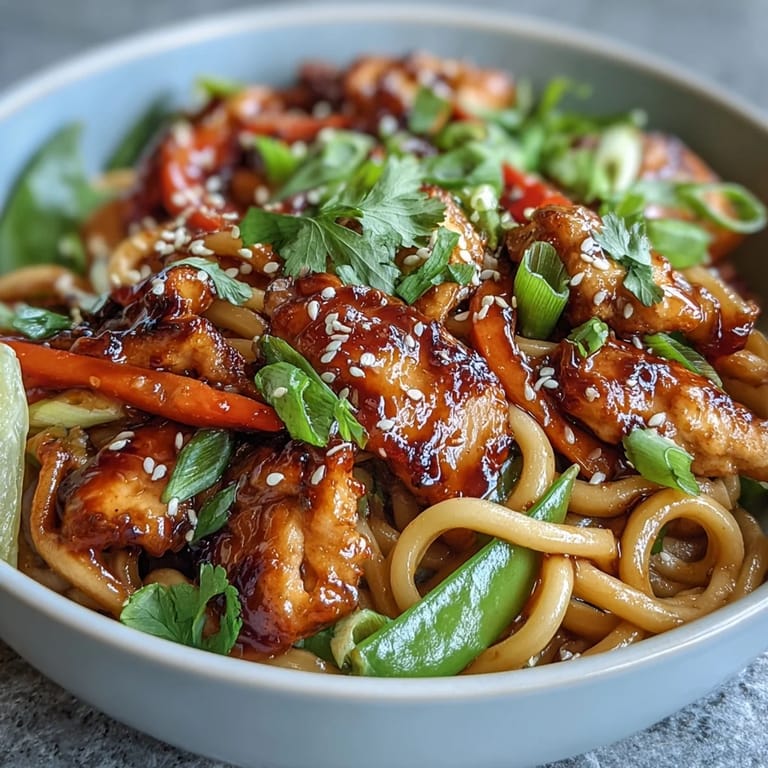
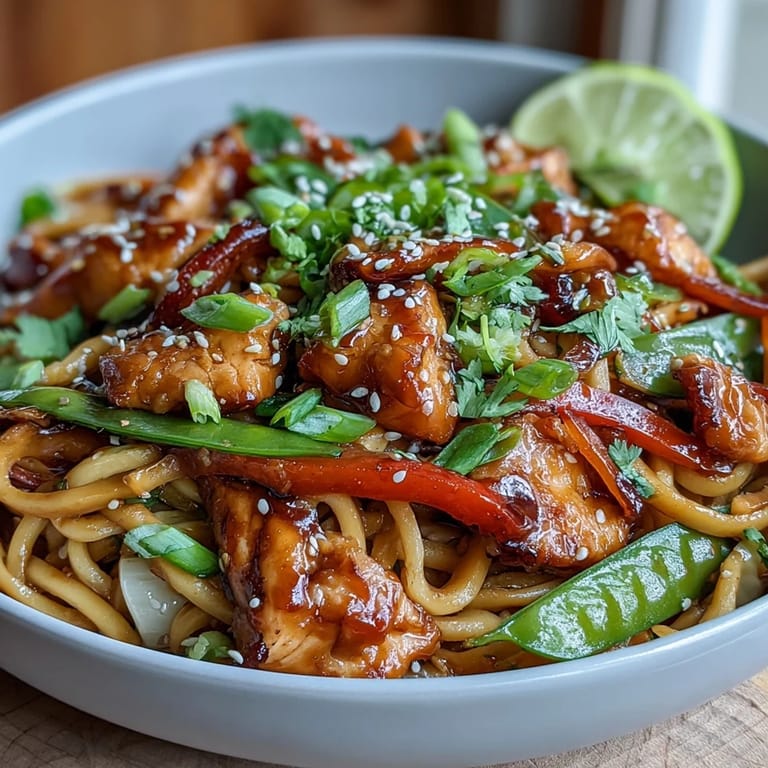
- Divide among bowls and scatter sesame seeds, fresh cilantro, and a lime wedge on top. Eat it while it's still steaming.
 Pin It
 My friend who claims she doesn't cook came over and watched me make this once, and now she makes it every week. She sends me photos of her bowls and says it's proof that good food doesn't need to be complicated, just intentional.
Why This Sauce Changes Everything
The magic lives in the balance of sweet, salty, sour, and nutty. Brown sugar isn't just sweetness, it brings caramel notes that make the whole dish feel deeper. Sesame oil is the anchor, the moment it hits the pan you know something special is happening. Rice vinegar keeps it from being cloying and sesame seeds at the end are the final note that makes people ask for the recipe.
Making It Your Own
This bowl is a canvas, not a rule. I've made it with shrimp instead of chicken on nights when that's what I felt like. A friend added peanut butter to the sauce and suddenly it was Thai-inspired. Another time I threw in broccoli and mushrooms and it became completely different but equally delicious.
Timing and Temperature Tips
The whole dish happens quickly once you start cooking, so have everything prepped and within arm's reach. Medium-high heat is your friend here, it gives you browning without burning. If you're nervous about the timing, remember that restaurant kitchens move fast because they've done it a hundred times, you'll get there too.
- Prep all your ingredients before you turn on the heat: This is when having your mise en place matters most, scrambling for garlic when the pan is hot costs you the moment.
- Taste the sauce before it goes in the pan: If it needs more sweetness or salt, adjust it now while it's still in the bowl, not when it's coating everything.
- Keep tasting as you go: Seasoning is personal and your palate knows better than any recipe.
 Pin It
 Make this when you want something that feels restaurant-quality but doesn't require restaurant-sized stress. It's the kind of dish that reminds you why cooking is worth doing.
Recipe FAQs
- → What type of noodles work best?
Udon, soba, and rice noodles all work beautifully. Udon offers a chewy texture, soba adds a nutty flavor, and rice noodles keep it light. Choose based on preference or what's available in your pantry.
- → Can I make this ahead?
The sauce can be whisked together up to 3 days in advance and stored refrigerated. Components cook quickly, so it's best prepared fresh, but leftovers reheat well for lunch the next day.
- → How do I adjust the sweetness?
Start with 2 tablespoons of brown sugar as written. For less sweetness, reduce to 1 tablespoon. For more, add an extra tablespoon. Taste the sauce before tossing to perfect the balance.
- → Can I use other proteins?
Absolutely. Thinly sliced beef or pork work well. For seafood, shrimp cook in just 2-3 minutes. Tofu makes an excellent vegetarian option—press and cube it, then pan-fry until golden before adding to the vegetables.
- → What vegetables can I add?
Broccoli florets, sliced mushrooms, baby corn, or bok choy are great additions. Add heartier vegetables like broccoli with the peppers so they have time to become tender. More delicate greens like spinach can be added at the very end.
- → Is this gluten-free?
As written, it contains gluten from soy sauce and noodles. To make it gluten-free, use tamari instead of soy sauce and choose rice noodles or certified gluten-free udon. Always check labels to be sure.