 Pin It
 My coworker used to pull these jars out of the fridge every Tuesday, and I watched her shake them up with hot water like some kind of lunchtime wizard. One day she caught me staring and offered to show me how she made them. I went home that night, lined up four jars on my counter, and realized I'd been overcomplicating lunch for years. Now my fridge looks like a tiny noodle library, and I actually look forward to midday meals again.
I made a batch of these the week I moved into my new apartment, before I even had a proper dining table. I sat on the floor with a jar in my lap, pouring hot water from my kettle, and it felt like the first real meal in that space. My neighbor knocked to borrow a screwdriver and saw the row of jars on the counter, and by the end of the month, half the building was meal prepping this way. It became our unofficial welcome ritual, teaching new people the layering order and swapping topping ideas in the hallway.
Ingredients
- Dried ramen or rice noodles (200 g): I prefer rice noodles because they hold up better over several days, but ramen works if you plan to eat them within two days.
- Cooked chicken breast, tofu, or shrimp (200 g, diced): Cube them small so they heat through quickly when you add hot water, and make sure they are fully cooked before layering.
- Shredded carrots (1 cup): These add a subtle sweetness and stay crisp even after a few days in the jar, plus they look cheerful through the glass.
- Thinly sliced bell peppers (1 cup, red or yellow): Slice them as thin as you can so they soften just enough when the hot water hits without turning mushy.
- Baby spinach or kale (1 cup): Spinach wilts nicely, but if you use kale, tear it into small pieces so it does not stay too tough.
- Thinly sliced scallions (1/2 cup): These give a sharp, fresh bite that cuts through the richness of the sesame oil beautifully.
- Bean sprouts (1/2 cup): They add crunch and a slightly nutty flavor, and they are one of the few things that stay crisp even after soaking in the jar.
- Soy sauce (4 tbsp, tamari for gluten-free): This is the salty backbone of the sauce, so use a good quality one because you will taste it in every bite.
- Rice vinegar (2 tbsp): It brings a gentle tang that balances the sesame oil and keeps the sauce from feeling too heavy.
- Sesame oil (2 tbsp): A little goes a long way, this is what makes the whole jar smell incredible when you open it.
- Honey or maple syrup (1 tbsp): Just enough sweetness to round out the soy sauce without making it taste like dessert.
- Sriracha or chili sauce (2 tsp, optional): I always add it because I like the slow burn, but you can leave it out or add it fresh when you eat.
- Garlic (1 clove, minced): Fresh garlic makes the sauce come alive, but mince it finely so you do not get a surprise chunk.
- Fresh ginger (1 tsp, grated): Grate it on a microplane if you have one, it distributes evenly and adds a warm, spicy note that smells like comfort.
- Chopped cilantro (2 tbsp, optional): I add this right before eating so it stays bright and does not wilt in the jar.
- Roasted peanuts or cashews (2 tbsp, chopped, optional): These give you something to crunch on and add richness, plus they make the meal feel more substantial.
- Sesame seeds (1 tbsp, optional): A small sprinkle on top makes it look finished and adds a nutty flavor.
- Lime wedges (optional): A squeeze of lime right before you eat brightens everything up and cuts through the sesame oil.
Tired of Takeout? 🥡
Get 10 meals you can make faster than delivery arrives. Seriously.
One email. No spam. Unsubscribe anytime.
Instructions
- Cook the noodles:
- Boil them according to the package directions, then drain and rinse them under cold water to stop the cooking and keep them from clumping. Let them cool completely before you start layering, or they will steam up the jar and make everything soggy.
- Make the sauce:
- Whisk together the soy sauce, rice vinegar, sesame oil, honey, Sriracha if using, minced garlic, and grated ginger in a small bowl until it is smooth and smells amazing. Taste it and adjust the heat or sweetness to your liking before you divide it up.
- Divide the sauce:
- Pour equal amounts into the bottom of each of your four mason jars, this is the secret to keeping everything fresh. The sauce acts as a barrier so the noodles do not sit in liquid and turn mushy.
- Layer the protein:
- Add your diced chicken, tofu, or shrimp right on top of the sauce in each jar. Make sure the pieces are small and evenly distributed so every jar gets a fair share.
- Add the vegetables:
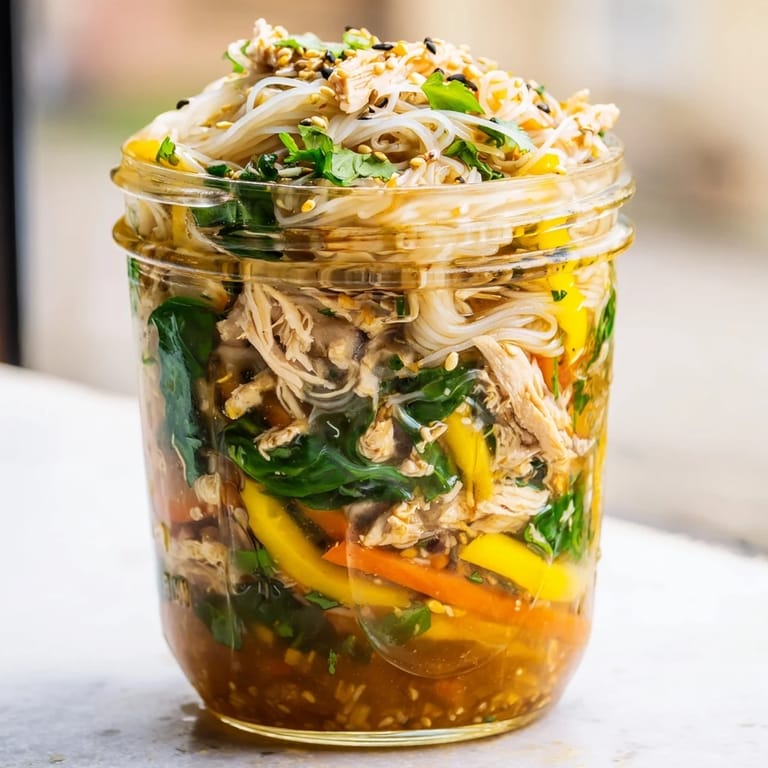
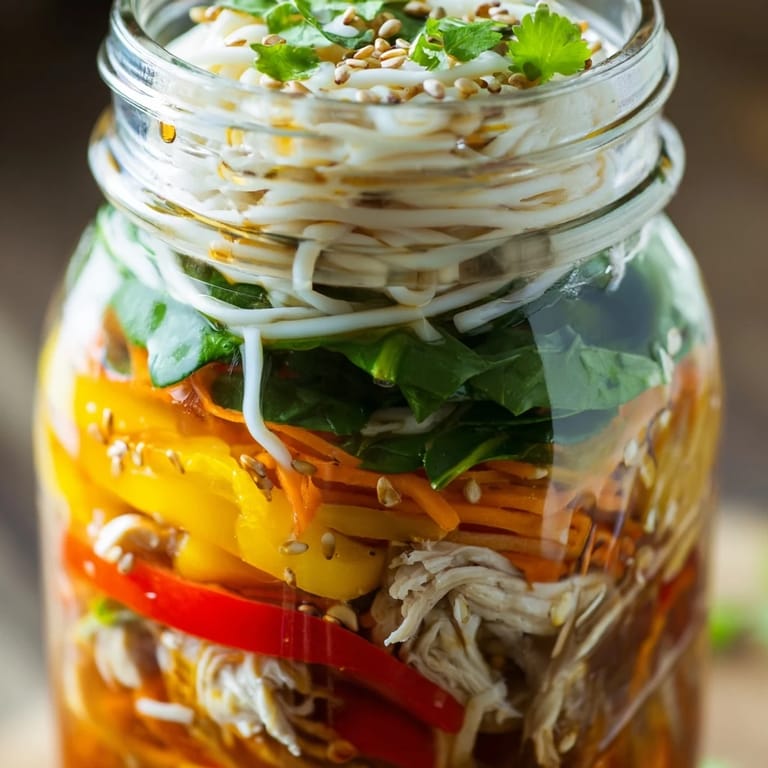
- Layer in the carrots, bell peppers, spinach or kale, scallions, and bean sprouts in that order, pressing them down gently so everything fits. The order matters because the sturdier vegetables go in first and the delicate greens sit closer to the top.
- Top with noodles:
- Add the cooled noodles as the final layer, packing them in lightly so the jar is full but not bursting. Seal the lids tightly and refrigerate them until you are ready to eat.
- Serve:
- When you are ready, remove the lid, add your toppings if you want them, and pour about half a cup of hot water into the jar. Let it sit for two to three minutes so everything warms through and the flavors meld, then stir it all together and eat straight from the jar or pour it into a bowl.
 Pin It
 I brought one of these jars on a long train ride once, and the woman sitting next to me asked what smelled so good. I ended up explaining the whole layering process while she took notes on her phone, and by the time we reached our stop, she had promised to try it that weekend. A month later, she found me on social media just to tell me she had made twenty jars and given them to her book club. It is funny how a simple meal can turn into a conversation, and then into something people pass along to each other like a good recipe should be.
Choosing Your Noodles
Rice noodles hold up better in the jar over four days because they do not absorb as much liquid as wheat noodles do. Ramen works if you plan to eat them within two days, but they can get a little soft by day three. I have also used spiralized zucchini for a low carb version, and while it does not have the same chewy texture, it still tastes great and adds extra vegetables. If you want something more substantial, try soba or udon noodles, just make sure you rinse them well so they do not stick together.
Protein Swaps and Ideas
I have used leftover rotisserie chicken more times than I can count because it is already seasoned and saves time. Tofu works beautifully if you press it first and cube it small, and shrimp adds a sweet, briny flavor that pairs perfectly with the sesame and ginger. Edamame is my go to when I want something plant based and quick, and hard boiled eggs sliced in half make a great addition if you want something creamy. Just make sure whatever protein you use is fully cooked and cooled before you layer it in, or it will create condensation in the jar.
Storage and Meal Prep Tips
These jars keep in the fridge for up to four days, but I find they taste best within the first three. Make sure your jars are completely dry before you start layering, because any moisture can make the vegetables wilt faster. I like to prep them all on Sunday evening so I have lunch sorted for most of the week, and I label the lids with a piece of tape so I know which day I made each one.
- Store the jars upright so the sauce stays at the bottom and does not leak into the noodles.
- If you are taking one to work, pack your toppings separately in a small container so they stay fresh and crunchy.
- You can freeze the cooked noodles separately if you want to make a bigger batch, just thaw them in the fridge overnight before layering.
 Pin It
 Now I keep a stack of clean jars in my cupboard, and I find myself looking forward to the ritual of layering them every week. It is one of those recipes that makes life feel a little more organized, a little more delicious, and a lot less stressful when lunch rolls around.
Recipe FAQs
- → How long do mason jar noodles keep in the refrigerator?
Properly sealed mason jar noodles stay fresh for up to 4 days when refrigerated. Keep the jars tightly sealed and don't mix ingredients until ready to eat to maintain texture and flavor.
- → Can I use different types of noodles?
Yes, ramen and rice noodles work well, but you can also use egg noodles, soba, udon, or spiralized zucchini. For low-carb options, shirataki noodles are excellent. Adjust cooking time based on your noodle choice.
- → What are the best protein options?
Cooked chicken breast, tofu, and shrimp are excellent choices. Edamame, tempeh, or cooked chickpeas work great for vegetarian or vegan versions. Cook proteins beforehand and dice into bite-sized pieces for easy consumption.
- → How do I reheat or serve these jars?
Pour approximately 1/2 cup hot water into the sealed jar and let sit for 2-3 minutes to heat the ingredients and rehydrate the noodles. Stir well and enjoy directly from the jar or transfer to a bowl for serving.
- → Can I make this dairy-free or vegan?
Yes, this meal is naturally dairy-free. For vegan versions, use tofu or edamame as protein, substitute honey with maple syrup, and use tamari instead of regular soy sauce for gluten-free needs.
- → What's the best way to layer ingredients?
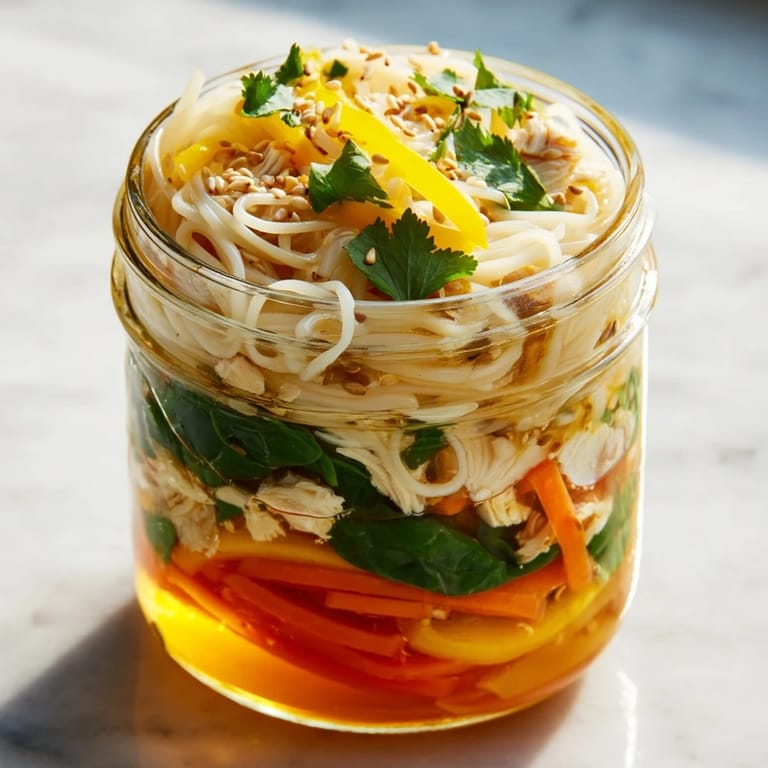
Layer in this order: sauce at the bottom, protein, vegetables (carrots, peppers, greens, scallions, sprouts), then noodles on top. This prevents noodles from absorbing too much sauce and keeps vegetables crisp.