 Pin It
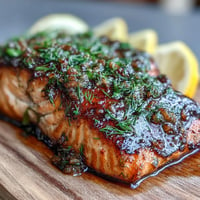
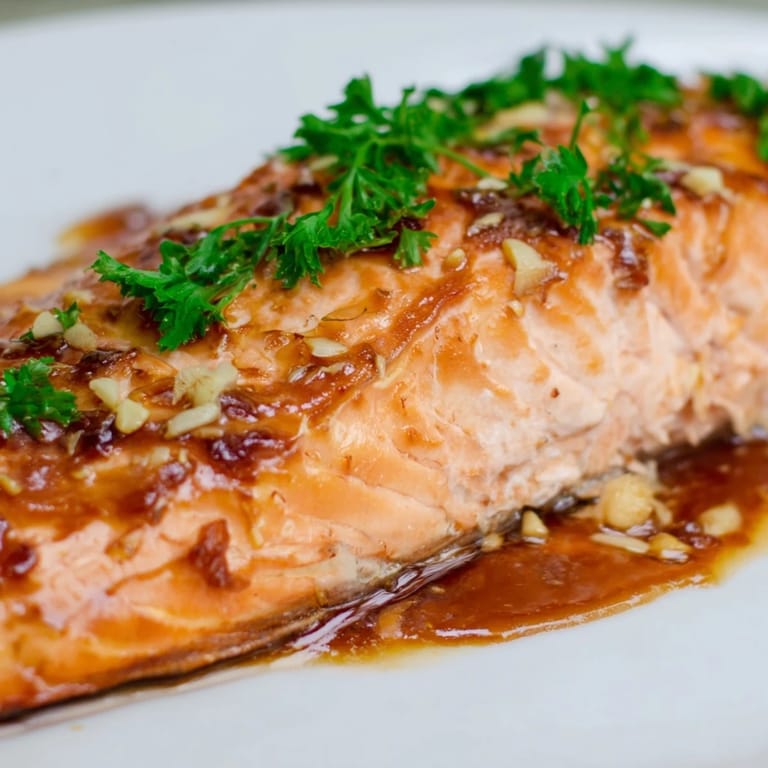
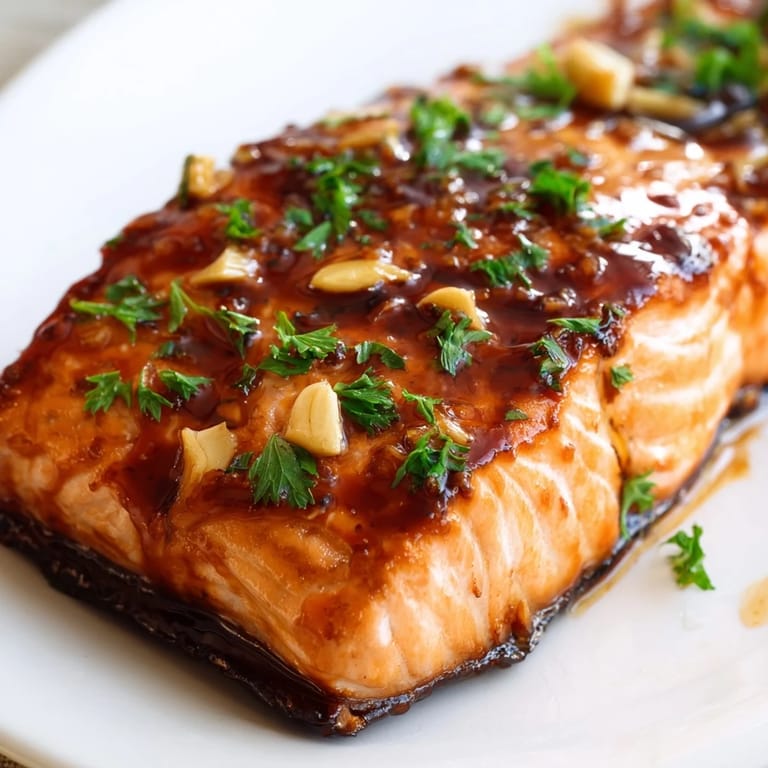
 My kitchen smelled like warm honey and toasted garlic before I even realized the oven timer hadn't gone off yet. I was standing there with a pastry brush in one hand, phone in the other, completely distracted by a text when I noticed the edges of the salmon starting to glisten under the broiler. That glossy, amber sheen is what taught me timing matters, but also that a little extra caramelization never hurt anyone. This honey garlic glazed salmon became my go-to the moment I realized I could make something this elegant on a weeknight without breaking a sweat.
I made this for my sister on a rainy Tuesday when she needed cheering up. She sat at the counter watching me brush the glaze onto the fillets, asking if I was sure it would work because it looked too simple. When she took her first bite, she went quiet for a second, then said it tasted like comfort with a little bit of fancy. That's exactly what it is.
Ingredients
- Salmon fillets: Skin-on helps the fish hold together during roasting, but skinless works just as well if you prefer a cleaner presentation.
- Honey: This is what gives the glaze its shine and gentle sweetness, balancing the salty soy and sharp garlic beautifully.
- Unsalted butter: Melted butter carries the garlic flavor and helps the glaze stick to the salmon without sliding off.
- Garlic cloves: Fresh minced garlic is non-negotiable here, it blooms in the oven and fills your kitchen with the best kind of smell.
- Soy sauce: Adds umami depth and a touch of salt, use gluten-free tamari if you need to keep it safe for allergies.
- Fresh lemon juice: Brightens the whole dish and cuts through the richness so it never feels too sweet or heavy.
- Dijon mustard: Optional but worth it, it adds a subtle tang and helps emulsify the glaze into something smooth and glossy.
- Fresh parsley: A handful of chopped parsley at the end makes everything look vibrant and taste a little fresher.
Tired of Takeout? 🥡
Get 10 meals you can make faster than delivery arrives. Seriously.
One email. No spam. Unsubscribe anytime.
Instructions
- Prep the oven and tray:
- Preheat your oven to 200°C (400°F) and line a baking tray with parchment paper. This keeps the glaze from sticking and makes cleanup almost effortless.
- Season the salmon:
- Pat the fillets dry with a paper towel, then place them on the tray and season both sides lightly with salt and pepper. Dry fish gets a better sear and the glaze clings better.
- Mix the glaze:
- In a small bowl, whisk together honey, melted butter, minced garlic, soy sauce, lemon juice, and Dijon mustard until everything is smooth and combined. It should look glossy and smell incredible.
- Brush it on:
- Use a pastry brush to coat the top and sides of each fillet generously with the glaze. Don't be shy, this is where all the flavor lives.
- Roast until tender:
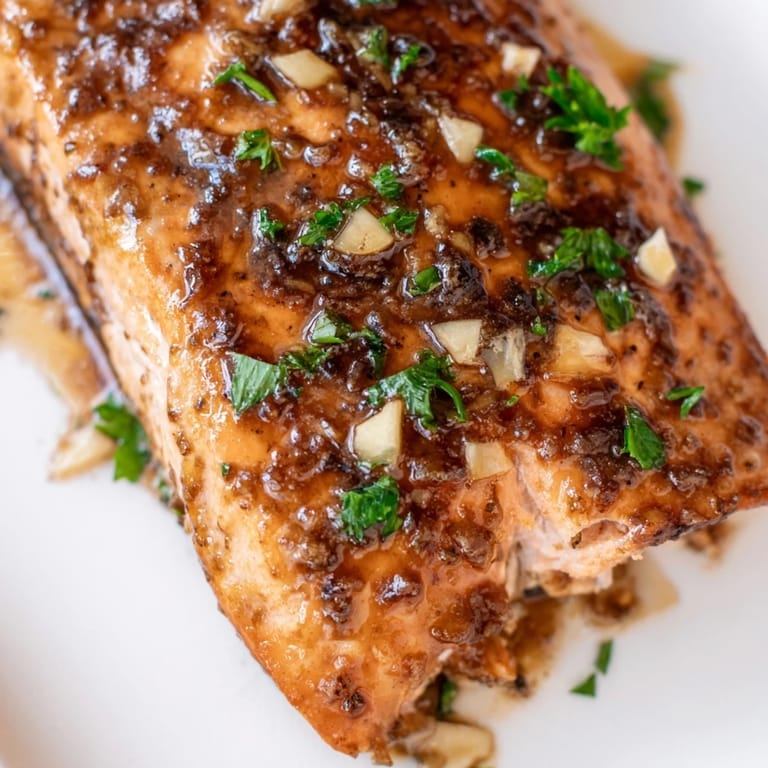
- Slide the tray into the oven and roast for 12 to 15 minutes, until the salmon flakes easily with a fork and the glaze has started to caramelize at the edges. The kitchen will smell amazing.
- Broil for shine:
- If you want extra caramelization, switch to broil for the last 1 to 2 minutes. Watch it closely so the glaze doesn't burn.
- Finish and serve:
- Remove from the oven, spoon any sticky pan juices over the top, and sprinkle with chopped parsley. Serve hot with lemon wedges on the side.
 Pin It
 The first time I served this at a small dinner, someone asked for the recipe before they even finished their plate. It wasn't because I'm some kind of culinary genius, it was because this dish just works. It tastes like effort without requiring any, and that's the kind of magic that makes people feel cared for without you having to say a word.
What to Serve It With
This salmon pairs beautifully with steamed jasmine rice or fluffy quinoa to soak up the extra glaze. I love serving it alongside roasted asparagus or broccolini tossed in olive oil and sea salt. A crisp green salad with a lemon vinaigrette keeps things light and fresh, or you can go cozy with garlic mashed potatoes if you're in the mood for comfort.
How to Store and Reheat
Leftovers keep well in an airtight container in the fridge for up to two days. To reheat, place the salmon in a low oven at 150°C (300°F) for about 8 minutes, just until warmed through. Microwaving works in a pinch, but the texture won't be quite as tender. I sometimes flake leftover salmon into a grain bowl or toss it with pasta and greens for an easy next-day lunch.
Simple Swaps and Tweaks
If you want a little heat, add a pinch of crushed red pepper flakes to the glaze before brushing it on. Maple syrup can stand in for honey if that's what you have, it adds a deeper, slightly woodsy sweetness. For a dairy-free version, swap the butter for olive oil or melted coconut oil, both work without sacrificing flavor.
- Try fresh ginger instead of garlic for a brighter, slightly spicy twist.
- Use lime juice and zest instead of lemon for a more tropical vibe.
- Sprinkle sesame seeds over the top along with the parsley for a little crunch and visual interest.
 Pin It
 This honey garlic salmon has earned its spot in my weekly rotation because it never lets me down. It's proof that simple ingredients and a hot oven can turn an ordinary evening into something worth sitting down for.
Recipe FAQs
- → How do I know when salmon is fully cooked?
Salmon is cooked through when it flakes easily with a fork and reaches an internal temperature of 63°C (145°F). The flesh should be opaque and no longer translucent in the center.
- → Can I prepare the glaze in advance?
Yes, you can mix the glaze up to 2 hours ahead and store it in an airtight container. Brush it onto the salmon just before roasting for best results.
- → What's the best way to prevent dry salmon?
Pat the fillets dry before seasoning, don't overcook them, and keep the glaze on top to retain moisture. Using skin-on fillets also helps protect the delicate flesh.
- → Can I use frozen salmon fillets?
Yes, thaw frozen salmon completely in the refrigerator before cooking. Pat dry thoroughly after thawing to ensure the glaze adheres properly.
- → What substitutions work for the glaze ingredients?
Replace honey with maple syrup for a deeper flavor, use tamari instead of soy sauce for gluten-free diets, or substitute lime juice for lemon. Adjust seasonings to taste.
- → How do I achieve better caramelization?
Brush the glaze generously over the fillets and consider finishing under the broiler for 1-2 minutes. Watch carefully to prevent burning and ensure the glaze caramelizes beautifully.