 Pin It
 My gym buddy Marcus brought this to a potluck, and I'll admit I was skeptical about a "healthy" pasta bake until I took one bite. The cheese was actually melted and bubbly, the beef was seasoned properly instead of bland, and somehow it didn't feel like I was eating cardboard. He mentioned he'd been meal-prepping it on Sundays, and that's when I realized this wasn't some punishment dish—it was genuinely good food that happened to have 33 grams of protein per serving.
I made this for my sister's recovery week after her knee surgery, and she actually asked for seconds instead of just politely finishing what was on her plate. The house smelled like an Italian restaurant by the time it came out of the oven, and watching her take a proper bite instead of pushing food around was worth every chopped vegetable. That's when I knew this wasn't just another recipe—it was the kind of dish that reminds people they're being cared for.
Ingredients
- Whole wheat penne or rotini, 300 g (10.5 oz): This holds the sauce better than regular pasta and adds fiber without making the dish feel heavy or dense.
- Extra-lean ground beef, 450 g (1 lb): The leanness matters here because you won't have excess fat pooling on top, but don't skip browning it properly for actual flavor development.
- Onion, 1 medium, diced: This becomes the sweet base that balances the tomato acidity, so don't rush the sautéing step.
- Garlic, 2 cloves, minced: Mince it fresh right before cooking because jarred garlic tastes tinny in a dish this simple.
- Red bell pepper, 1, diced: Red peppers are naturally sweeter than other colors, which reinforces that pizza-inspired flavor without added sugar.
- Mushrooms, 100 g (3.5 oz), sliced: These add umami depth and a meaty texture that makes you forget this isn't a heavier version.
- Baby spinach, 100 g (3.5 oz): Stir it in at the last second before the sauce to keep it bright and prevent it from turning into a dark, bitter mess.
- Canned crushed tomatoes, 700 ml (24 oz): San Marzano varieties are worth seeking out because the flavor is noticeably cleaner than generic brands.
- Tomato paste, 2 tbsp: This concentrates the tomato flavor without watering down the sauce, so don't substitute it with more crushed tomatoes.
- Dried oregano, 1 tsp: Oregano is the smell that makes people think Italian, so don't underestimate how much work this tiny amount does.
- Dried basil, 1 tsp: Mix this into the sauce rather than just sprinkling it on top so the flavor distributes evenly throughout.
- Chili flakes, ½ tsp (optional): A small pinch adds complexity that makes people try to guess what's in the sauce without tasting heat.
- Salt and freshly ground black pepper: Taste as you go because both the beef and tomatoes have natural salt, and it's easy to oversalt.
- Part-skim mozzarella cheese, 150 g (5 oz), shredded: Shred it fresh from a block rather than using pre-shredded because the anti-caking agents prevent proper melting.
- Grated Parmesan cheese, 30 g (1 oz): This provides the salty, nutty note that makes melted cheese taste more complex and less one-dimensional.
- Turkey pepperoni slices, 30 g (1 oz) (optional): These add that pizza identity without the heaviness of regular pepperoni, and they crisp up nicely in the oven.
- Fresh basil for garnish (optional): Tear it by hand right before serving so it doesn't bruise and turn dark, which ruins the visual appeal.
Tired of Takeout? 🥡
Get 10 meals you can make faster than delivery arrives. Seriously.
One email. No spam. Unsubscribe anytime.
Instructions
- Heat your oven and start the pasta:
- Crank the oven to 200°C (400°F) and get a large pot of salted water boiling—the salt matters because it's your only seasoning at this stage. Cook the pasta until it's just barely al dente, which means it'll have a little resistance in the center, because it's going back in the oven and will soften further.
- Brown the beef properly:
- Heat a large nonstick skillet over medium heat and add the ground beef, breaking it up with a spoon as it cooks into small crumbles rather than one clumpy mass. You want actual browning on the meat, not just cooked-through grayness, so let it sit for a minute before stirring to develop a crust.
- Build your flavor base:
- Drain any excess fat from the beef if needed, then add the diced onion, minced garlic, bell pepper, and mushrooms all at once. Sauté for 5 to 7 minutes until everything softens and the onions turn translucent, and the kitchen starts smelling like an Italian grandmother's kitchen.
- Wilt the spinach in:
- Dump in the baby spinach and stir constantly for about a minute until it collapses and darkens slightly. Don't walk away during this step because it goes from vibrant to overcooked in the time it takes to check your phone.
- Add the sauce and let it simmer:
- Pour in the crushed tomatoes and tomato paste, then stir in the oregano, basil, chili flakes, salt, and pepper. Let it all bubble away gently for about 5 minutes so the herbs release their oils and the flavors stop tasting separate.
- Combine pasta and sauce:
- Dump the cooked pasta into the skillet with the beef and vegetable mixture, stirring gently so every noodle gets coated with sauce and nothing breaks apart. This is where the dish transforms from ingredients into something cohesive.
- Transfer to your baking dish:
- Pour everything into a lightly greased 23x33 cm (9x13 inch) baking dish and spread it so it's roughly even. Wipe down the sides of the dish so the cheese topping doesn't stick to dried sauce and look messy.
- Top with cheese and pepperoni:
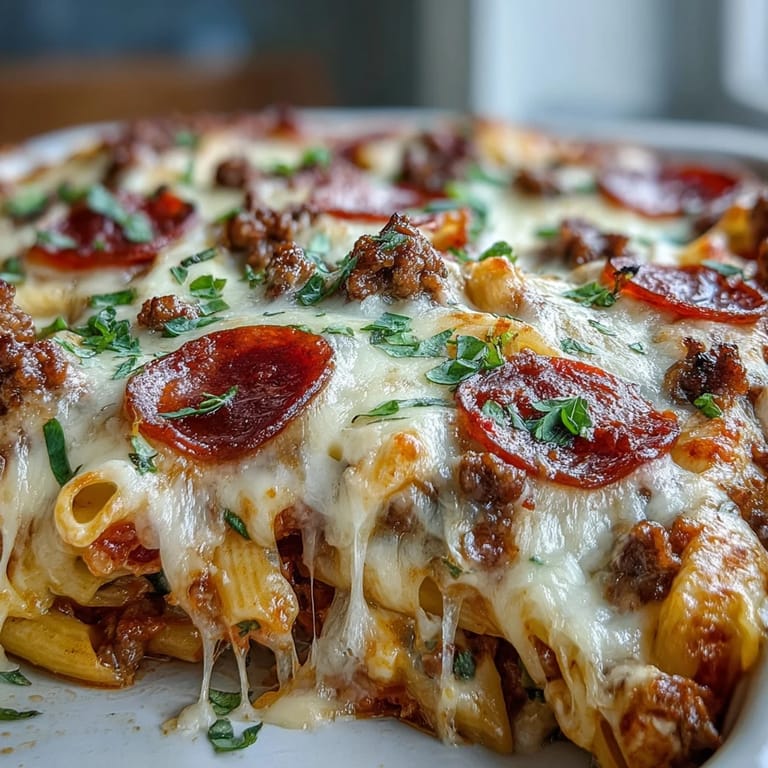
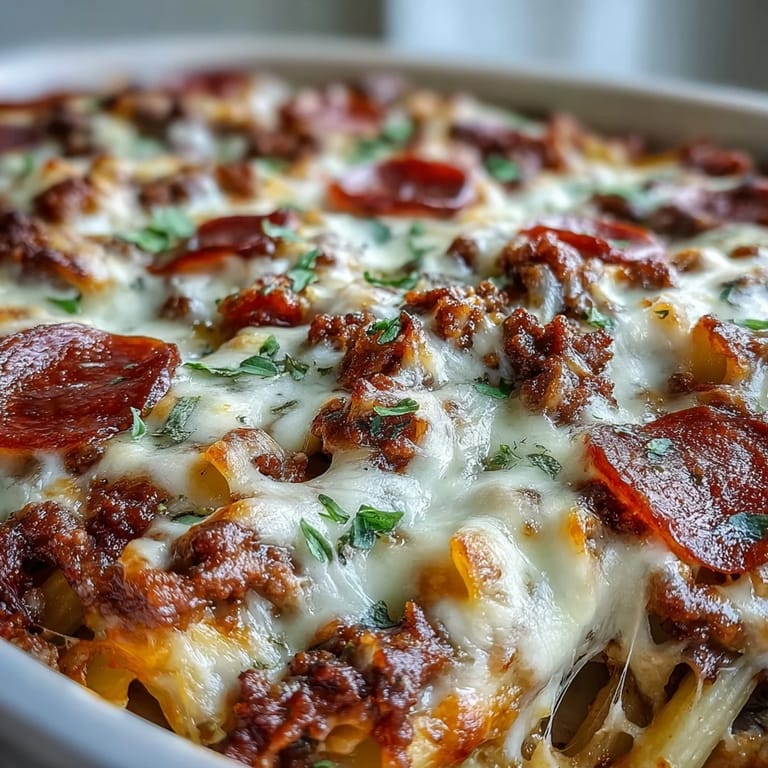
- Scatter the shredded mozzarella evenly across the top, then sprinkle the Parmesan over that, and arrange the turkey pepperoni slices if you're using them. The pepperoni will crisp around the edges and add a subtle salty punch that makes people ask what you did.
- Bake until bubbly and golden:
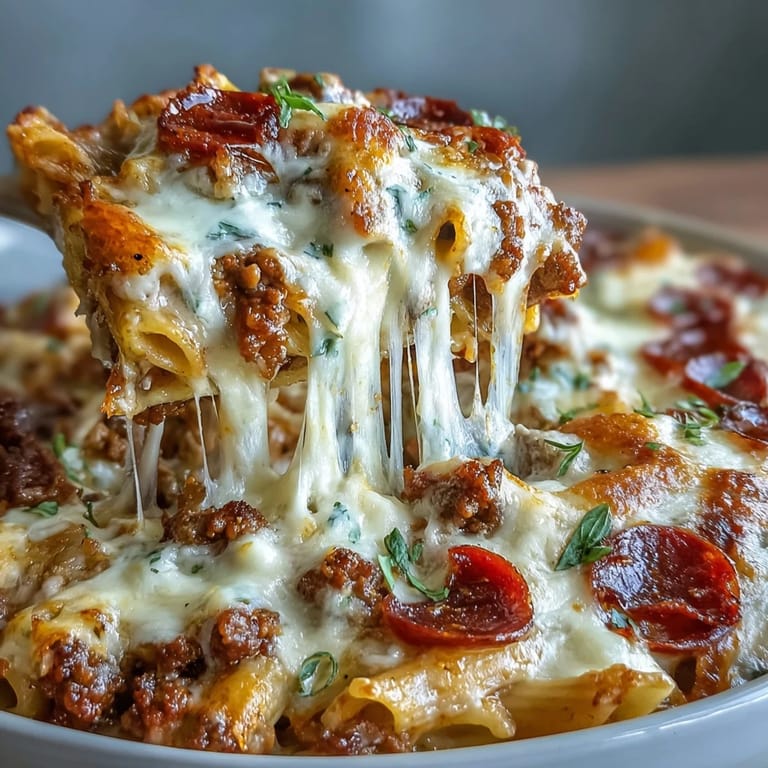
- Slide it into the oven for 20 minutes until the cheese is melted and bubbling at the edges and the top starts to turn golden in spots. The internal temperature doesn't need checking—if the cheese looks melted and the sauce is bubbling around the edges, you're done.
- Finish with fresh basil:
- Pull it from the oven and let it sit for 2 minutes so the cheese sets slightly and it's easier to serve. Tear some fresh basil over the top right before plating if you have it, because it adds a brightness that makes the whole dish feel more finished.
 Pin It
 Last month I brought this to a community event where I wasn't sure what to expect, and it was gone before the lasagna, which is saying something. A woman who'd been training for a bodybuilding competition asked for the recipe, and a guy who usually avoids vegetables ate three servings. That moment reminded me that food doesn't have to be complicated or trendy to matter—it just has to be made with enough care that people feel it.
Protein-Boosting Variations
If 33 grams of protein per serving isn't enough for your goals, there are a few moves that actually work without turning the dish into a chalky nightmare. The cottage cheese method is my go-to because it adds richness and another 8 grams of protein per serving without changing the texture or making it taste tangy. Some people stir ricotta in instead, which gives you a creamier result that feels more luxurious, though it costs you about a gram of protein per serving in exchange.
Make-Ahead and Storage
This dish was literally designed for people who have real lives and can't cook every night, so assembly the night before is totally fair game. Put together everything except the cheese topping, cover it, refrigerate it, and bake it straight from cold—just add 5 to 10 minutes to the cooking time since it's starting from the fridge instead of room temperature. Leftovers keep for 4 days in a sealed container, and reheating in a 180°C (350°F) oven for 10 to 15 minutes brings the cheese back to life way better than a microwave ever could.
Building Your Own Bowl
Once you understand how this comes together, you can riff on it based on what you actually have in your fridge instead of treating the ingredient list like scripture. The formula is lean protein plus vegetables plus pasta plus sauce plus cheese, and everything else is just your personal preference applied to that framework. I've made versions with zucchini instead of peppers, ground turkey instead of beef, and white beans stirred in for days when I'm out of meat, and they all work because the technique stays the same.
- Roasted vegetables add deeper flavor than raw sautéed ones if you have 10 extra minutes before assembly.
- A splash of balsamic vinegar in the sauce adds complexity that makes people think you spent way more time on this than you actually did.
- Don't skip the fresh basil garnish because it's the final note that separates a good pasta bake from one that feels genuinely finished.
 Pin It
 This dish lives in the space where eating for performance and eating for pleasure actually overlap, which is rare enough to matter. It's the kind of food that works for someone training hard, someone feeding a family, or someone who just wants to feel taken care of by dinner.
Recipe FAQs
- → Can I make this pasta bake ahead of time?
Yes, assemble the dish up to 24 hours in advance and refrigerate. Bake for an additional 10 minutes if cooking straight from the refrigerator.
- → What pasta works best for this bake?
Whole wheat penne or rotini holds sauce well and maintains texture. For gluten-free or extra protein, try chickpea or lentil pasta.
- → How can I increase the protein content further?
Stir in 200 g low-fat cottage cheese or ricotta before baking. You can also use legume-based pasta for an additional protein boost.
- → Can I freeze leftovers?
Portions freeze well for up to 3 months. Thaw overnight in the refrigerator and reheat at 180°C (350°F) until heated through.
- → What vegetables can I add or substitute?
Try black olives, roasted zucchini, or eggplant for Mediterranean flair. The vegetables can be adjusted based on what you have available.
- → Is turkey pepperoni necessary?
It's optional and adds a pizza-inspired flavor. You can omit it or substitute with diced bell pepper for a vegetarian version.