 Pin It
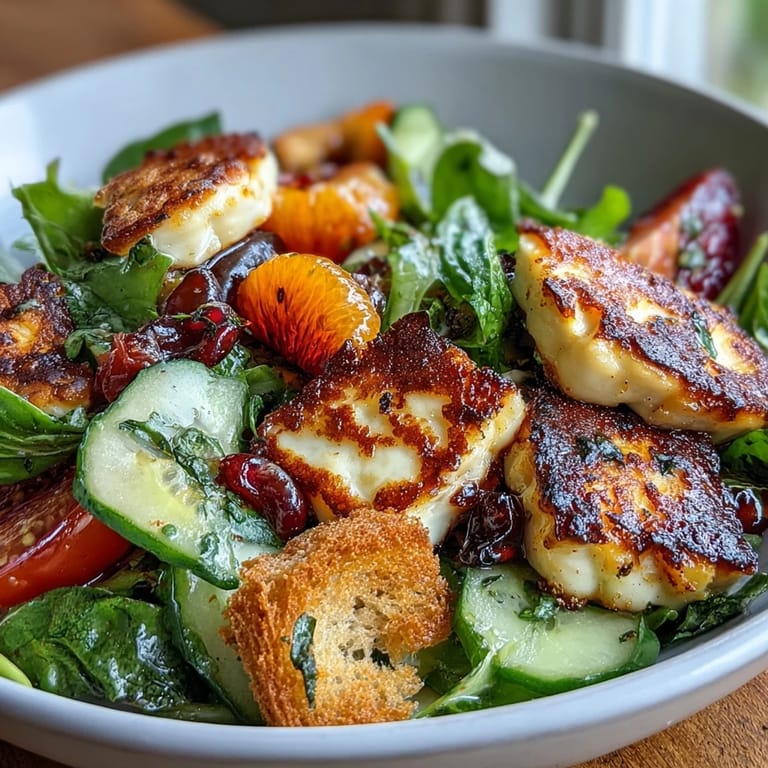
 There's a moment every spring when I find myself standing in front of the produce section, drawn magnetically to blood oranges the moment they appear. Last year, I was holding one, admiring its deep crimson skin, when a vendor mentioned she'd been eating them in a fattoush back home in Beirut. That conversation sparked something, and I spent the next week obsessing over recreating that dish, eventually landing on this version with golden-fried halloumi that squeaks between your teeth and croutons that stay impossibly crisp. The first time I made it for friends, someone asked if I'd been secretly trained as a chef, which felt like the highest compliment a home cook could receive.
I served this to my partner one Tuesday evening when we were both tired of our usual weeknight rotation, and they literally stopped mid-bite and asked what I'd done differently in the kitchen. The truth was nothing revolutionary, just better ingredients treated with a little more intention. Watching someone discover the interplay between the salty cheese, tart sumac, and sweet blood orange felt like I'd unlocked a secret code.
Ingredients
- Halloumi cheese, sliced: Choose thick slices around half an inch—this gives you enough surface area for that golden crust while keeping the inside creamy.
- Blood oranges: Their deep color and subtle bitterness elevate this beyond regular citrus, but honestly, regular oranges work too if you can't find them.
- Mixed salad greens: I use a combination of romaine for crunch, arugula for peppery notes, and fresh parsley and mint for brightness that ties everything together.
- Cucumber and cherry tomatoes: Keep these fresh and cold—they're your textural anchors and hydration in every bite.
- Radishes and red onion: Slice them as thin as you can manage; they add a sharp, almost bracing quality that makes all the flavors pop.
- Sourdough bread: The tanginess of sourdough croutons complements the sumac vinaigrette better than neutral bread ever could.
- Extra virgin olive oil: Don't skimp here—this is half your dressing and deserves quality.
- Lemon juice and red wine vinegar: The combination gives you brightness plus depth; one alone feels incomplete.
- Ground sumac: This is the flavor backbone—it brings a lemony tartness without any bitterness, and once you taste it, you'll want to add it to everything.
- Pomegranate molasses: It adds an almost floral sweetness that balances the salad's sharpness; find it in Middle Eastern markets or online.
Tired of Takeout? 🥡
Get 10 meals you can make faster than delivery arrives. Seriously.
One email. No spam. Unsubscribe anytime.
Instructions
- Toast your croutons until they're golden and still snappy:
- Toss sourdough cubes with olive oil and salt, spread them on a baking sheet, and bake at 180°C for 8–10 minutes, stirring halfway through. You want them crispy on the outside but with just a hint of chew remaining—pull them out when you think they might be just slightly underdone.
- Build your dressing while everything else cooks:
- Whisk together the olive oil, lemon juice, red wine vinegar, sumac, pomegranate molasses, salt, and pepper in a small bowl. Taste it and adjust—it should make your mouth water slightly before it hits the salad.
- Fry the halloumi until the edges turn golden and crispy:
- Heat olive oil in a nonstick skillet over medium heat until it just starts to shimmer, then add your halloumi slices without crowding the pan. Listen for that satisfying sizzle and let them sit for 1–2 minutes per side until they develop that golden crust, then transfer to a plate lined with a clean kitchen towel to keep them warm.
- Assemble your salad bowl with intention:
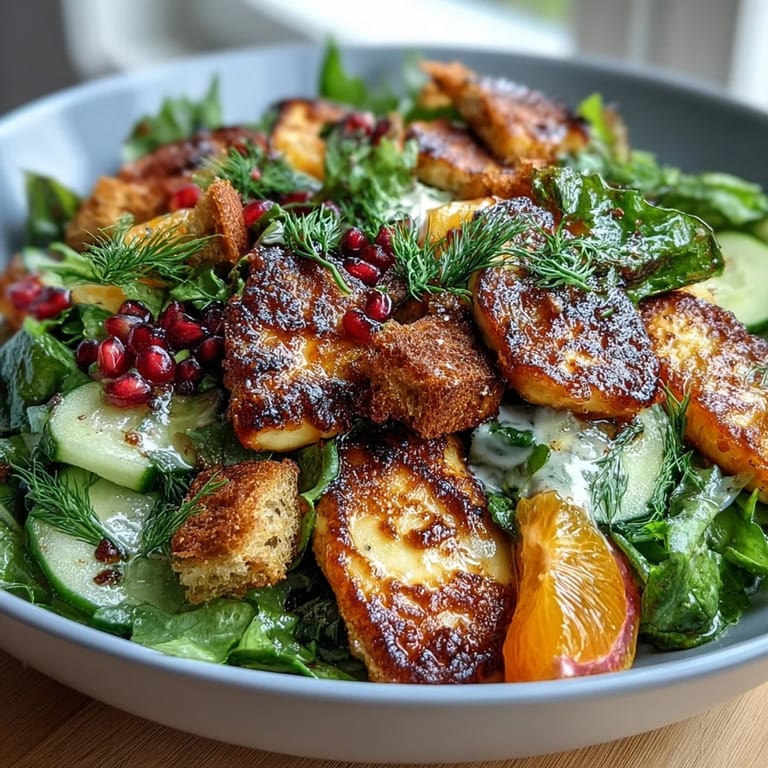
- Combine all your greens, cucumber, tomatoes, radishes, and red onion in a large bowl, then top with the blood orange slices, warm halloumi, and croutons. This order matters because you want the warm cheese to gently wilt the greens just slightly without completely softening them.
- Dress and serve immediately:
- Drizzle the dressing over everything and toss gently—you're aiming for every bite to have a bit of everything, not heavy-handed coating. Serve right away while the croutons are still crisp and the halloumi is still warm.
 Pin It
 There's something about serving a salad where every component—the warm, the cold, the crispy, the creamy—plays its part that reminds me why I love cooking in the first place. It's not complicated, but it feels thoughtful, and that's where real food lives.
The Sumac Vinaigrette Magic
The first time I tasted sumac properly was in a small restaurant in London where the chef had been trained in the Levantine tradition, and it completely changed how I understand acidity in cooking. It's not as harsh as vinegar; it's more like distilled lemon with floral notes that make you wonder why you haven't been using it your whole life. The pomegranate molasses adds this almost mysterious sweetness that prevents the vinaigrette from tasting thin or one-dimensional.
Texture Matters More Than You Think
Early iterations of this salad kept falling flat until I realized I was being too precious about consistency—everything was roughly the same texture, and my mouth got bored. The moment I started slicing things differently—some paper-thin, some chunky, some at different angles—the whole dish came alive. It's a lesson that applies far beyond salads: contrast in texture makes food interesting.
Timing and Temperature Considerations
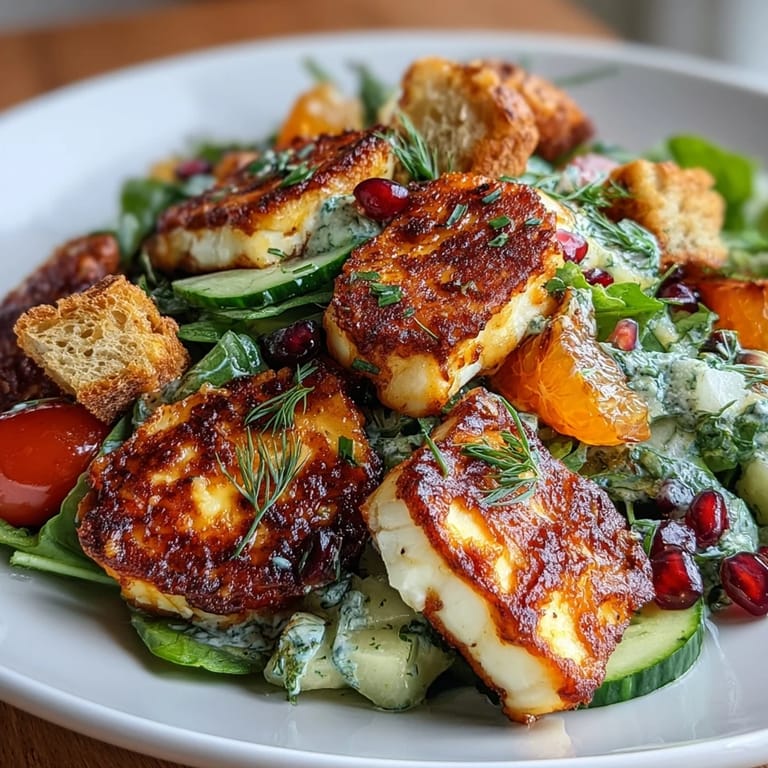
The interplay between warm halloumi and cold greens is what makes this salad feel like more than just a collection of ingredients thrown together. The warmth gently begins to soften the greens without wilting them into submission, and the cheese's saltiness blends into the dressing. Every component needs to be at its intended temperature when the salad comes together, which means some strategic planning but nothing overwhelming.
- Make sure your salad greens are actually cold from the fridge, not room temperature, so the contrast with the warm halloumi is pronounced.
- Toast your croutons right before assembly so they're still warm and crispy when you eat them, not soggy from sitting around.
- The blood oranges should be at room temperature for the best flavor, so take them out of the fridge a few minutes before slicing.
 Pin It
 This salad has become my answer to the question of what to cook when you want something that feels special without the stress. It's proof that simplicity and elegance aren't mutually exclusive.
Recipe FAQs
- → What makes fattoush unique?
Fattoush is a Levantine salad distinguished by its use of fried or toasted bread pieces that soak up the tangy dressing, creating a perfect balance of crisp and tender elements.
- → Can I prepare halloumi ahead of time?
Halloumi is best served immediately after frying while warm and golden. However, you can prep all vegetables and dressing beforehand, then quickly fry the cheese just before serving.
- → What if blood oranges aren't in season?
Regular navel oranges work beautifully as a substitute. You can also use segmented grapefruit for a similar citrus punch and vibrant color contrast.
- → How do I keep croutons crispy?
Allow croutons to cool completely on the baking sheet rather than stacking them while warm. Store in an airtight container and add to salad just before tossing with dressing.
- → What pairs well with this salad?
This salad stands alone beautifully as a light meal. For a more substantial spread, serve alongside grilled chicken, lamb kofta, or as part of a Middle Eastern mezze platter with hummus and falafel.