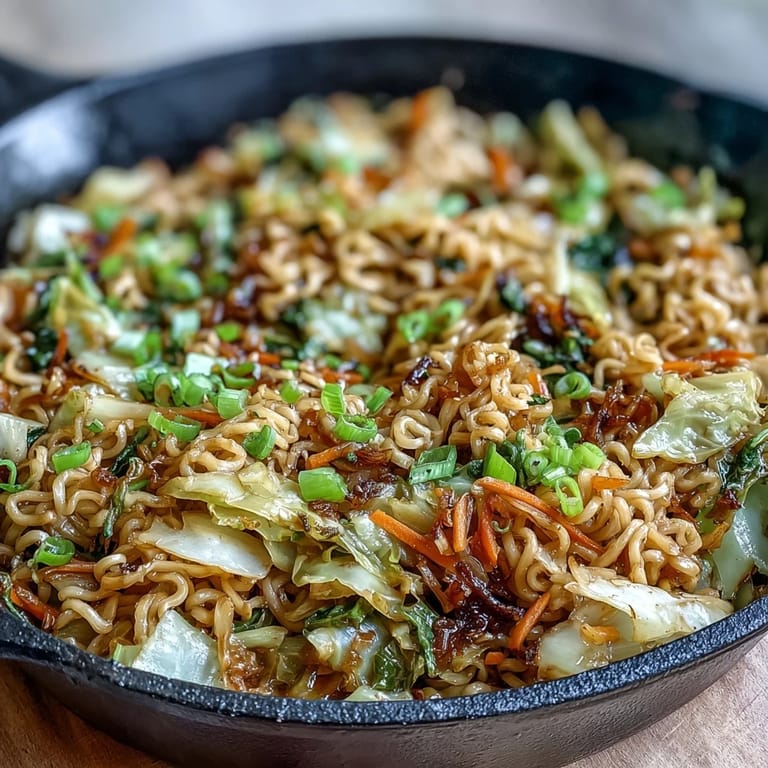
 Pin It
 My roommate burst through the door one night with nothing but a wrinkled cabbage and two ramen packs, insisting we could make dinner out of it. I was skeptical until the smell of ginger and garlic hit the pan, and suddenly that sad little cabbage turned golden and sweet at the edges. We ate straight from the skillet, laughing at how something so simple tasted better than most takeout. That night taught me you don't need a full pantry to make something genuinely good. Sometimes the best meals come from whatever's left in the fridge and a little heat.
I started making this during a particularly broke month when creativity in the kitchen wasn't optional. The first time I served it to friends, they asked for the recipe before they even finished their bowls. One of them still texts me photos whenever she makes it, usually with some wild addition like kimchi or leftover rotisserie chicken. It became our group's unofficial comfort food, the thing we'd make after long days or during impromptu gatherings. There's something about watching cabbage sizzle and soften that feels almost meditative.
Ingredients
- Green cabbage: Slice it thin so it cooks quickly and gets those crispy browned edges that make this dish addictive.
- Carrot: Julienne it for sweetness and color, plus it adds a little crunch that contrasts nicely with the noodles.
- Scallions: Separate the whites and greens because the whites need time to cook and release their bite, while the greens stay fresh and sharp as garnish.
- Garlic and ginger: These two are your flavor foundation, so mince them fine and let them sizzle until your kitchen smells like a street market.
- Instant ramen noodles: Toss those seasoning packets because you're building something better from scratch.
- Soy sauce and oyster sauce: This duo gives you salty depth and a hint of sweetness that clings to every strand of noodle.
- Toasted sesame oil: Just a tablespoon adds nutty richness that makes everything taste more complete.
- Rice vinegar and sugar: They balance the salt with a touch of tang and sweetness, rounding out the sauce.
- Chili flakes: Optional but worth it if you like a gentle heat that builds as you eat.
- Vegetable oil: Use something neutral with a high smoke point so your vegetables can get properly caramelized.
Tired of Takeout? 🥡
Get 10 meals you can make faster than delivery arrives. Seriously.
One email. No spam. Unsubscribe anytime.
Instructions
- Cook the noodles:
- Boil your ramen according to the package time, then drain them well and set them aside. They'll finish cooking in the skillet later, so don't worry if they seem a little firm.
- Mix the sauce:
- Whisk together soy sauce, oyster or mushroom sauce, sesame oil, rice vinegar, sugar, and chili flakes in a small bowl. Having this ready means you can move fast once the vegetables hit the pan.
- Start the aromatics:
- Heat your oil in a large skillet or wok over medium-high heat, then add garlic, ginger, and the white parts of the scallions. Stir them around for about a minute until they smell incredible and start to soften.
- Fry the vegetables:
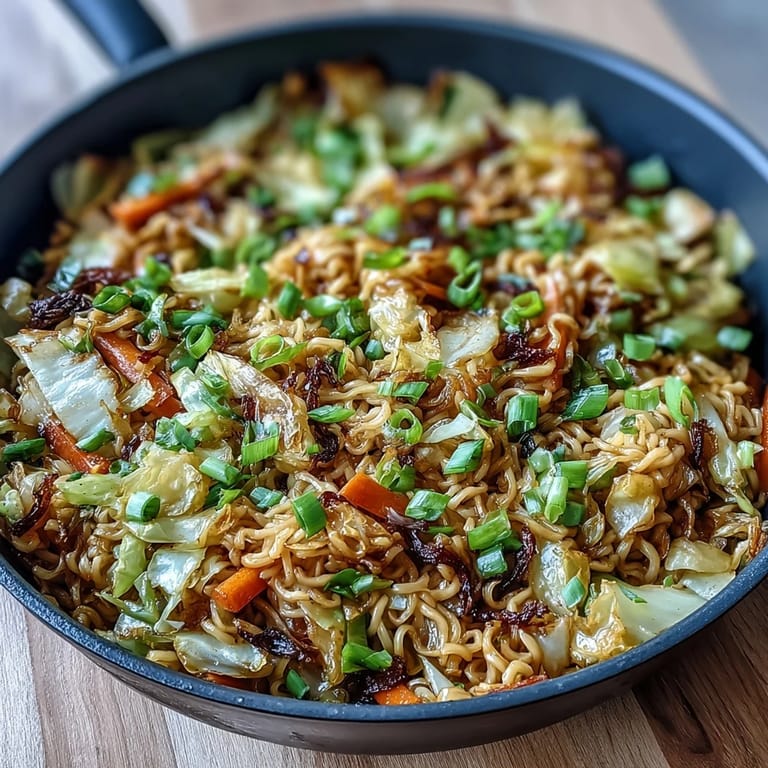
- Toss in the cabbage and carrot, then let them sit for a moment before stirring so they can brown in spots. Stir-fry for 4 to 5 minutes until the cabbage is tender but still has some bite and those edges are golden.
- Combine everything:
- Add the cooked noodles to the skillet and pour in your sauce. Toss everything together for 2 to 3 minutes, making sure every strand gets coated and the flavors meld.
- Finish and serve:
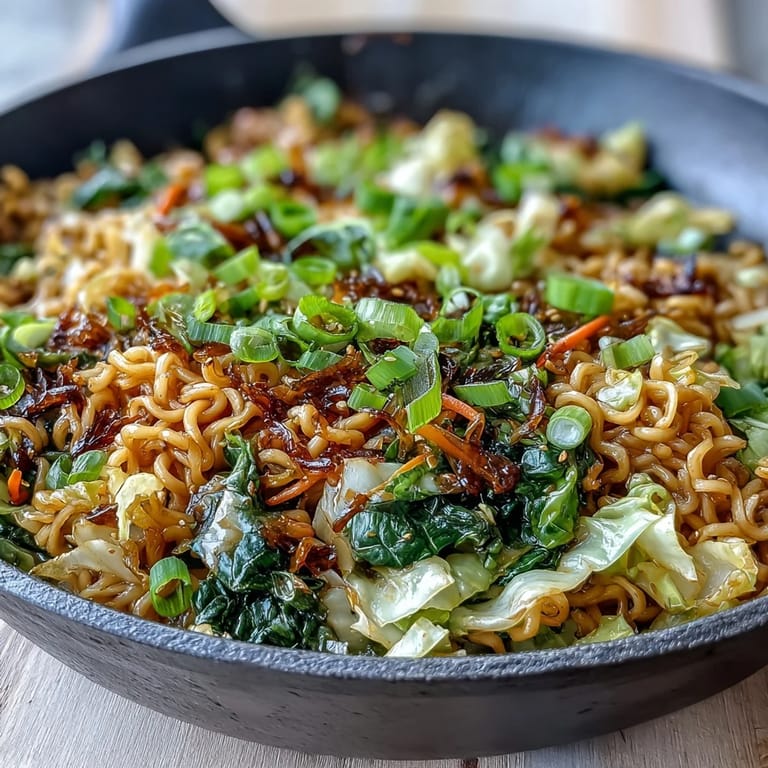
- Pull the skillet off the heat, scatter the green parts of the scallions over the top, and serve it while it's still steaming. The contrast between the hot noodles and the fresh scallions is part of the magic.
 Pin It
 One rainy evening, I made this for my neighbor who'd just moved in and didn't have her kitchen set up yet. She sat at my counter, quiet at first, then started talking about her grandmother's stir-fries back home. We didn't share a language for food, but somehow this simple bowl of cabbage and noodles became a bridge. She's since moved away, but I think of her every time I hear that sizzle.
Making It Your Own
This recipe is a template more than a rulebook. I've added sliced mushrooms when I had them, tossed in snap peas for extra crunch, and even stirred in leftover roasted sweet potato. A fried egg on top turns it into a full meal, and crumbled tofu works if you want to keep it vegan. The sauce is forgiving enough to handle whatever vegetables are about to go bad in your crisper.
Timing and Texture
The key to this dish is speed and high heat. You want the cabbage to soften but still have structure, and the noodles to pick up flavor without turning mushy. I learned the hard way that medium heat won't give you those browned edges, and low heat just makes everything soggy. Keep your ingredients prepped and close by because once you start cooking, it all happens fast.
Serving Suggestions
I usually eat this straight from the skillet, but it also looks great in wide shallow bowls with extra scallions and a sprinkle of sesame seeds. If you're feeding a crowd, double the recipe and keep it warm in a large serving dish. It's also surprisingly good cold the next day, eaten straight from the fridge with chopsticks.
- Top with toasted sesame seeds or crushed peanuts for extra texture.
- Serve alongside pickled vegetables or a simple cucumber salad.
- Drizzle with extra sesame oil or a squeeze of lime right before eating.
 Pin It
 This dish has saved me on more late nights than I can count, and it never feels like settling. It's proof that good food doesn't need to be complicated, just made with a little attention and heat.
Recipe FAQs
- → Can I make this dish ahead of time?
It's best served immediately for optimal texture, but you can prep ingredients in advance. Store cooked noodles and chopped vegetables separately, then stir-fry when ready to serve.
- → What type of cabbage works best?
Green cabbage is ideal for its crisp texture and mild flavor. Napa cabbage also works well and cooks faster, though it will be less crunchy.
- → How do I prevent the noodles from sticking together?
After draining, toss noodles with a small amount of oil. Don't overcook them initially, as they'll continue cooking when stir-fried with the vegetables.
- → Can I use fresh ramen noodles instead of instant?
Absolutely! Fresh ramen noodles are an excellent upgrade. Cook according to package directions and follow the same stir-fry method for delicious results.
- → What can I substitute for oyster sauce?
Mushroom sauce offers a similar umami depth for vegan versions. Hoisin sauce or additional soy sauce with a pinch of sugar also work well as alternatives.
- → How can I add more protein to this dish?
Top with a fried or soft-boiled egg, add cubed firm tofu, or toss in edamame. Cooked chicken, shrimp, or beef can also be mixed in for non-vegetarian options.