 Pin It
 There's something about creating a cake for a First Communion that makes your hands shake a little—not from nerves, but from the weight of the moment. I was decorating one of these at my kitchen counter on a Saturday morning when my neighbor knocked and asked what I was making, and I found myself explaining the theology of white fondant roses like I'd studied it my whole life. The truth is, this cake chooses you as much as you choose it; it demands elegance but rewards patience, and somewhere between the vanilla sponge and those delicate petals, you realize you're not just baking—you're creating a memory.
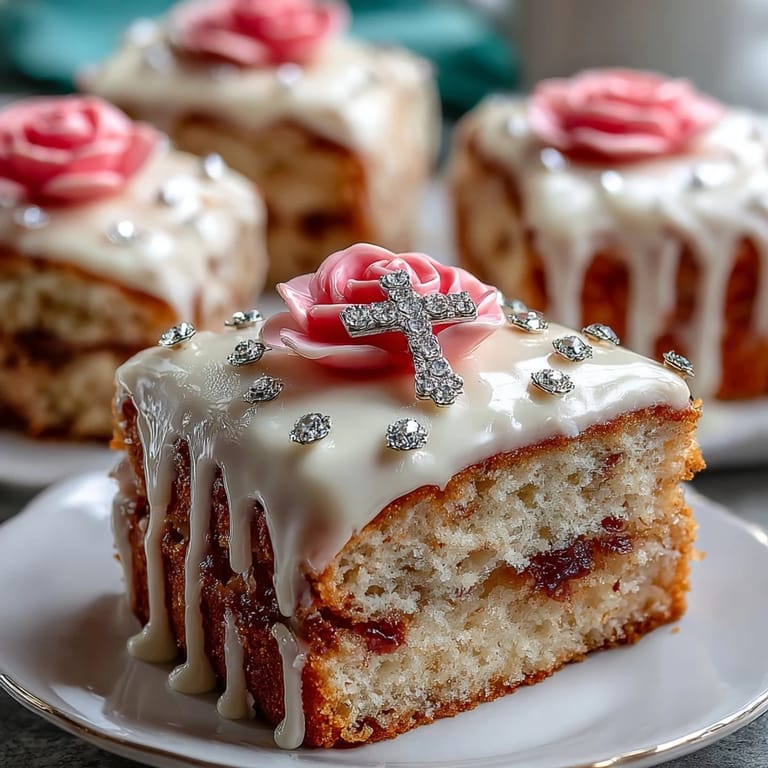
I baked this cake the morning of my goddaughter's First Communion, and I remember her mother calling me at 6 a.m. in a minor panic about whether everything would be ready in time. By noon, as I placed that cross topper on top, I understood why she was nervous—this wasn't just dessert, it was a statement, a blessing made edible. When she walked into the kitchen and saw it, she didn't say anything for a full ten seconds, just stood there, and that silence was worth every minute of piping and fondant work.
Ingredients
- All-purpose flour (2 ½ cups): Use the spoon-and-level method instead of scooping straight from the bag, as this keeps your cake tender and prevents dense layers.
- Baking powder (2 ½ tsp): This is your guarantee of lift; don't skimp or substitute with baking soda unless you're also adding acid.
- Unsalted butter (1 cup for sponge, 1 ½ cups for frosting): Room temperature is non-negotiable—cold butter won't cream properly, and your batter will be grainy.
- Granulated sugar (2 cups): The creaming stage with butter takes exactly three minutes of vigorous beating; you'll see it transform from sandy to pale yellow.
- Eggs (4 large): Room temperature eggs incorporate smoothly; cold eggs can break the emulsion and leave your batter separated.
- Pure vanilla extract (1 tbsp for sponge, 2 tsp for frosting): The difference between pure and imitation is like comparing a whisper to a shout.
- Whole milk (1 cup): Room temperature, like the eggs; the alternating method with flour keeps gluten development minimal and ensures a tender crumb.
- Powdered sugar (5 cups): Sift it before measuring, and the buttercream will be silky instead of lumpy.
- White fondant (16 oz): High-quality fondant is smoother and more forgiving; cheaper versions can be grainy and crack when rolled.
- Edible pearls or silver dragees: These aren't essential, but they catch the light and add a whisper of sophistication that photographs beautifully.
Tired of Takeout? 🥡
Get 10 meals you can make faster than delivery arrives. Seriously.
One email. No spam. Unsubscribe anytime.
Instructions
- Set the stage:
- Preheat your oven to 350°F and line two 8-inch round pans with parchment paper; this takes two minutes but saves you from cake stuck to the pan later. Have everything at room temperature—eggs, milk, butter—because this is where temperature becomes chemistry.
- Build your dry team:
- In a medium bowl, whisk flour, baking powder, and salt together; this distributes the leavening evenly and aerates the flour slightly.
- Cream to pale clouds:
- Beat butter and sugar for exactly three minutes until the mixture looks pale and fluffy, like sweetened clouds. This aerates the batter and is the foundation of your cake's tender crumb.
- Add eggs with confidence:
- Drop in eggs one at a time, beating well after each; rushing this step leads to a separated, greasy batter that won't rise properly. Vanilla extract goes in last, and you'll smell the shift immediately.
- The gentle fold:
- With the mixer on low speed, alternate flour mixture and milk, starting and ending with flour; overmixing develops gluten and creates a tough cake, so stop as soon as you see no white streaks.
- Into the heat:
- Divide batter equally between pans and smooth the tops with an offset spatula. Bake 30 to 35 minutes—the toothpick should come out clean but not completely dry.
- Cool with patience:
- Let cakes rest in pans for ten minutes before turning out; this prevents crumbling, and you'll hear them release from the pan slightly as they cool.
- Make the buttercream magic:
- Beat softened butter until it's creamy and pale, then gradually add sifted powdered sugar—this prevents lumps and takes about four minutes of steady beating. Add vanilla, salt, and milk one tablespoon at a time until you reach spreading consistency.
- The crumb coat strategy:
- Place one cake layer on your board, spread a thin layer of buttercream between the layers, then coat the entire cake in a thin crumb coat; refrigerate for twenty minutes so loose crumbs don't disturb your final layer.
- The smooth finish:
- Apply the final buttercream layer with an offset spatula, using a bench scraper to create clean edges if you want a polished look.
- Shape fondant roses:
- Roll fondant to 1/8-inch thickness, cut small circles, and shape them petal by petal, starting with a tiny ball at the center and wrapping thin-stretched petals around it; the seventh or eighth petal, everything clicks into place. These can be made a day ahead and stored in an airtight container.
- Arrange and adorn:
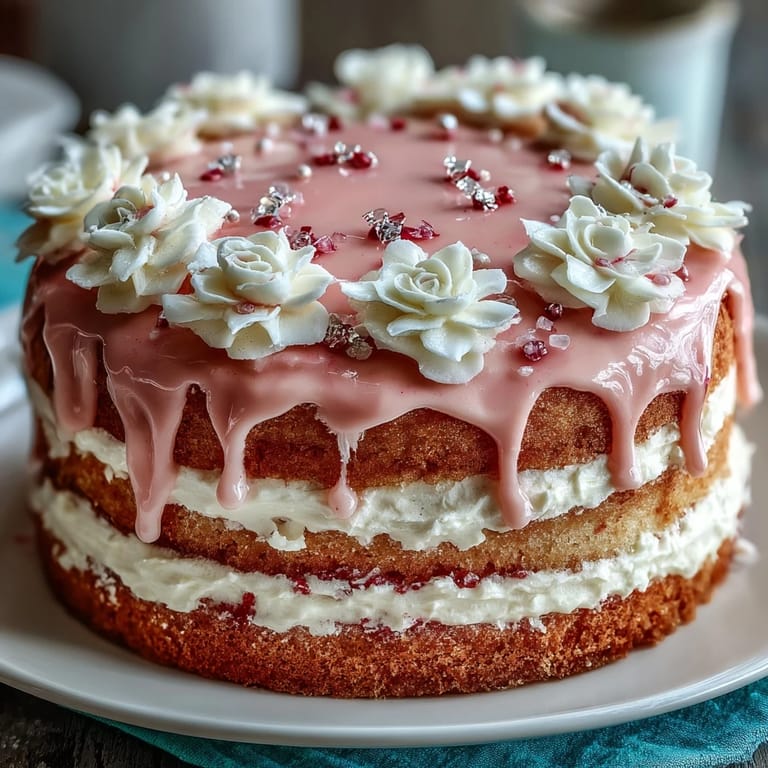
- Place fondant roses and optional green leaves on the frosted cake however your eye guides you; there's no wrong way, only your way. Scatter edible pearls in the spaces between roses for a soft shimmer.
- Crown with intention:
- Place the cross topper at the center or off to one side, depending on your design vision; step back and let yourself feel the transformation.
- Chill before serving:
- Refrigerate until serving time, which allows flavors to meld and the buttercream to set completely.
 Pin It
 What stays with me about this cake isn't just how beautiful it looked on the table, but how the birthday girl's younger brother asked if he could have a rose to take home, as though it were a real flower to press in a book. Her mother laughed and let him pick one, and I realized this cake had done something beyond feeding people—it had created a small, tender moment that nobody planned.
The Science of a Tender Crumb
The secret to a cake that doesn't dry out or crumble is respecting the creaming stage and the alternating method. When you cream butter and sugar properly, you're incorporating tiny air bubbles that expand in the oven and create lift. The alternating method—flour, milk, flour, milk, flour—keeps the gluten network from developing too much, which is what you want; overmixing creates a tough, dense cake that tastes more like bread. I learned this the hard way by impatient mixing, and the difference was startling enough that I've never rushed it again.
Decorating Without Intimidation
Fondant roses sound more complicated than they actually are, and once you shape your third or fourth petal, your hands understand what your mind was overthinking. The key is thinness—each petal should be thin enough to see light through, which requires gentle finger work and maybe a small pasta maker if you have one. I watch people get nervous about this step, but the beautiful thing about fondant is that even a wonky rose looks intentional and charming on a cake. Start with one test rose on a piece of parchment; if it's perfect, wonderful, and if it's not, you've learned exactly what your next one should be, and the final cake will have roses that tell the story of your effort and care.
Timing and Storage
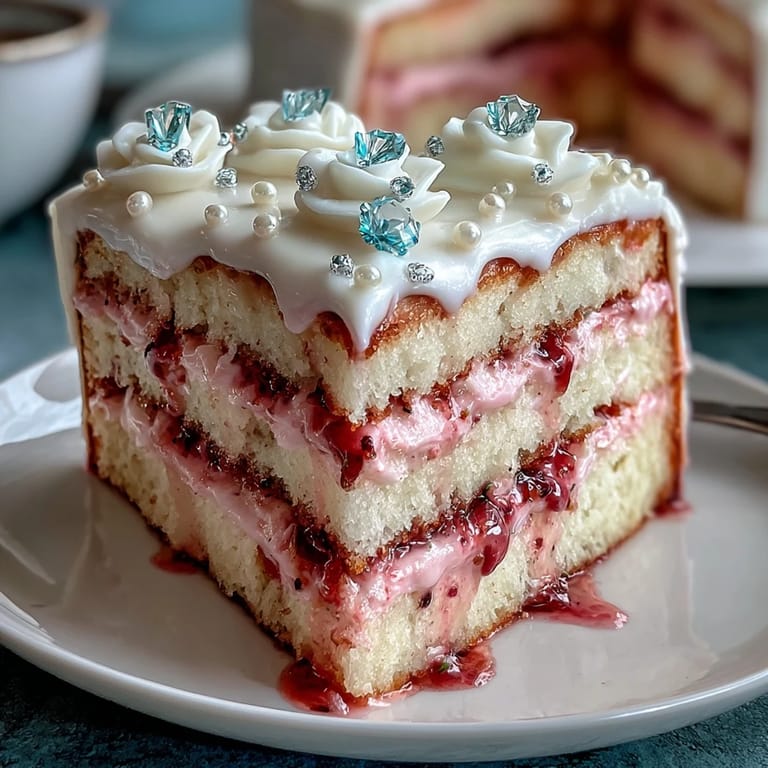
This cake actually improves after twenty-four hours, when the layers have settled and flavors have married together; the vanilla deepens and the buttercream sets into a perfect slicing consistency. You can bake the layers three days ahead and store them wrapped tightly in plastic wrap, frost the cake two days ahead, and add fondant roses the morning of serving. The cake keeps beautifully in a cool room or refrigerator for up to five days, and if you need to transport it, use a cake carrier or a sturdy cardboard box lined with non-slip shelf liner to prevent sliding.
- Bake layers early and freeze them if you're decorating more than two days ahead; frozen layers are actually easier to level and frost because they're more stable.
- Keep fondant roses in an airtight container at room temperature away from humidity, and they'll last for a week or more.
- If the cake begins to sweat in the fridge, let it sit at room temperature for thirty minutes before serving so the flavors brighten and the texture softens to that perfect tender bite.
 Pin It
 This cake has become my go-to for celebrations that matter—the ones where a simple sheet cake won't do, but you also don't want to spend your entire week in the kitchen. It's elegant enough to photograph, delicious enough to eat slowly and savor, and simple enough that you can actually enjoy the process instead of dreading it. Make this cake and let yourself be surprised by what your hands and heart can create together.
Recipe FAQs
- → How do I make the vanilla sponge moist?
Using room temperature butter, eggs, and milk combined with proper mixing techniques ensures a tender and moist sponge. Avoid overmixing once flour is added to maintain lightness.
- → What is the best way to shape fondant roses?
Roll small balls of fondant, flatten each into petal shapes, then layer and shape them carefully to resemble delicate roses. Keeping fondant slightly pliable helps during molding.
- → Can I substitute ingredients for dietary needs?
Yes, using a gluten-free flour blend replaces all-purpose flour for gluten sensitivity, and half of the butter in the sponge can be swapped with vegetable oil for a lighter texture.
- → How do I achieve smooth buttercream frosting?
Beat butter until creamy before gradually adding sifted powdered sugar with vanilla and a pinch of salt. Adding milk or cream slowly helps reach the perfect spreading consistency.
- → What is the best way to chill the cake during prep?
After applying a crumb coat, chilling the cake for 20 minutes firms up the frosting layers, making it easier to apply a smooth final coat and add decorations.
- → Are there optional flavors to enhance the sponge?
Adding lemon zest or almond extract to the batter provides additional fragrance and flavor variations without altering the cake's classic profile.