 Pin It
 The first whisper of spring always seems to call for carrot cake in my kitchen, but this Easter version came together almost by accident on a breezy afternoon when I realized I had more carrots than fridge space. The gentle scrape of carrots against the grater, the shimmer of candied curls, and that first slice through a tender, spice-laden crumb—everything about this cake feels celebratory without being fussy. One year, I got carried away trying to perfect the carrot curls and ended up with a kitchen that smelled like sugared carrots for hours. Even so, the cheerful mood this cake inspires tends to outweigh the mess. There's just something about its homey spirit and gorgeous finish that makes it a staple for gatherings and quiet evenings alike.
I still laugh remembering the one Easter when my niece 'helped' by sneaking spoonfuls of frosting as I tried to decorate—by the time we finally sat down to dessert, her nose was powdered with sugar and the cake was nothing short of a masterpiece in chaos. It's exactly those little kitchen moments—shared tasks, imperfect layers, and stolen tastes—that turn a simple recipe into something memorable. Every slice of this carrot cake takes me back to that laughter and the flurry of icing-smeared fingers reaching for another candied curl.
Ingredients
- All-purpose flour: The backbone of your cake's structure—I've found sifting it first keeps the crumb tender and light.
- Baking powder & baking soda: Both are essential here for a tall, fluffy rise and just the right lift.
- Salt: A pinch makes the spices and sweetness bloom—don't skip it.
- Cinnamon, nutmeg, ginger: These warming spices round out the cake's personality; freshly ground where possible always perks up the flavor.
- Granulated & light brown sugar: This combo brings depth and moisture—packing the brown sugar gives the crumb extra richness.
- Vegetable oil: Keeps every bite moist and tender, plus it's more forgiving than butter for this type of cake.
- Eggs: Room temperature eggs blend best and give the cake its lift—set them out early or rest them in warm water if you're in a hurry.
- Vanilla extract: Just enough to smooth and mellow out the spices.
- Grated carrots: The star—finely grate for even moisture, and don't skimp (it looks like a mountain but it melts right in).
- Walnuts or pecans (optional): Toasted and chopped, these add crunch and flavor, but you can leave them out for a nut-free cake.
- Raisins (optional): Some say they're essential, others prefer a smooth crumb; I add them when my pantry allows for chewy little surprises.
- Cream cheese & unsalted butter: Both need to be soft for a fluffy, lump-free frosting—just a little patience makes all the difference.
- Powdered sugar: Always sifted, otherwise clumps can dull the smoothness of your frosting.
- Vanilla extract & salt (for frosting): The finishing touch for balance in each sweet tangy bite.
- Large carrots (for candied curls): Using a vegetable peeler helps get those dramatic ribbons that hold their shape.
- Granulated sugar & water (for candied curls): This simple syrup transforms carrot strips into a delicate, sparkly garnish.
Tired of Takeout? 🥡
Get 10 meals you can make faster than delivery arrives. Seriously.
One email. No spam. Unsubscribe anytime.
Instructions
- Get prepped:
- Set the oven to 350°F (175°C) and line two round cake pans with parchment so your cakes pop out easily—greasing is your silent insurance policy.
- Mix dry ingredients:
- In a bowl, whisk together the flour, baking powder, baking soda, salt, and all your spices; it's worth inhaling the scent before moving on.
- Blend the wet base:
- In a large bowl, whisk together both sugars and the oil, then work in the eggs one by one—listen for that satisfying 'plop' and beat each in until glossy, then stir in the vanilla.
- Bring it together:
- Add the dry mix to the wet ingredients in batches, stirring gently until just combined—stop once no flour streaks remain to keep the crumb tender.
- Add-ins:
- Fold in the grated carrots, then the nuts and raisins if you're using them; your arms might tire, but the flecks of orange are lovely to watch.
- Bake it up:
- Divide the batter evenly in your pans and bake 35–40 minutes; you'll know they're done when the kitchen smells sweetly spiced and a tester comes out clean.
- Cool down:
- Let cakes rest in their pans 10 minutes, then cool completely on a rack—impatience leads to sticky fingers (ask me how I know).
- Make candied carrot curls:
- While cakes cool, preheat the oven to 225°F (110°C), then shave carrots into ribbons using a peeler; simmer them in sugar syrup for 10 minutes and shape around a spoon handle before baking until set.
- Whip up frosting:
- Beat softened cream cheese and butter until smooth, then add sifted powdered sugar, vanilla, and salt—keep going until it's spreadable yet billowy.
- Assemble and decorate:
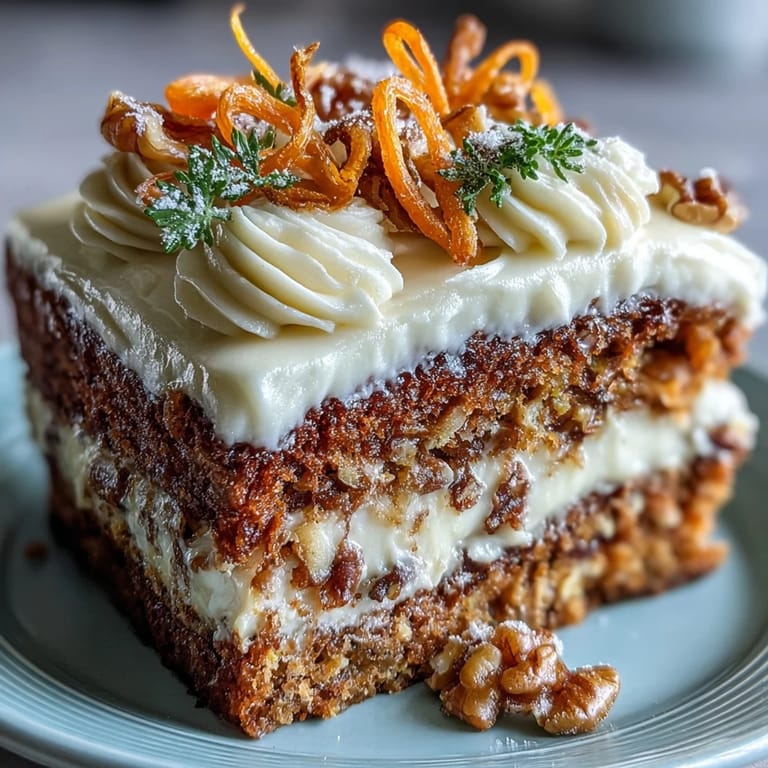
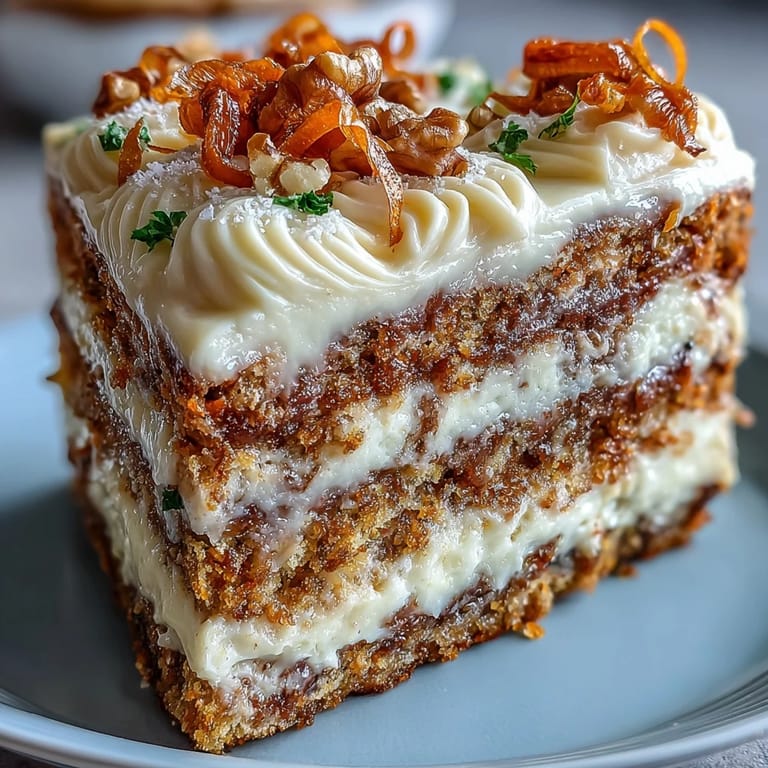
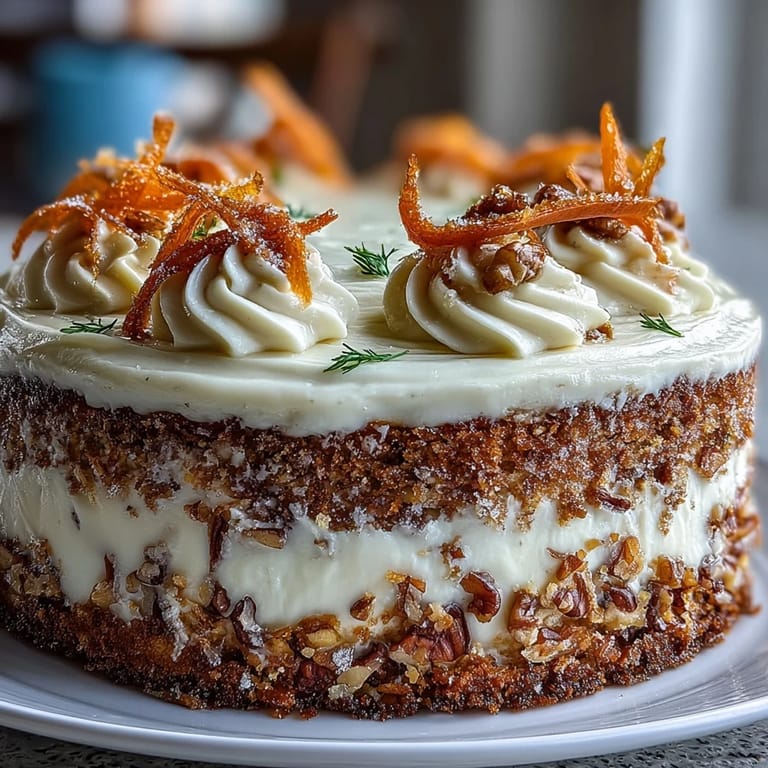
- Layer cake and frosting, then cover the outside generously before nestling the candied carrot curls atop for a flourish—step back and admire your work before slicing in.
 Pin It
 I'll never forget placing this carrot cake at the center of our spring table, sunlight glinting off its curls, and watching as hands reached in from every direction for their first slice. It was a small reminder that sometimes, celebration is as simple as a shared dessert and a bit of sticky-fingered joy.
On Making Candied Carrot Curls
The candied carrot curls always draw a little gasp—they look fancy but are less tricky than they seem. The key is simmering them just enough for that shine and baking until just pliable so they'll hold a curl yet stay soft to bite. If a few break, use the bits to sprinkle around the base; no one ever minds extra sparkle on their cake.
Let’s Talk About Frosting
There’s a magical moment when the cream cheese and butter come together perfectly smooth, gleaming and cloudlike—this is when I know the frosting will spread like a dream. Keep tasting and adjusting the sugar for tanginess; sometimes I add a pinch more salt just to brighten everything up. A generous swoop over the sides hides any baking imperfections and gives that bakery finish at home.
Keeping Your Cake Fresh & Serving
A refrigerated carrot cake slices more cleanly, and the cream cheese frosting stays tidy even on warm days. If you make it ahead, pull it out about 20 minutes before serving so the flavors wake up. For leftovers, a gentle wrap in parchment keeps the cake moist without sticking.
- Chill before slicing for neat layers.
- Store decorated cake in the fridge up to 4 days.
- Add extra carrot curls just before serving for the best texture.
 Pin It
 May this cake bring as much color and cheer to your kitchen as it has to mine—even if you end up with a little powdered sugar on your nose. Happy baking and even happier sharing!
Recipe FAQs
- → How do I keep the cake moist?
Use oil rather than butter for a more tender crumb, avoid overmixing the batter, and remove the cakes as soon as a toothpick comes out clean. Brushing layers with a light sugar syrup before frosting can add extra moisture.
- → What's the easiest way to make candied carrot curls?
Peel carrots into long thin strips with a vegetable peeler, simmer in equal parts sugar and water briefly, then lift, twist around a spoon handle and dry in a low oven until set but still pliable.
- → Can I omit or swap the nuts?
Yes. Toasted walnuts add warmth, but you can substitute pecans or leave them out for a nut-free version. Toasting nuts enhances flavor and crunch before folding them in.
- → How do I prevent the frosting from sliding?
Make sure the layers are completely cooled and refrigerate briefly before frosting. Apply a thin crumb coat, chill to set, then finish with a final layer of frosting for stability.
- → Can I make the layers ahead or freeze them?
Yes. Bake and cool the layers, wrap tightly and freeze for up to one month. Thaw in the refrigerator overnight before frosting. Assembled and frosted cakes keep refrigerated for 3–4 days.
- → How do I know when the cake is done?
Insert a toothpick into the center; it should come out clean or with a few moist crumbs. Avoid a fully wet toothpick, which indicates underbaking, and test near the center for accuracy.