 Pin It
 A few years back, I was standing in my kitchen on a Tuesday evening with absolutely nothing planned for dinner when I spotted a half-empty can of chickpeas in the pantry. That moment of mild panic—you know the one—turned into something wonderful. I grabbed a handful of spices, some coconut milk, and whatever vegetables were lurking in the fridge, threw them all into one pot, and ended up with something so warm and satisfying that I've made it countless times since. This curry became my answer to those nights when I need real food fast, but I still want to feel like I'm taking care of myself.
I made this for my sister last year when she was going through a rough patch, and watching her shoulders relax as she ate was everything. She kept asking for the recipe, and I realized that sometimes the most meaningful meals aren't complicated—they're just made with attention and care. Now whenever I simmer this curry, I think about how food can be both nourishment and comfort at exactly the same time.
Ingredients
- Yellow onion, diced: This is your foundation—the sweetness builds the whole flavor base, so don't skip the few minutes of letting it turn translucent and soft.
- Garlic and ginger, fresh: These two are non-negotiable if you want that authentic warmth; mincing them finely lets them distribute evenly through the sauce.
- Red bell pepper, diced: It adds a gentle sweetness and softness that balances the spice beautifully.
- Baby spinach or kale: Stir this in at the very end so it stays bright and retains some texture instead of melting into mush.
- Carrot, diced (optional): If you add it, it becomes unexpectedly sweet as it cooks down.
- Chickpeas, canned: Drain and rinse them to remove excess sodium and that metallic taste that sometimes lingers.
- Coconut milk, full-fat: This is where the richness comes from; light versions work but the sauce won't feel quite as luxurious.
- Vegetable broth: Use quality broth if you can—it makes a real difference in the final flavor.
- Diced tomatoes, canned: They add brightness and a subtle tartness that keeps the curry from becoming one-dimensional.
- Curry powder, cumin, turmeric, smoked paprika: Each spice plays its own role, so don't just dump them in; toast them briefly so they wake up.
- Chili flakes: Start with half a teaspoon; you can always add more heat, but you can't take it back.
- Coconut oil or olive oil: Either works, but coconut oil echoes the curry's tropical notes if you're after that extra layer.
Tired of Takeout? 🥡
Get 10 meals you can make faster than delivery arrives. Seriously.
One email. No spam. Unsubscribe anytime.
Instructions
- Heat and soften the onion:
- Pour your oil into a large pot over medium heat and let it shimmer for a moment. Add the diced onion and let it sit for a few minutes before stirring—you want those edges to turn golden and the inside to become almost translucent and sweet.
- Build the aromatics:
- Once the onion is soft, stir in the garlic, ginger, and red bell pepper. After about two minutes, the entire kitchen should smell incredible, which is your signal you're doing it right.
- Toast the spices:
- This is a small but crucial step—add all the dry spices and stir constantly for just one minute. The heat will release their essential oils and deepen their flavor in ways that cold spices never can.
- Combine everything:
- Add the tomatoes, coconut milk, broth, chickpeas, and carrot if you're using it. Stir everything together so the spices are fully distributed and nothing is clumping at the bottom.
- Simmer gently:
- Bring it to a simmer, then lower the heat and cover the pot. Let it bubble quietly for fifteen minutes, stirring occasionally. The vegetables will soften and the flavors will begin to marry together into something cohesive and complex.
- Finish with greens:
- Stir in the spinach or kale and let it simmer uncovered for just two to three minutes until it wilts. Taste and adjust salt and spice—this is your moment to make it exactly right.
- Serve with intention:
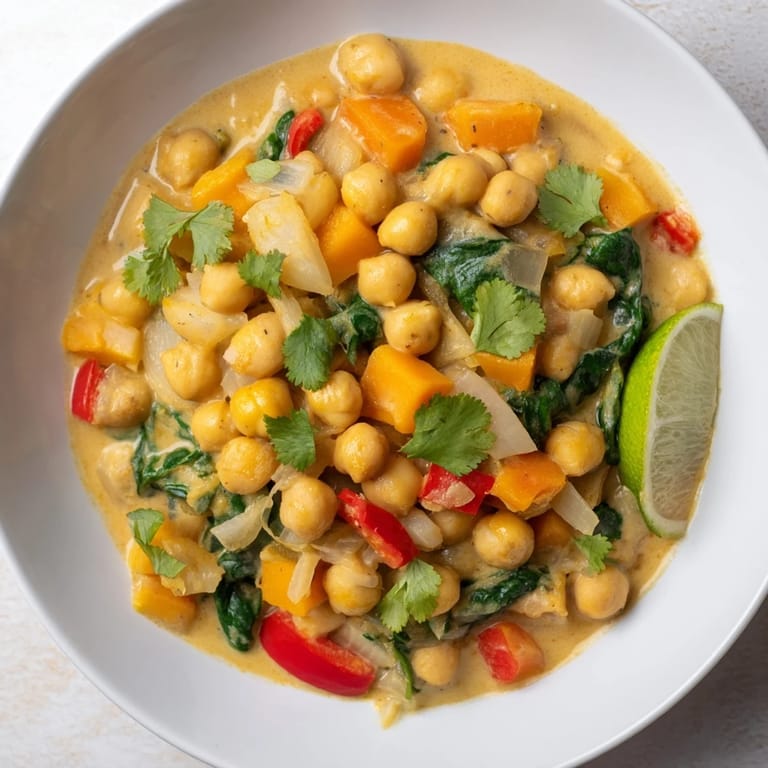
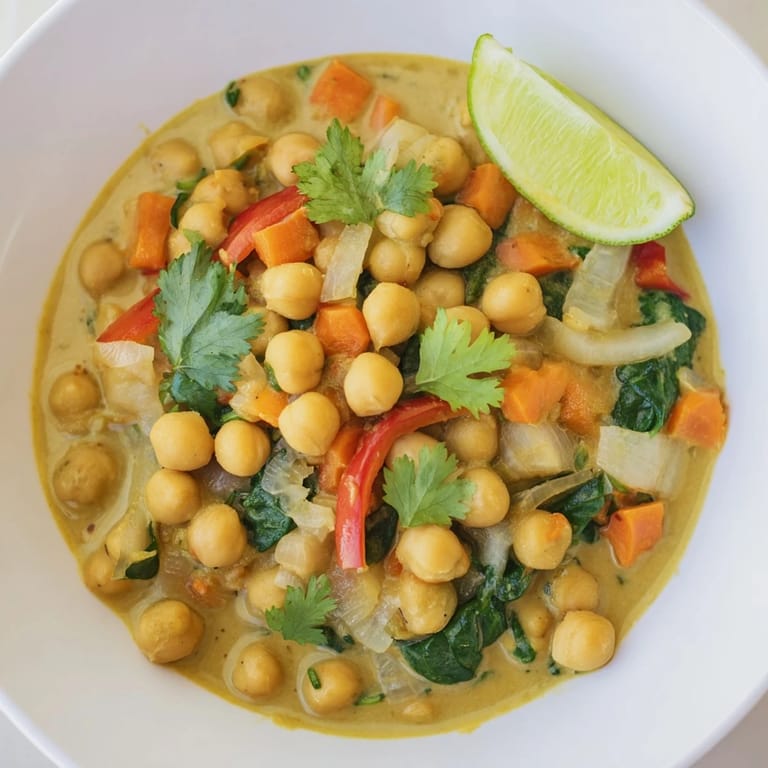
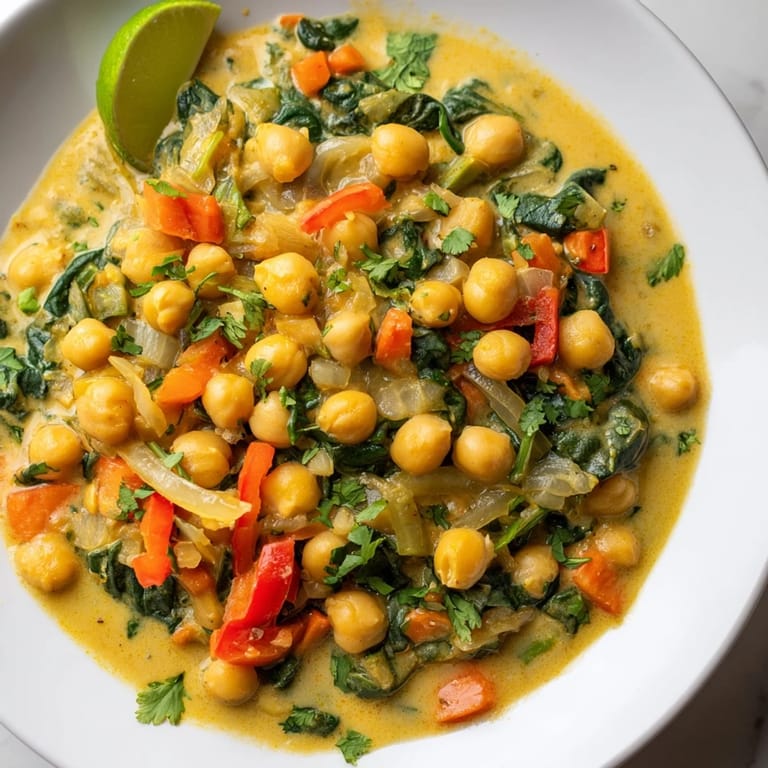
- Ladle it into bowls and finish with fresh cilantro and a squeeze of lime. The brightness of the lime cuts through the richness and wakes up every flavor.
 Pin It
 There's something almost meditative about watching a pot transform over twenty-five minutes—vegetables softening, spices releasing their perfume, everything coming together into something nourishing and complete. This dish taught me that some of the best meals don't require fussing; they just need attention and good ingredients working together.
Variations to Make It Your Own
I've added roasted cauliflower, diced sweet potato, and even a handful of frozen peas to this curry depending on what was in my kitchen. The structure stays solid no matter what you swap in—it's flexible enough to adapt without falling apart. Once you've made it once, you'll start seeing vegetables and proteins you could throw into it, and that's when it becomes less a recipe and more a formula you own.
Storage and Reheating
This curry actually tastes better the next day after the spices have had time to settle into the sauce. Store it in an airtight container in the fridge for up to four days, and when you reheat it, do so gently over low heat with a splash of broth to loosen it up again. It also freezes beautifully for up to three months, which means you can make a double batch and have comfort waiting for you on a future difficult day.
What to Serve It With
I usually make jasmine rice or grab naan from the grocery store, but honestly, this curry is rich enough to eat on its own if you want something lighter. A simple green salad alongside it adds brightness and cuts through the richness without competing with the star of the show. Here are three ways I've loved serving it.
- Spoon it over fluffy jasmine or basmati rice so the rice soaks up all the golden sauce.
- Tear off pieces of warm naan and use them to scoop the curry—it becomes less of a side dish and more of an active part of eating.
- Serve it in a bowl on its own with just a wedge of lime and some cilantro if you're keeping things simple.
 Pin It
 This curry is proof that the best meals aren't about complexity—they're about thoughtfulness and good ingredients coming together with intention. Once you make it, it becomes yours to adjust and adapt however your kitchen needs.
Recipe FAQs
- → Can I use other greens instead of spinach?
Yes, kale or Swiss chard can be substituted for spinach for a slightly different texture and flavor.
- → How can I add more protein to this dish?
Adding cubed tofu or tempeh during cooking boosts the protein content while maintaining a plant-based profile.
- → Is it possible to adjust the heat level?
Absolutely, chili flakes can be added or omitted to suit your preferred spice tolerance.
- → What is the best way to serve this dish?
Serve hot garnished with fresh cilantro and lime wedges, alongside jasmine or basmati rice or warm naan bread.
- → Which oils work best for sautéing the vegetables?
Coconut oil or olive oil are ideal to enhance the aroma and complement the spices during sautéing.