 Pin It
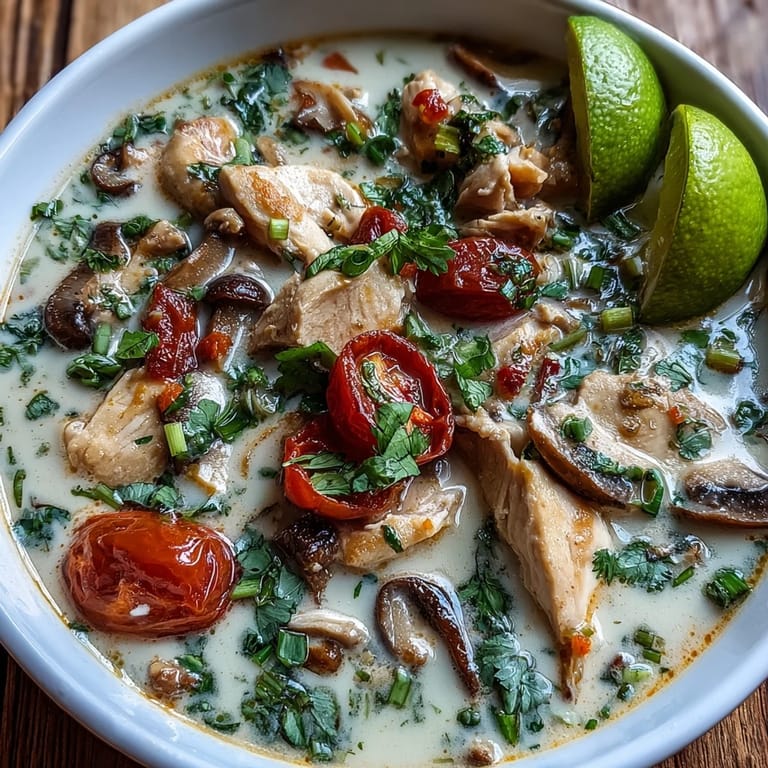
 The rain pounded against my kitchen window as I stirred the fragrant Tom Kha Gai soup simmering on my stove. I had first encountered this magical Thai coconut soup at a tiny restaurant tucked away in Bangkok's bustling streets, where the owner insisted I learn the delicate balance of sour, spicy, and sweet. Back home, I struggled for months to recreate that perfect harmony until a Thai cooking instructor showed me how crushing the lemongrass properly releases its essential oils. Now the comforting aroma of this soup instantly transports me back to those steam-filled streets whenever I need a dose of culinary escapism.
Last winter when my cousin visited during a particularly brutal cold snap, I served this soup and watched his expression transform from polite interest to genuine delight. Through chattering teeth, he declared it was like drinking liquid sunshine. We sat huddled at the kitchen island, steam rising from our bowls, as the conversation flowed easier with each spoonful. By the third bowl, he was scribbling down the recipe while confessing he had always found Thai food intimidating to cook at home.
Ingredients
- Lemongrass: The woody stalks might seem intimidating, but they create the backbone of authentic flavor - I learned to smash them firmly with the flat side of my knife to release their citrusy oils before dropping them into the broth.
- Galangal: This knobby root looks similar to ginger but offers a sharper, more citrusy flavor that cannot be perfectly replicated - when I cant find it fresh, I substitute ginger but add a touch more lime zest to compensate.
- Coconut Milk: Always use full-fat for this soup as the richness creates that silky mouthfeel that makes Tom Kha Gai so luxurious - I discovered the hard way that light versions separate and produce a thin, disappointing result.
- Fish Sauce: This pungent liquid might smell alarming in the bottle, but it transforms in the cooking process to create that elusive umami depth that makes you wonder why the soup tastes so good without being able to identify why.
- Thai Bird's Eye Chilies: These tiny peppers pack serious heat, so I always start with one less than the recipe suggests and add more after tasting - crushing them slightly releases just enough spice without overwhelming the delicate coconut base.
Tired of Takeout? 🥡
Get 10 meals you can make faster than delivery arrives. Seriously.
One email. No spam. Unsubscribe anytime.
Instructions
- Infuse the Broth:
- Bring your chicken stock to a gentle bubble, not a rolling boil, before adding the lemongrass, kaffir lime leaves, galangal, chilies, garlic, and shallots. The kitchen will begin filling with a fragrant steam that tells you youre on the right track.
- Cook the Chicken:
- Slide those thin slices of chicken breast into the aromatic broth and watch them transform from pink to opaque white. Theyll cook quickly in about 5-7 minutes, so stay nearby and resist the urge to raise the heat.
- Add Richness:
- Pour in the coconut milk with a gentle hand, stirring slowly to create those beautiful swirls of creamy white against the golden broth. This is when I always pause to appreciate the visual transformation happening in my pot.
- Introduce the Vegetables:
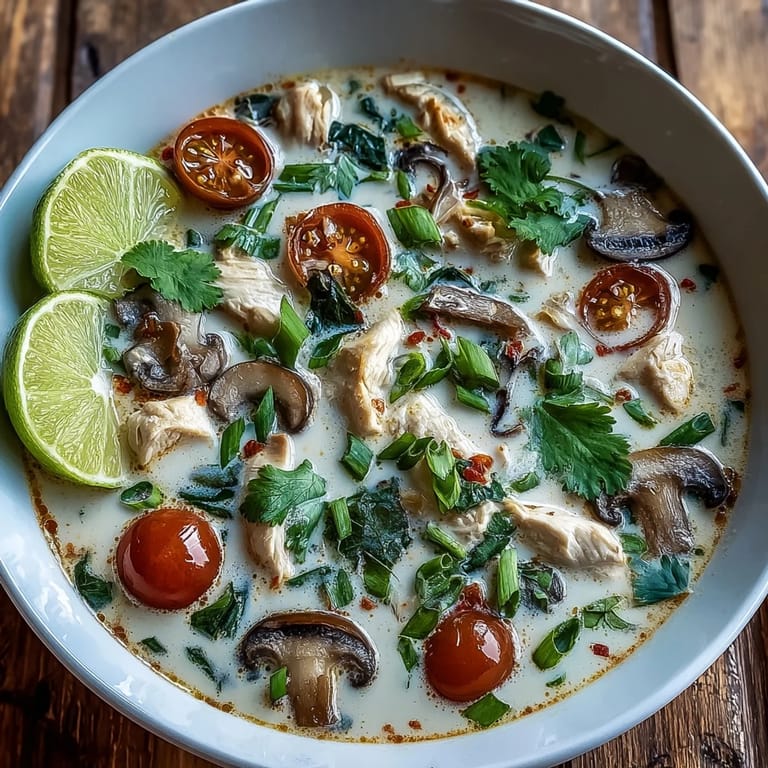
- Add your mushrooms and cherry tomatoes, letting them soften just enough to absorb the flavors without becoming mushy. The tomatoes will contribute little bursts of acidity that brighten each spoonful.
- Balance the Flavor:
- This is where the magic happens as you add fish sauce, lime juice, palm sugar, and salt. Take your time tasting and adjusting, remembering that these four elements should dance together without any single one leading too forcefully.
- Serve with Intention:
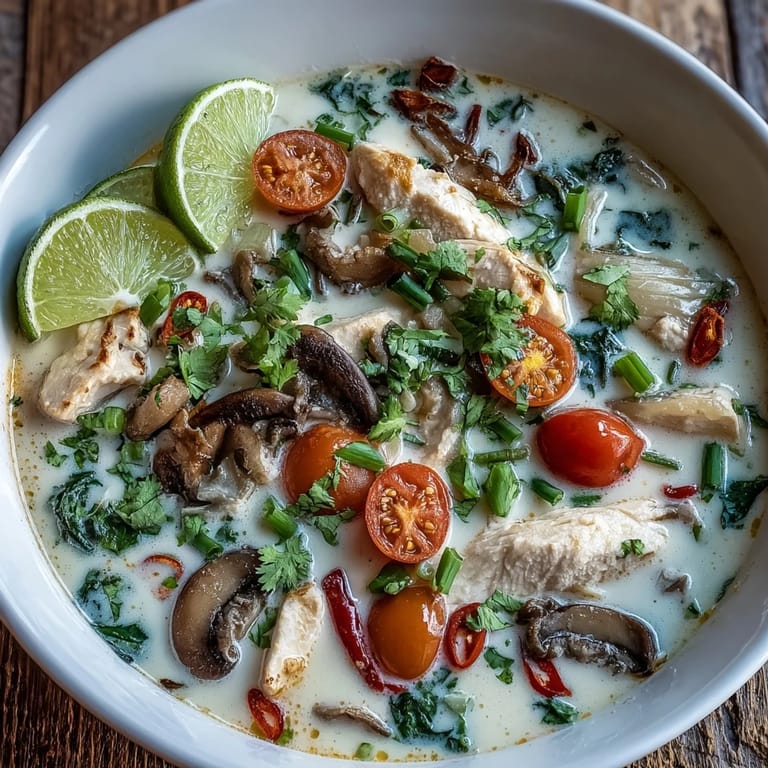
- Ladle the steaming soup into warmed bowls, making sure each serving gets a fair distribution of chicken, mushrooms, and tomatoes. The final garnishes of cilantro, green onions, and lime wedges arent just pretty additions but essential brightness that completes the flavor profile.
 Pin It
 On my birthday last year, when asked what special meal I wanted, I surprised everyone by requesting this soup instead of something more celebratory. As we gathered around the table, bowls steaming, my partner revealed hed secretly learned to make it himself, following my dog-eared recipe card with all my scribbled notes in the margins. Watching him ladle it confidently into my favorite blue ceramic bowls, I realized this simple soup had become more than just dinner - it had become a love language between us, a shared experience of flavor and comfort that needed no translation.
The Art of Balancing Flavors
Thai cooking taught me that perfection lies in the balance of five key elements: sour, sweet, salty, spicy, and creamy. In this soup, each ingredient plays its part in this delicate harmony - lime juice brings sourness, palm sugar offers subtle sweetness, fish sauce delivers saltiness, chilies provide heat, and coconut milk rounds everything with creamy richness. I used to make the mistake of adding everything at once, but now I introduce each element gradually, tasting as I go, like tuning an instrument until the whole orchestra plays in perfect harmony. My Thai cooking instructor would say if youre uncertain, add the seasonings at three-quarters strength, then adjust at the end when all flavors have had time to meld together.
Adapting for Dietary Needs
When my vegetarian sister visits, I transform this soup by swapping chicken for firm tofu cubed and briefly pan-seared before adding to the broth, creating a satisfying texture contrast. Vegetable broth provides the base, while soy sauce or tamari replaces fish sauce with a splash of lime zest to compensate for the missing depth. The revelation came when I discovered that sautéing mushrooms separately until golden before adding them to the vegetarian version created that umami foundation that meat usually provides. My sister now requests this adaptation whenever temperatures drop below freezing, saying its the only soup that satisfies her craving for something both nourishing and exciting.
Serving Suggestions and Pairings
While perfectly satisfying on its own, this soup transforms into a complete meal with a small bowl of jasmine rice on the side, allowing you to add spoonfuls to the soup as you eat or alternate between soup and rice. After countless dinner parties, I learned that serving this soup in small portions as a starter sets a stunning tone for a Thai-inspired menu, especially when followed by something with contrasting textures like a crispy fish or vegetable stir-fry.
- For a beautiful presentation, serve in dark-colored bowls that make the golden soup and bright garnishes visually pop, then place all the optional garnishes in small dishes allowing guests to customize their experience.
- Keep lime wedges, cilantro, and sliced chilies in separate small dishes so each person can adjust their bowl to their preferred level of brightness and heat.
- If serving for lunch, a simple side of cucumber salad dressed with rice vinegar provides a cooling contrast that complements the soups warmth and complexity.
 Pin It
 Whenever I serve this Tom Kha Gai, there's a moment of collective silence as everyone takes their first spoonful, followed by expressions of pure contentment. It's in these quiet moments of shared pleasure that I'm reminded how a simple bowl of soup can bridge cultures and create connections more effectively than words ever could.
Recipe FAQs
- → What makes Tom Kha Gai different from other Thai soups?
Tom Kha Gai stands out for its creamy coconut milk base, unlike the clear broth of Tom Yum. The combination of galangal, lemongrass, and kaffir lime leaves creates a distinctive aromatic profile that's both rich and refreshing.
- → Can I make this soup ahead of time?
Yes, prepare the base up to 2 days in advance. Store refrigerated and reheat gently, adding fresh garnishes before serving. The flavors actually deepen overnight.
- → What's the best substitute for galangal?
Fresh ginger works well as a substitute, though it has a slightly different flavor profile. Use about the same amount and add it early enough to infuse the broth properly.
- → How spicy is this soup traditionally?
Traditional Tom Kha Gai has mild to medium heat. Adjust the number of bird's eye chilies based on your preference—start with less if you're sensitive to spice.
- → Can I freeze leftovers?
Yes, freeze for up to 3 months in airtight containers. The coconut milk may separate slightly when reheated, but whisk gently to restore the creamy texture.
- → What protein alternatives work well?
Tofu, shrimp, or even vegetables work beautifully. For vegetarians, use vegetable broth and replace fish sauce with soy sauce or tamari for umami depth.