 Pin It
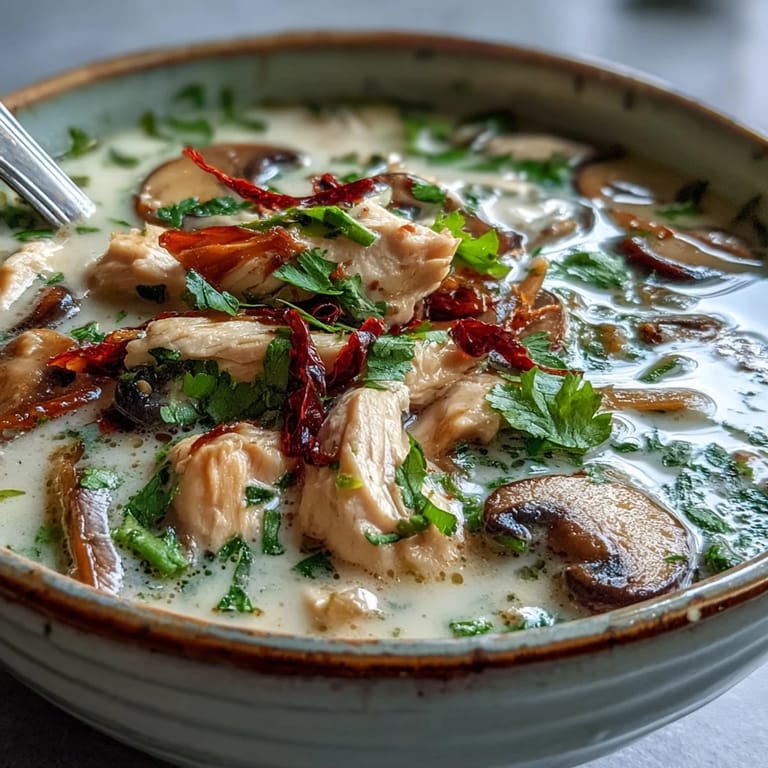
 The first time I made Tom Kha Gai was after a rainy afternoon wandering through a small Asian market where an elderly Thai woman noticed me examining lemongrass with obvious confusion. She smiled knowingly and placed galangal and makrut lime leaves in my basket, whispering, "For proper Tom Kha, you need these too." That chance encounter transformed my understanding of Thai cooking, as the intoxicating aroma of those fragrant ingredients simmering in coconut milk filled my kitchen that evening, transporting me across continents with just one spoonful.
One wintry Saturday when my friend Sarah was battling a terrible cold, I showed up at her door with a thermos of this soup, still steaming and fragrant. Her face lit up at the first spoonful, and between appreciative sips, she kept murmuring that it was better than any medicine. The combination of chilies clearing her sinuses and the comforting warmth of the broth worked wonders, and soon we were laughing about her miraculous recovery while the snow fell outside.
Ingredients
- Galangal: This knobby rhizome might look like ginger but has a distinctively piney, citrusy flavor that forms the soul of Tom Kha Gai - I learned to slice it thinly rather than grating it to allow its essence to infuse without overpowering.
- Lemongrass: The subtle lemony fragrance it releases when bruised properly transforms the broth - I discovered the best technique is to remove outer layers, cut into 4-inch pieces, and smash with the flat side of a knife until you can smell the essential oils releasing.
- Makrut Lime Leaves: These glossy leaves contribute an unmistakable citrus note that regular lime cant replicate - I fold them before adding to help release their oils without needing to tear them completely.
- Coconut Milk: The richness and body comes from full-fat coconut milk - after much experimentation, I found that adding it later in the cooking process prevents it from separating and maintains that silky texture.
- Fish Sauce: The secret umami backbone that gives depth without tasting fishy - I add it incrementally, tasting as I go, since different brands vary dramatically in saltiness.
Tired of Takeout? 🥡
Get 10 meals you can make faster than delivery arrives. Seriously.
One email. No spam. Unsubscribe anytime.
Instructions
- Infuse the Broth:
- Bring chicken broth to a gentle simmer in your pot, then add the lemongrass, galangal, lime leaves and chilies - youll know its working when the kitchen fills with a fragrant steam that makes your mouth water instantly.
- Add the Proteins:
- Slip the sliced chicken and shallots into the aromatic broth, stirring gently as the chicken transforms from translucent to tender white morsels.
- Introduce the Creaminess:
- Pour in the coconut milk with a slow, steady hand, watching as it swirls and marbles before fully incorporating into a silky broth.
- Balance the Flavors:
- Here comes the magic of Thai cooking - add fish sauce for saltiness, palm sugar for subtle sweetness, and lime juice for brightness, adjusting until your taste buds sing with that perfect harmony.
- Remove Aromatics:
- Fish out the lemongrass stalks, galangal slices, and lime leaves - theyve done their job infusing the soup with incredible flavor but arent meant to be eaten.
- Serve with Flair:
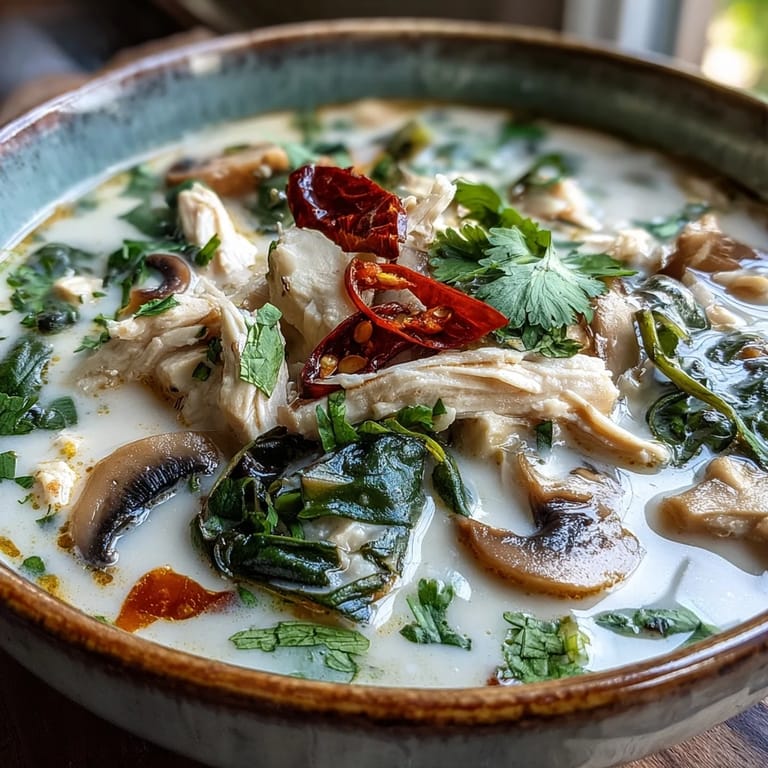
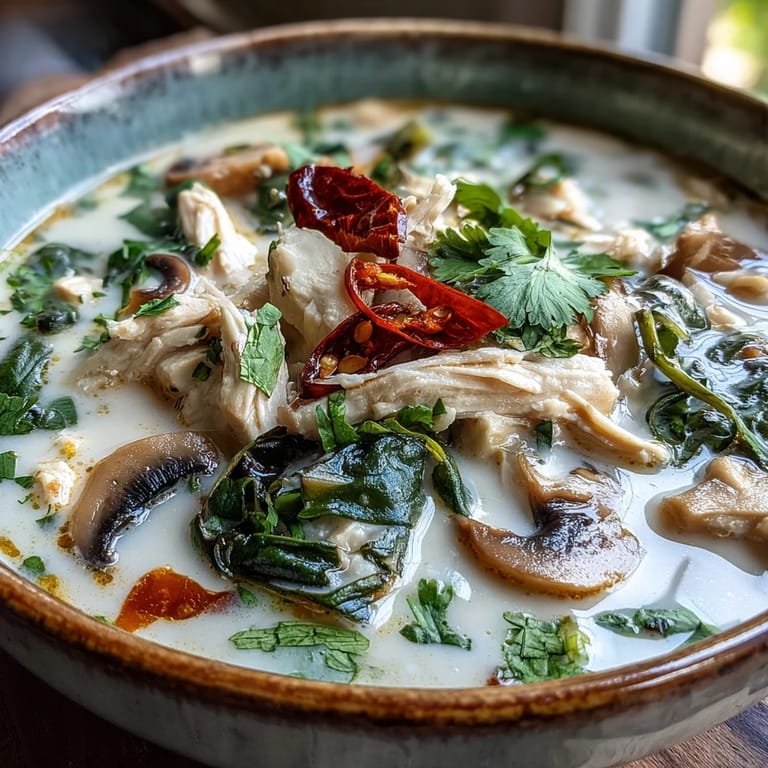
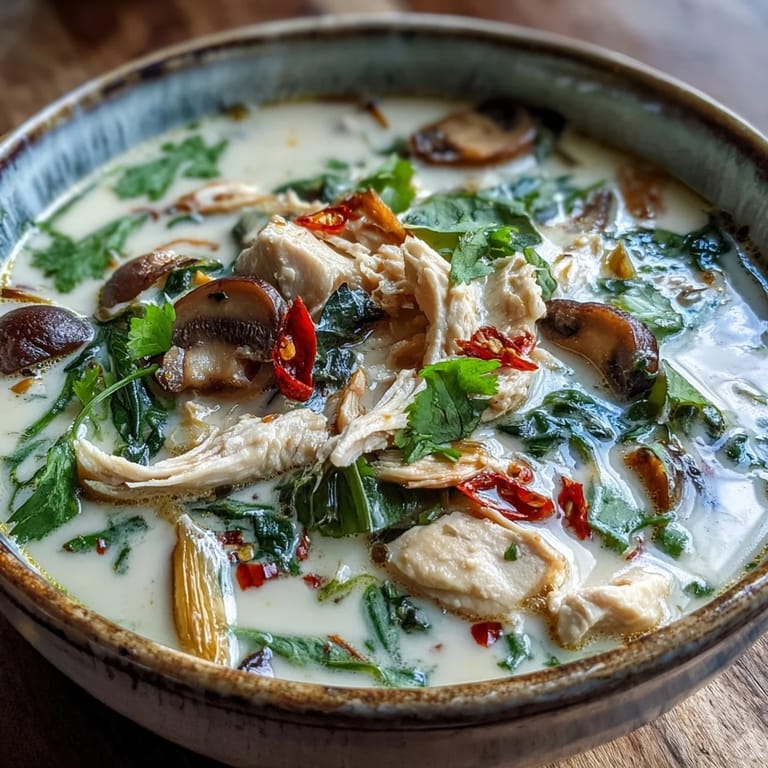
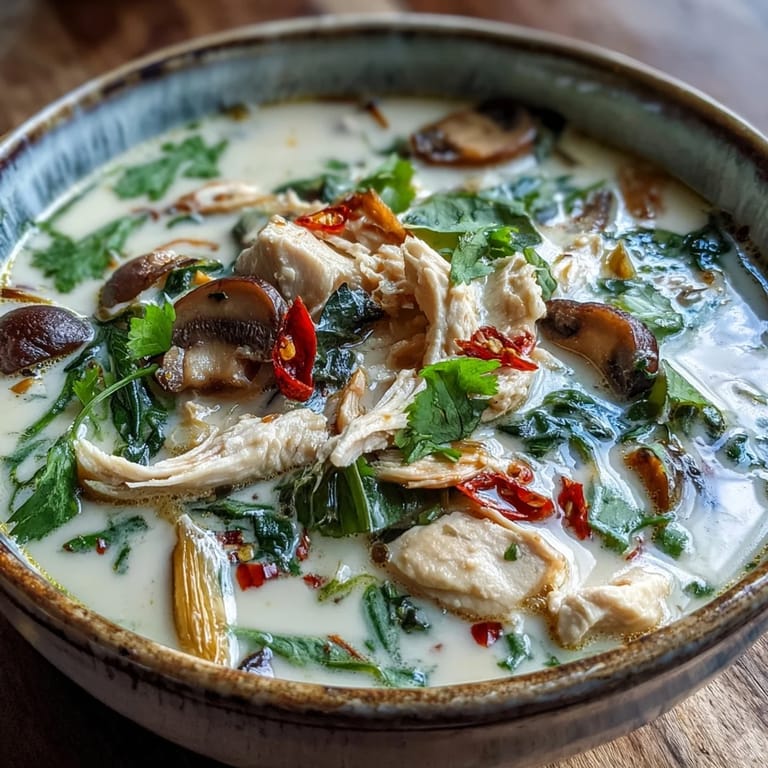
- Ladle the steaming soup into bowls, scatter fresh cilantro and green onions over the top, and place lime wedges alongside for anyone who craves extra tanginess.
 Pin It
  Pin It
 Last summer, I served Tom Kha Gai as the starter for an impromptu garden dinner with neighbors, worried it might be too exotic for some palates. As twilight fell and conversation flowed, I noticed everyone had gone mysteriously quiet, completely absorbed in their bowls, spoons scraping to capture every last drop. When my normally picky neighbor asked somewhat sheepishly for seconds, I realized this soup had a universal appeal that transcended culinary boundaries.
Finding Authentic Ingredients
My quest for galangal once led me to three different Asian markets before finding a shopkeeper who pulled some from a special refrigerator in the back, explaining it had arrived that morning. The difference that truly fresh galangal made was remarkable - sharper, more aromatic, with none of the bitterness that can develop as it ages. While ginger can substitute in a pinch, the distinctive citrusy, almost pine-like quality of galangal gives Tom Kha its soul, making the extra effort to source it completely worthwhile.
Serving Traditions
In Thailand, Tom Kha Gai is rarely enjoyed alone but usually served as part of a larger meal alongside jasmine rice. I learned this from a Thai colleague who gently corrected me when I mentioned having the soup as a standalone lunch. She explained how the rice not only helps temper the intensity of flavors but also turns the experience into a more satisfying meal where you can alternate between spoonfuls of soup and rice. This simple change completely transformed how I enjoy this dish, creating a more authentic and satisfying experience.
Adapting For Different Diets
Through years of sharing this recipe, Ive adapted it countless ways to accommodate dietary needs without compromising the essential character of the dish. Vegetarians get a version with meaty oyster mushrooms and firm tofu, while for shellfish lovers, I sometimes substitute half the chicken with plump shrimp added in the final minutes of cooking.
- For vegan guests, use vegetable broth and replace fish sauce with a combination of soy sauce and a touch of miso paste for that essential umami element.
- If serving someone who cant tolerate spice, set aside a portion before adding chilies and instead offer chili oil on the side for others.
- For a more substantial meal, serve small bowls of jasmine rice alongside, allowing guests to add spoonfuls to their soup as they eat.
 Pin It
  Pin It
 Every bowl of Tom Kha Gai carries with it not just nourishment but a moment of tranquility, a chance to slow down and savor something truly special. Whether youre making it to comfort someone you love or simply to treat yourself after a long day, its a bowl of sunshine regardless of the weather outside.
Recipe FAQs
- → What makes Tom Kha Gai different from other Thai soups?
Tom Kha Gai distinguishes itself through the rich coconut milk base, which creates a creamy texture unlike the clear broth of Tom Yum. The aromatic blend of galangal, lemongrass, and makrut lime leaves delivers complex layers of fragrance, while the balance of fish sauce, lime juice, and palm sugar achieves that signature sweet-sour-savory profile unique to Thai cuisine.
- → Can I substitute galangal with ginger?
While ginger can work in a pinch, galangal has a distinct piney, citrusy flavor that's essential for authentic taste. If using ginger, increase the amount slightly and add extra lemongrass to compensate. Look for frozen galangal at Asian markets—it freezes beautifully and maintains flavor better than dried substitutes.
- → How do I prevent the coconut milk from curdling?
Keep the heat gentle and avoid boiling vigorously once coconut milk is added. Stir continuously when combining with the hot broth, and add lime juice off the heat. Using full-fat, unsweetened coconut milk also helps maintain stability. If separation occurs, simply stir before serving—the flavor remains unchanged.
- → What proteins work well besides chicken?
Shrimp creates an excellent seafood version, cooking in just 2-3 minutes. For plant-based options, firm tofu cubes or fresh tempeh absorb the aromatic broth beautifully. Mushrooms can serve as the main protein for a vegetarian approach, while pork loin offers a richer alternative to chicken thighs.
- → How should I store and reheat leftovers?
Refrigerate in airtight containers for up to 3 days. The flavors actually deepen overnight, making it ideal for meal prep. Reheat gently over low heat, stirring occasionally—avoid boiling to prevent separation. Frozen portions last 2 months; thaw overnight in the refrigerator before warming.
- → What adjustments can I make for different spice levels?
Start with fewer chilies for mild versions, adding bird's eye chilies individually to taste. For extra heat, leave some chili seeds intact or add fresh Thai chili oil at serving. Cooling elements like additional coconut milk or lime wedges on the side let diners customize their spice preference.