 Pin It
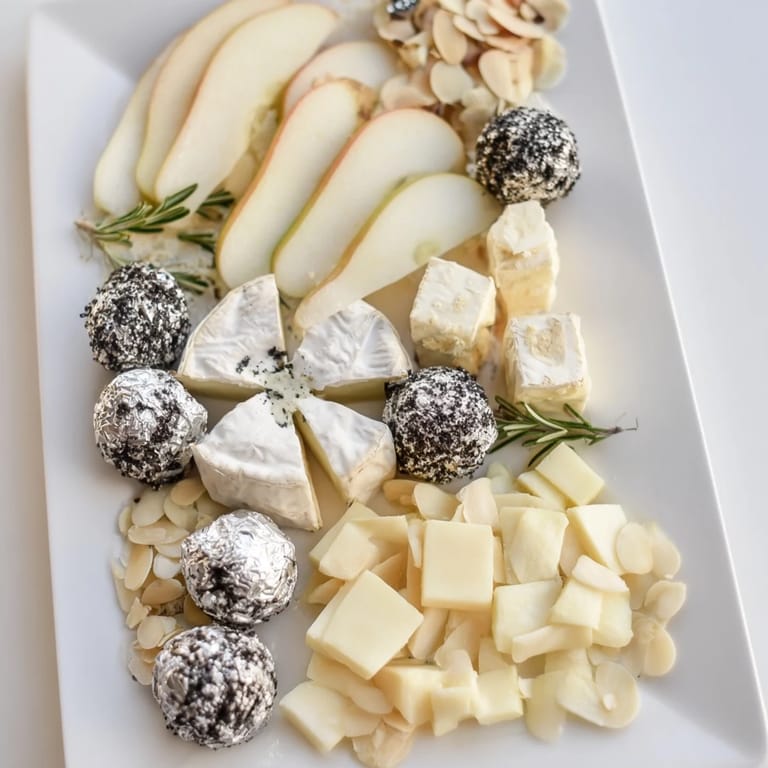
 There's something about curating a board that feels like directing a film—every element has its moment, its light, its place in the frame. I discovered this monochromatic approach one winter evening when I had leftover truffle cheeses and a handful of silver-wrapped chocolates, and instead of serving them separately like I always had, I arranged them together on a slate board. The contrast between the creamy whites and the dark chocolates, all those metallic wrappers catching the light, made my living room look like a gallery.
I'll never forget hosting a group of film students one night and putting this board out almost apologetically, thinking it was too simple. Instead, someone started narrating the cheeses like they were characters in a noir film, and suddenly everyone was engaged in this playful conversation about flavor and texture. That's when I realized the real magic of a board like this—it becomes a conversation starter, a shared experience where people slow down and actually taste things.
Ingredients
- Truffle brie, sliced: This is your anchor, the creamy, luxurious base that everyone gravitates toward; slice it just before serving so it stays beautiful and doesn't dry out.
- Ash-ripened goat cheese, cut into rounds: The tanginess here balances the richness of everything else and adds visual interest with its pale gray exterior.
- Aged white cheddar, cubed: You want something with real bite and crystalline texture; this aged version has both complexity and a satisfying crunch.
- Truffle-infused cream cheese, shaped into quenelles: Use two spoons to make elegant oval shapes that look like they belong in a chef's kitchen.
- Silver-wrapped dark chocolate truffles: These aren't an afterthought; they're proof that chocolate and cheese belong together.
- White chocolate pralines, silver-dusted: The sweetness here plays beautifully against the savory cheeses and provides textural variety.
- Plain water crackers: Neutral enough to let the cheeses shine without competing for attention.
- White baguette slices: Toast them lightly if you want them crisp, or leave them soft if you prefer them to absorb cheese flavors.
- Seedless white grapes: They provide refreshing palate-cleansing moments and fill gaps beautifully.
- Asian pear, thinly sliced: Slightly sweet and juicy, these add a crisp counterpoint to the creamy elements.
- Blanched almonds, lightly toasted: The subtle warmth from toasting brings out their natural sweetness without overwhelming.
- White candied ginger, sliced: A small touch of heat and spice that reminds people to pause and pay attention.
- Edible silver leaf, optional: If you're going for the full cinema experience, this pushes it from elegant to theatrical.
- Fresh rosemary or sage sprigs: These aren't just garnish; they add an herbal note and soften the otherwise sophisticated sweetness.
Tired of Takeout? 🥡
Get 10 meals you can make faster than delivery arrives. Seriously.
One email. No spam. Unsubscribe anytime.
Instructions
- Gather your canvas:
- Place your largest board or platter in front of you and take a moment to visualize the final composition. Think of it like a film set—you want depth, rhythm, and areas where the eye can rest.
- Anchor with cheeses:
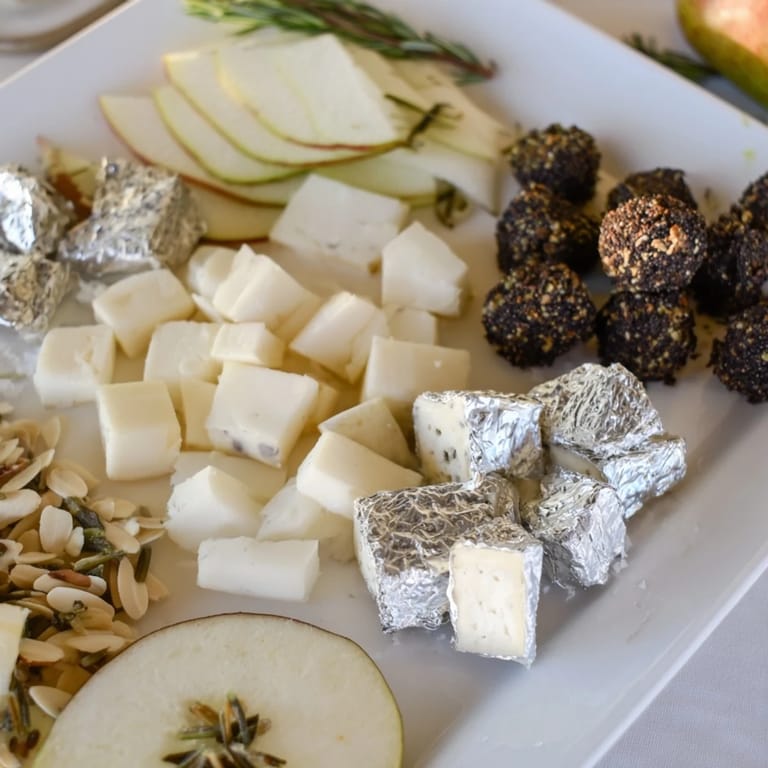
- Arrange the four cheeses in separate clusters around the board, creating a visual rhythm. I place them at different heights and angles so they don't feel static, using the varying creams, whites, and pale grays to build a cohesive palette.
- Introduce the chocolates:
- Scatter the silver-wrapped dark truffles and white chocolate pralines in small clusters between the cheeses. They'll catch light and draw the eye, breaking up the cheese sections naturally.
- Fill the negative space:
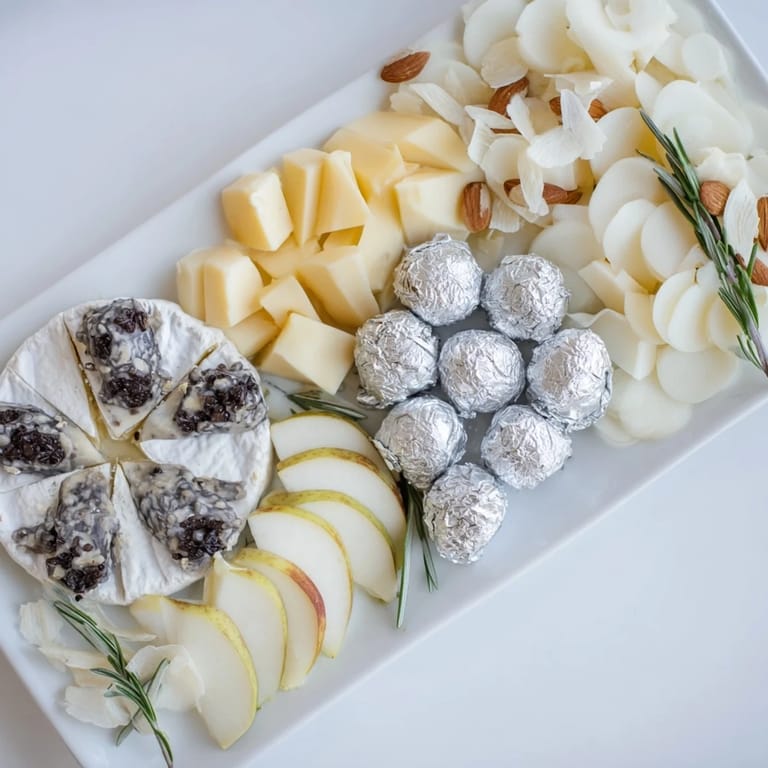
- Spread the crackers, baguette, grapes, and pear slices around and between the other elements, creating pathways that encourage grazing. Don't fill every gap—negative space is part of the elegance.
- Layer in texture:
- Nestle the toasted almonds and sliced candied ginger into corners and edges, where they add visual interest without cluttering the main attractions.
- Finish with flourish:
- Add a few carefully placed herb sprigs and, if you're feeling it, some edible silver leaf for that true silver-screen shimmer. This is your final brushstroke.
- Time your reveal:
- Let the cheeses sit out for 15 minutes before guests arrive so they reach room temperature and flavors truly open up. The chocolate should stay cool but not cold.
 Pin It
 I remember one guest asking if I'd gone to culinary school to make something so polished, and I laughed because the truth is simpler and more beautiful—I just arranged good ingredients with respect and intention. That's when it hit me that this isn't about complexity; it's about honoring what you're serving and presenting it like it matters.
Why This Board Works as Theater
The monochromatic palette is deceptively simple but profoundly effective. Because there's no color chaos competing for attention, each texture and shape becomes a character in its own narrative—the crystalline crunch of aged cheddar, the pillowy softness of brie, the glossy shine of wrapped chocolates. It's the visual equivalent of a black-and-white film where every shadow and highlight matters, which is exactly why this board feels more sophisticated than a rainbow of options ever could.
Pairing and Sequencing
Think of this board as a film with a narrative arc rather than a random collection. Start with the mild, creamy elements like the brie and truffle cream cheese, move into the sharper complexity of aged cheddar and goat cheese, and punctuate with the sweetness of chocolate and candied ginger. The pear and grapes become palate cleaners between acts, and the almonds add a satisfying textural rhythm throughout. Pour a crisp Champagne or dry white wine and watch how everything becomes even more luminous.
Making It Your Own
The beauty of a composed board is that it's a template, not a prescription. I've made this same concept with different cheeses and still achieved that elegant, curated feeling. The real skill is learning what belongs together by understanding flavors and textures rather than following rules exactly. Once you understand that truffle adds earthiness, that aged cheese needs sweetness to balance it, and that visual cohesion comes from restraint, you can adapt this to whatever's calling you.
- For a vegan version, swap in plant-based truffle cheeses and vegan dark chocolate truffles without losing any sophistication.
- Add marcona almonds or dried white figs if you want additional complexity and sweetness.
- Serve immediately but don't stress if someone eats half of it—that means it was beautiful enough to disappear.
 Pin It
 This board taught me that entertaining doesn't require hours in the kitchen; it requires intention and the confidence to let good ingredients speak for themselves. That's cinema in a nutshell.
Recipe FAQs
- → What cheeses work best for this board?
Truffle brie, ash-ripened goat cheese, aged white cheddar, and truffle-infused cream cheese offer creamy, earthy, and sharp notes, providing a rich balance.
- → Can I make this board vegan?
Yes, substitute plant-based truffle cheeses and vegan chocolates to maintain the essence and elegance of the board while keeping it vegan-friendly.
- → How should I arrange the ingredients?
Arrange cheeses in separate sections, alternate colors and textures, cluster chocolates nearby, and fill gaps with crackers, fruits, nuts, and candied ginger for balance.
- → What garnishes enhance the presentation?
Edible silver leaf adds glamour, while fresh rosemary or sage sprigs bring aromatic freshness and visual contrast.
- → What beverages pair well with this board?
Crisp, chilled Champagne or dry white wine complement the creamy cheeses and bittersweet chocolates beautifully.