 Pin It
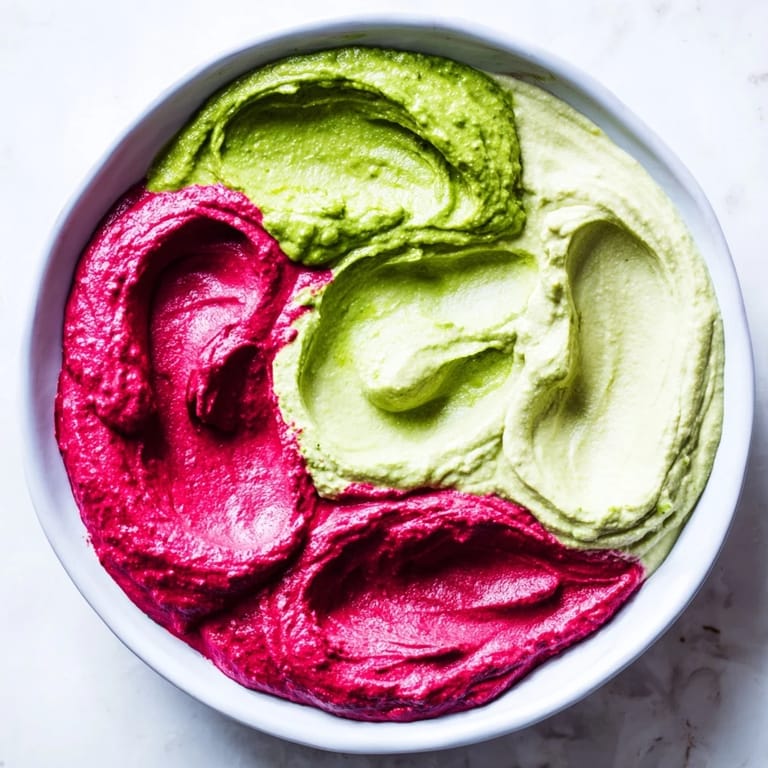
 The first time I arranged dips on a platter for a dinner party, I realized something magical happens when you stop trying to be neat and let colors do the talking instead. I'd made four different hummus variations that afternoon, each one a different shade, and instead of serving them in separate bowls like I always had, I decided to swirl them together on one big platter. My friend watching from the kitchen counter said it looked like marble, and suddenly what felt like a happy accident became the star of the evening. People barely touched the cheese board, but they emptied this thing in minutes, drawn in by how it looked before they even tasted it.
I remember bringing this to a summer potluck where everyone had made variations of the same salad, and mine was the only thing that created actual conversation at the table. Someone's grandmother asked for the recipe thinking it was some fancy Mediterranean technique, which made me laugh because it's basically just dips that got a little friendly with each other. That's when I learned that presentation isn't superficial—it's permission to enjoy food more fully.
Ingredients
- Classic hummus: The neutral anchor that lets other colors shine; use a good quality one or make it fresh because you can taste shortcuts here.
- Beet hummus: Brings that deep magenta that makes everything feel intentional; the earthiness adds complexity without overpowering.
- Spinach or basil pesto hummus: The green grounds the palette and gives brightness; if you make your own pesto, it's worth the extra step.
- Roasted red pepper dip: Pure joy in a color; slightly sweeter than the others so it creates natural flavor balance.
- Greek yogurt: Plain and unsweetened is your secret marble accent; it's thinner than the hummus so it swirls like actual veining.
- Black sesame rice crackers: Their slight nuttiness plays beautifully against the creamy dips.
- Beetroot crisps: Thin and snappy, they echo the beet hummus so the platter feels cohesive.
- Spinach or kale crackers: Pick whichever holds up better when loaded; thin crackers break under enthusiastic dipping.
- Classic water crackers: The neutral canvas that lets flavors lead.
Tired of Takeout? 🥡
Get 10 meals you can make faster than delivery arrives. Seriously.
One email. No spam. Unsubscribe anytime.
Instructions
- Prepare your canvas:
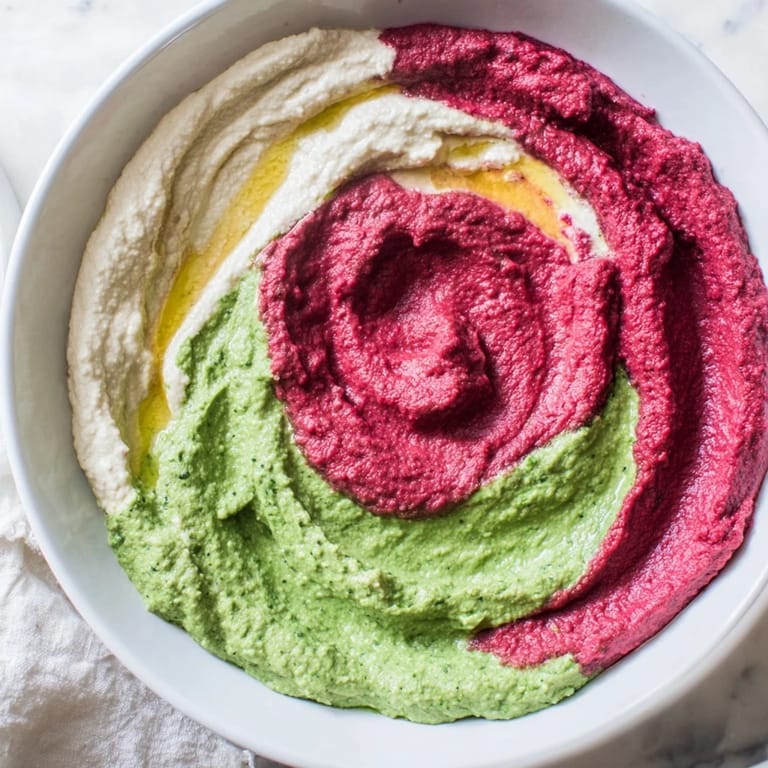
- Pour or dollop each dip onto your platter in no particular order, leaving little pockets of space between them. Think geology, not geometry—randomness is what makes this work.
- Create the marble effect:
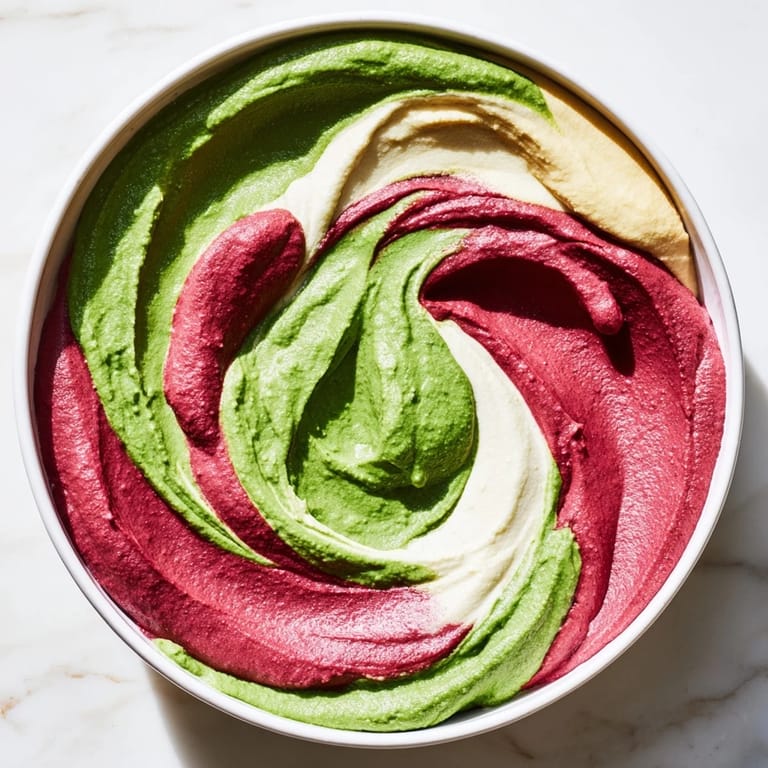
- Take a butter knife or the back of a spoon and gently drag through the dips where colors meet, creating veins and swirls. You're not mixing them into beige; you're letting them flow into each other like they chose to.
- Add the yogurt accent:
- Drizzle spoonfuls of Greek yogurt across the top, then swirl those in lightly for white marble lines. This is where it starts looking less like separated dips and more like something intentional.
- Arrange the crackers:
- Group each cracker color around the edge of the platter, clustering colors that echo the dips in the center. This isn't fussy—it's giving people an obvious starting point.
- Serve with intention:
- Set out small spoons or spreaders so people spread rather than scoop, which keeps the marble pattern visible longer and lets flavors shine individually.
 Pin It
 There was a moment during that same potluck when a child who usually refuses anything 'fancy' leaned over the platter and tried three different crackers with three different dips, completely unselfconscious, just exploring. That's when I understood this isn't really about marble or colors—it's about making food feel like play instead of obligation.
Making Your Own Dips
Store-bought dips are fine and honest, but making them takes maybe ten extra minutes and changes how the whole thing feels. A hummus base—chickpeas, tahini, lemon, garlic, olive oil—becomes whatever color you add: roasted beets, fresh spinach, roasted red peppers. The flavor is brighter, you control salt, and there's something about building it yourself that makes you proud of the platter instead of just relieved it looks good.
Choosing Your Crackers Wisely
The cracker choice matters more than people think because they're your delivery system and your design element. Delicate crackers break under dip weight, which frustrates people; sturdy ones might overpower gentle flavors. I've found the sweet spot is picking one truly crispy one (like that black sesame), one medium (beetroot), and one that's slightly pillowy (water crackers), so texture stays interesting throughout the eating experience.
Variations and Seasonal Swaps
Once you understand the logic—different colors, different flavors, one neutral swirl element—you can build this for any season or preference. Turmeric hummus turns it golden for fall, black bean dip deepens the palette, white beans with herbs lighten it for spring. The structure stays the same, but it never feels repetitive because the colors shift.
- Vegan swaps are easy: coconut yogurt or cashew cream replaces Greek yogurt, and most store-bought dips are already plant-based.
- Gluten-free crackers work perfectly as long as they're sturdy enough not to disintegrate under pressure.
- Edible flowers or fresh herb sprigs as final garnish push it from nice to memorable if you're feeling generous.
 Pin It
 This recipe isn't complicated, but it proves that sometimes the smallest shifts in presentation completely change how people experience food. It's an easy win that feels intentional.
Recipe FAQs
- → How do I create the marbled effect with dips?
Dollop spoonfuls of each colored dip alternately on your serving dish, then gently swirl them together using a butter knife or spoon's back without overmixing to maintain distinct marbled patterns.
- → What dips work best for this display?
Hummus varieties like classic, beet, and pesto blend beautifully with roasted red pepper dip. Adding plain yogurt helps enhance the marble texture with its creamy lines.
- → Can I make this suitable for gluten-free diets?
Yes, by selecting gluten-free crackers such as black sesame rice crackers or beetroot crisps, you can keep the platter inclusive without compromising taste or presentation.
- → What are some tips for arranging the crackers?
Group crackers by color around the perimeter to mirror the hues of the dips, creating visual harmony and easy access for guests to sample different flavors.
- → How can I add flair to this dips and crackers platter?
Garnish with edible flowers or fresh herbs for color contrast and freshness. Experiment with additional dips such as turmeric hummus or black bean dip for deeper tones.