 Pin It
 The first time I assembled a cheese platter with gold leaf, I felt like I was staging a scene from an old film. I'd been nervous about handling something so delicate—wouldn't the gold just blow away? But standing in my kitchen with afternoon light streaming across the counter, I realized this wasn't about perfection. It was about creating a moment where simple, beautiful things made people pause and smile before they even tasted anything.
I made this for my friend's birthday dinner last spring, and what I didn't expect was how it became the thing everyone photographed first. Someone had brought their partner who'd never seen edible gold before, and watching their face light up was worth every careful tweezer placement. That's when I understood that a cheese board isn't just about feeding people—it's about giving them permission to feel special.
Ingredients
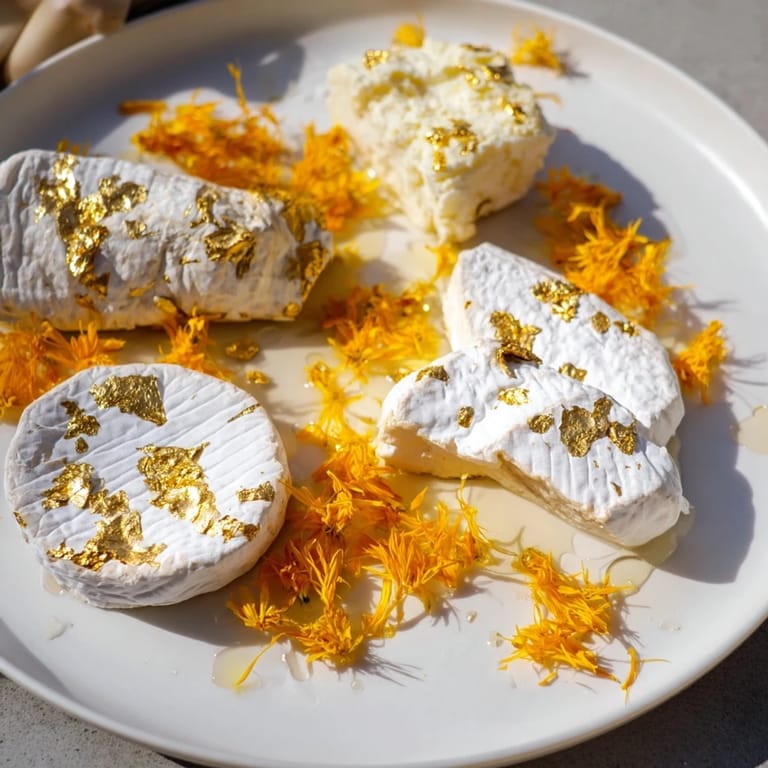
- Goat cheese log (chèvre), 150 g: Creamy and slightly tangy, it holds the gold leaf beautifully and provides a contrast to the richer cheeses.
- Triple-cream brie, 150 g: This is the indulgent one—almost buttery—and the gold makes it look like treasure.
- Fresh ricotta, 150 g: Mild and cloud-like, it balances the heavier cheeses and gives the platter visual texture.
- Feta block-style (drained), 150 g: The salty anchor that makes everything else taste better.
- Edible gold leaf, 1–2 sheets: Buy from a reputable source and handle with the tweezers provided in most packs—your fingers will warm it and ruin it.
- Yellow edible flower petals, 2 tbsp: Look for dried marigold, calendula, or chrysanthemum petals specifically labeled for food; they add color and an unexpected flavor note.
- Honey, 2 tbsp (optional): A drizzle over the brie elevates it from nice to unforgettable.
- Fresh microgreens or herbs (optional): Choose something delicate like dill fronds or purple microgreens for visual contrast.
- Baguette, thinly sliced: Toast it lightly if you like, or leave it soft—both work beautifully.
- Assorted crackers: Pick a mix of plain, seeded, and maybe one with a hint of flavor.
Tired of Takeout? 🥡
Get 10 meals you can make faster than delivery arrives. Seriously.
One email. No spam. Unsubscribe anytime.
Instructions
- Set Your Stage:
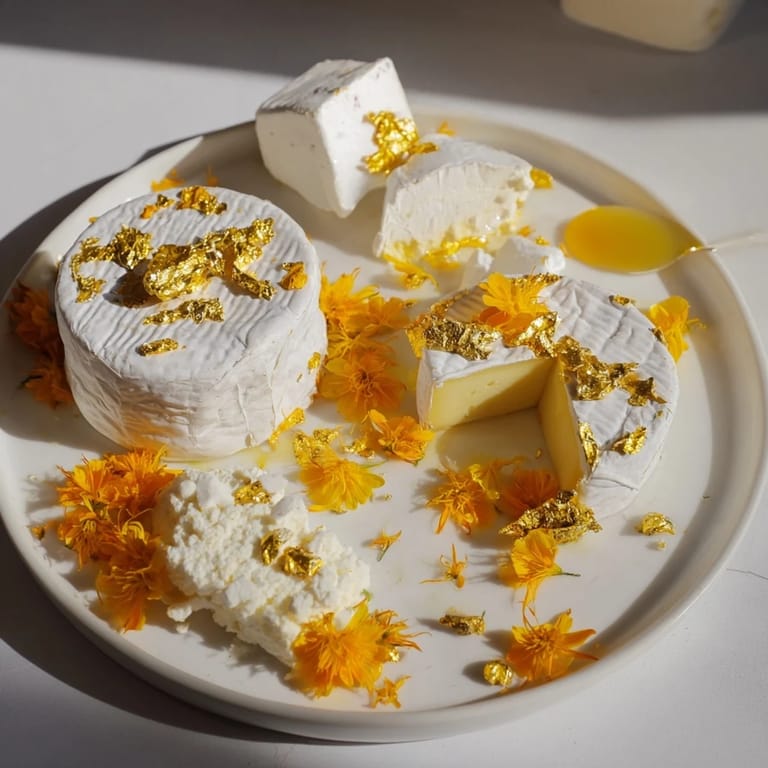
- Choose a platter that feels like the right canvas—I use a large slate piece or white ceramic. Arrange your four cheeses with breathing room between them, creating a loose diamond or triangle pattern. This isn't about rigid precision; it's about leaving space for the flowers and gold to feel intentional rather than cluttered.
- Apply the Gold:
- Using tweezers or the fine brush that comes with the gold leaf, carefully transfer small pieces to each cheese. Work over the platter so any flakes that drift will land exactly where you want them. Light your space well so you can see what you're doing—gold is subtle, and you want it to catch the light.
- Scatter the Flowers:
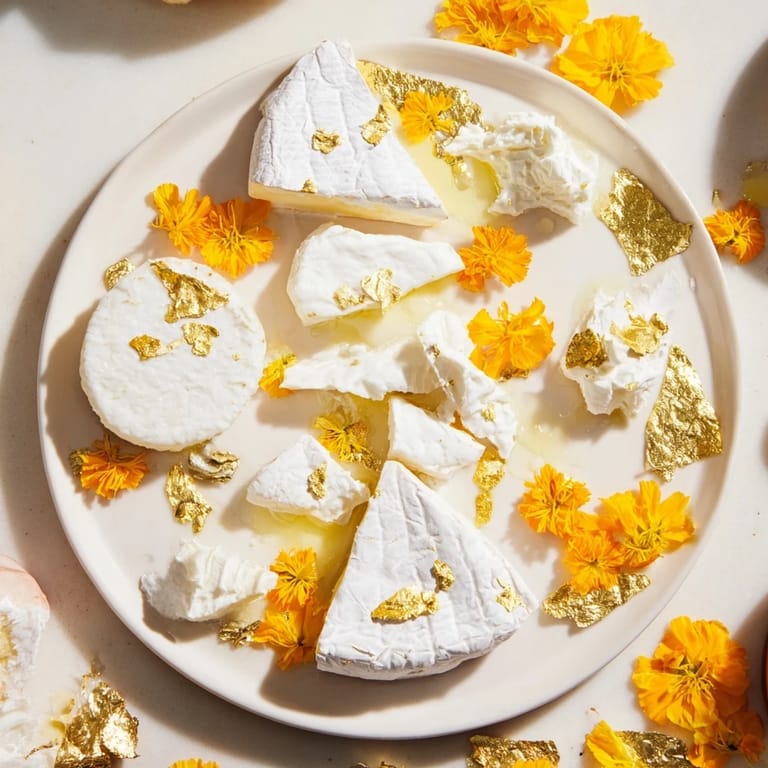
- Let the dried petals fall loosely across the platter, clustering a few around the gold-leafed cheeses and letting others frame the empty spaces. Step back and look—if it feels balanced, you're done; if it feels sparse, add a few more petals.
- Add Honey and Garnish:
- If using honey, drizzle a small amount over the brie—it will pool slightly and look intentional. Scatter your microgreens or herbs across the platter like you're setting down tiny treasures.
- Present and Serve:
- Place the crackers and baguette slices alongside, arrange your cheese knives so they're easy to reach, and step back. You've just created something that looks like it came from a restaurant kitchen.
 Pin It
 There's a moment at every gathering where someone picks up a piece of the brie with gold on it and their expression shifts—they're suddenly aware they're eating something beautiful, not just something delicious. That's the real magic of this platter. It's permission to celebrate the small luxuries, to make an ordinary Tuesday feel like an occasion.
Why This Works for Every Occasion
This platter has saved me more times than I can count. No oven required, no last-minute cooking stress, and it adapts to whatever you're celebrating—a birthday, a gallery opening, a casual dinner with friends who deserve to feel special. I've made it in winter with dark baguette, in summer with fresh herbs, and it's worked every time because the gold and flowers do the heavy lifting.
Cheese Selection Wisdom
The cheeses I chose—goat, brie, ricotta, and feta—give you a journey across textures and flavors. But here's what I've learned: you don't have to use these exact ones. What matters is picking white or pale cheeses so the gold and yellow petals really sing against them. If you can't find fresh ricotta, use burrata or a creamy chèvre. Swap the feta for a pale blue if you're feeling bold. The formula is texture, flavor variety, and a canvas that makes the garnish glow.
Making It Your Own
Once you understand the structure, this platter becomes a blank canvas. I've added candied walnuts for crunch, thin slices of pear for freshness, even a small jar of fig jam for those who want something sweet alongside the savory. Some versions I've made are winter-heavy with dried fruit; others are spring-bright with fresh herbs. The edible flowers and gold are what tie it all together, transforming whatever combination you choose into something that feels elevated and intentional.
- Fresh fruit like pears, grapes, or figs add texture and cut through the richness beautifully.
- A small dish of honey, jam, or fig paste gives people options and makes the platter feel more generous.
- Taste everything before serving—make sure your crackers are fresh and your cheese hasn't been sitting out warming for hours.
 Pin It
 A cheese board with gold and flowers isn't showing off—it's saying that the people you've gathered matter enough to make something beautiful. That's worth the fifteen minutes every time.
Recipe FAQs
- → What cheeses are used in the platter?
The platter features goat cheese log (chèvre), triple-cream brie, fresh ricotta, and block-style feta, all creamy white varieties.
- → How is the edible gold leaf applied?
Using clean tweezers or a fine brush, small pieces of gold leaf are gently placed onto the cheese surfaces to avoid tearing.
- → Are the flower petals safe to eat?
Yes, only edible flowers such as marigold, calendula, and chrysanthemum are used, sourced from reputable suppliers.
- → Can this be adapted for a vegan diet?
Plant-based white cheeses can replace dairy options to create a vegan-friendly version without losing elegance.
- → What accompaniments are suggested?
Slices of baguette (with gluten-free option) and assorted crackers pair beautifully with the cheeses and garnishes.
- → What tools help with assembling the platter?
A serving platter provides the base, while tweezers or a fine brush assist in precise gold leaf placement.