 Pin It
 I was arranging cheese for a dinner party when my daughter wandered into the kitchen and stopped cold at the cutting board. Four wedges of blue cheese sat there looking like weathered cliffs, and she said, "Mom, those look like mountains." That one observation transformed what could've been a standard cheese board into something playful and intentional. Sometimes the best dishes come not from recipes, but from happy accidents and the people who notice them.
My friend Marco arrived early to that dinner party and watched me fuss over the arrangement, tilting his head like he was studying a landscape painting. He grabbed a cracker, topped it with Roquefort and a walnut, and said this was the first time he'd actually tasted the differences between the cheeses instead of just eating them as a crowd. That's when I realized the mountain arrangement wasn't about being fancy—it was about giving each cheese room to breathe and be noticed.
Ingredients
- Roquefort cheese: The peppery, crumbly one that hits you first—its sharp intensity actually mellows when paired with the honey and nuts.
- Gorgonzola cheese: Creamier and slightly sweeter than its French cousin, it acts as a gentle bridge between the harshest and mildest blues.
- Stilton cheese: The earthiest of the bunch with an almost meaty depth—don't let its intimidating looks fool you.
- Bleu d'Auvergne cheese: Smooth and approachable, this one often converts people who think they don't like blue cheese.
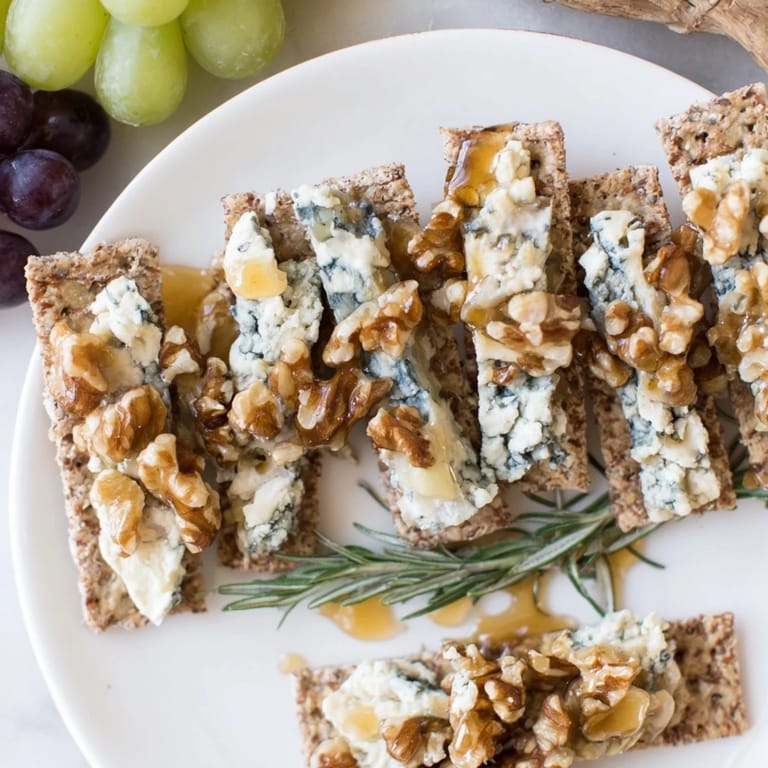
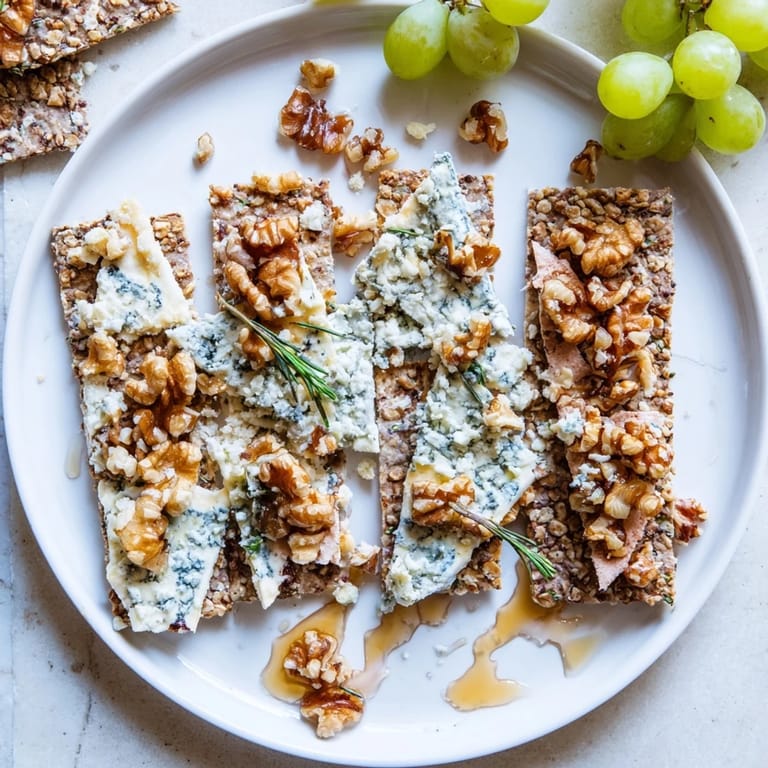
- Artisanal whole-grain crackers: The texture matters here; thin, delicate crackers disappear under the cheese, but sturdy ones hold up and provide a satisfying crunch.
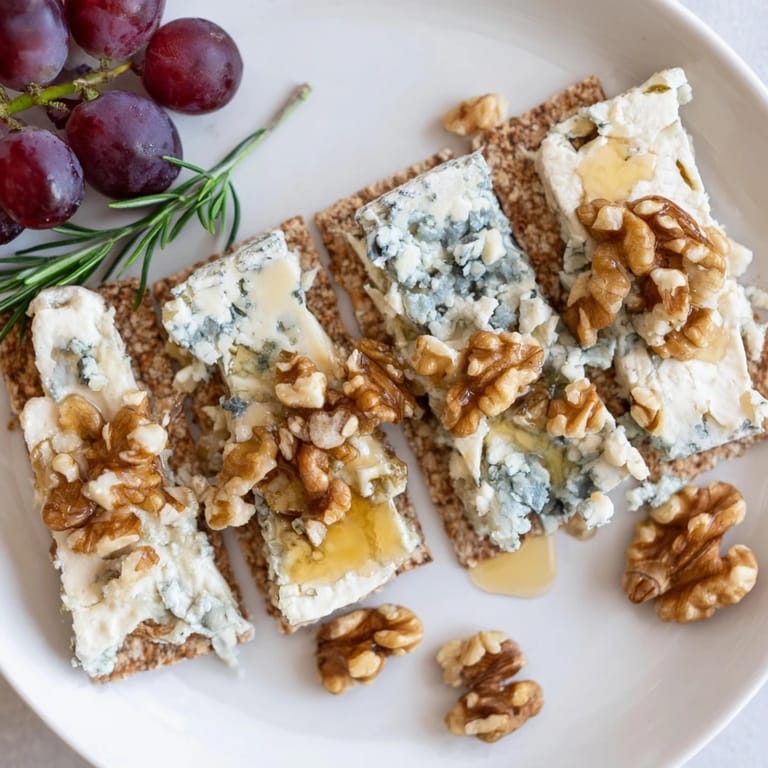
- Honey: Just a drizzle acts like a translator between the saltiness and intensity of the blues and your palate.
- Toasted walnuts: The toasting step is non-negotiable—raw walnuts taste bitter and one-note, but toasted they become warm and almost sweet.
- Fresh grapes or figs: The sweetness and slight tartness cut through the richness and provide visual contrast that makes the platter feel alive.
- Fresh herbs: A whisper of rosemary isn't decoration—it adds an herbaceous note that anchors the whole composition.
Tired of Takeout? 🥡
Get 10 meals you can make faster than delivery arrives. Seriously.
One email. No spam. Unsubscribe anytime.
Instructions
- Slice your blues into peaks:
- Cut each cheese into irregular wedges and chunky blocks rather than thin slices—you want them to feel substantial and look like actual landscape. Let them sit out for five minutes so they warm slightly and their flavors open up.
- Build your sky:
- Arrange the crackers in a single layer on your board or platter, leaving space where your mountain range will live. This background layer matters more than you'd think because it frames everything that comes next.
- Create the horizon:
- Position your cheese pieces in a loose row along the edge of the crackers, varying their heights and angles as you go. Stagger them so no two chunks sit at the same level—natural mountains are never perfectly aligned.
- Sweeten and crunch:
- Drizzle honey directly over the cheeses and let it pool slightly in the cracks and crevices. Scatter the toasted walnuts while the honey is still glistening so they stick.
- Add your color:
- Scatter grapes or fig slices around the platter, filling in empty spaces and creating visual punctuation. Fresh herbs go on last as a subtle garnish, tucked between cheeses rather than scattered everywhere.
- Serve with intention:
- Bring it straight to the table while it still feels fresh and intentional—this isn't a platter that sits around waiting to be noticed.
 Pin It
 After dinner, my daughter asked if we could make it again next month, and I said yes even though we both knew the next version would probably look nothing like this one. She wanted to add pistachios. Her friend suggested beet chips instead of grapes. What started as a playful arrangement became something we'd actually iterate on together, and that felt like the real success of the dish.
The Cheese Hierarchy
There's a natural order to tasting blue cheeses, though nobody's going to stop you if you want to do it backward. Start with the gentlest (Bleu d'Auvergne), move through the creamy complexity (Gorgonzola), then let the peppery intensity of Roquefort clear your palate before finishing with Stilton's earthy depth. This progression isn't a rule—it's more like a conversation where each cheese responds to the one before it. Some people do it completely randomly and still have a transcendent experience, but if you're new to blues, this order helps your palate actually distinguish between them.
Why the Arrangement Matters
A cheese board is technically just cheese and crackers, but the moment you give it a narrative—a mountain range, a landscape, an intentional story—people engage differently. They look at it longer. They try combinations they might not have tried. They take smaller, more thoughtful bites. It's the same cheeses with the same flavors, but the framing changes how people experience them. You're not trying to be a food stylist; you're just giving people permission to slow down and pay attention.
When and How to Serve It
This platter lives best in that precise moment between when your guests arrive and when you move to the table—before hunger overwhelms subtlety, but after people have had a chance to admire it. If you're making this for a wine tasting, serve it right at the beginning so the cheeses are still cold and distinct. For a casual gathering, it can sit out for forty minutes without falling apart, but the crackers will start to lose their snap after about an hour. Pair it with a chilled Sauternes if you want something sweet and floral to echo the honey, or go bold with a structured red wine that stands up to the intensity of the blues.
- Cover the platter loosely with plastic wrap if it needs to sit longer than thirty minutes—the cheeses will dry out otherwise.
- Set out small cheese knives or spreaders so people aren't using the same knife for all four blues (the flavors blend if you do).
- Toast your walnuts fresh if you can; they stay crispy for about three hours, after which they turn a bit soft and less interesting.
 Pin It
 The best appetizers are the ones people remember not because they were complicated, but because they made them feel noticed. This one does that quietly, without trying too hard. Serve it and watch what happens.
Recipe FAQs
- → What types of blue cheese are used?
Roquefort, Gorgonzola, Stilton, and Bleu d'Auvergne create the distinct layers of flavor and texture.
- → How should the cheeses be cut?
Slice the cheeses into rough, irregular wedges or blocks to resemble jagged mountain peaks for a natural look.
- → Can I substitute nuts for allergies?
Yes, walnuts can be replaced with pumpkin seeds for a nut-free option without sacrificing crunch.
- → What crackers work best for this platter?
Artisanal whole-grain crackers provide a sturdy base and complement the richness of the cheeses.
- → How can I enhance the flavor profile?
Drizzle honey over cheeses and scatter fresh grapes or figs around for sweetness and color contrast.