 Pin It
 My grandmother used to say that black-eyed peas and collard greens weren't just food—they were promises. Every January first, without fail, she'd have a pot simmering on her stove, the kitchen filling with the smell of smoked paprika and bay leaf, and she'd insist that eating them would bring luck for the year ahead. I was skeptical as a teenager, rolling my eyes at the tradition, but somewhere between my first spoonful and the third bowl, I understood what she meant. This dish has a way of settling into you, warm and grounding, like a conversation with someone who knows you well.
I made this for my coworker Marcus after he mentioned offhandedly that his mom used to cook it every New Year's, and he hadn't had it in five years since she moved away. Watching his face when he tasted the first spoonful—that quiet recognition of home—made me realize why certain dishes stick around for generations. It's not just about the ingredients; it's about the comfort they represent.
Ingredients
- Black-eyed peas (2 cups dried or 3 cans): Use dried if you have time to soak them overnight—they'll develop a creamier texture and absorb the broth better, but canned works beautifully when you're short on time.
- Collard greens (1 large bunch, about 1 lb): Make sure to remove the tough center stems by folding each leaf in half and slicing them out; this one small step makes all the difference in the final texture.
- Onion, garlic, celery, and carrot: These aromatics are your foundation—don't skip them or rush the sauté, as those five minutes of softening build the depth of flavor everything else will rest on.
- Smoked paprika (1 teaspoon): This is the soul of the dish, giving it that characteristic warmth; regular paprika won't deliver the same depth.
- Bay leaf and thyme (1 bay leaf, 1 teaspoon dried thyme): These herbs work quietly in the background, so don't overpower them—they're meant to complement, not dominate.
- Apple cider vinegar (1 tablespoon): Added at the very end, this brightens everything and keeps the greens from tasting one-dimensional.
- Broth (6 cups vegetable or chicken): Use a good quality broth you'd actually drink, since it becomes the base of your dish.
- Optional ham hock or smoked turkey (4 oz): If you include this, it transforms the broth into something richer, but the dish stands confidently on its own without it.
Tired of Takeout? 🥡
Get 10 meals you can make faster than delivery arrives. Seriously.
One email. No spam. Unsubscribe anytime.
Instructions
- Soak your peas the night before (if using dried):
- Rinse them under cold water, cover generously with fresh cold water, and let them sit overnight. They'll plump up slightly and cook more evenly the next day, reducing your stovetop time.
- Build your flavor base with the aromatics:
- Heat a splash of oil in your Dutch oven over medium heat, then add the onion, celery, and carrot. You're looking for them to soften and turn slightly golden at the edges—that takes about five minutes and sets the tone for everything else.
- Wake things up with garlic:
- Once the vegetables are soft, stir in the minced garlic and let it cook for just one minute until it's fragrant but not brown. Brown garlic tastes bitter, so stay present for this step.
- Toast the spices if using meat:
- If you're adding ham hock or smoked turkey, place it in the pot now and let it cook for two minutes to start releasing its oils and smokiness into the base.
- Coat everything in spices and add the peas:
- Pour in the black-eyed peas along with the bay leaf, smoked paprika, thyme, and red pepper flakes if you like heat. Stir everything together so the spices coat the vegetables and peas—this distributes the flavor evenly.
- Bring to a boil, then settle into a gentle simmer:
- Pour in your broth and turn the heat up until it reaches a rolling boil, then reduce it to low, cover the pot, and let it simmer gently. If using dried peas, this takes about 45 minutes; canned peas need only 20 minutes to heat through and meld with the broth.
- Add the greens and let them transform:
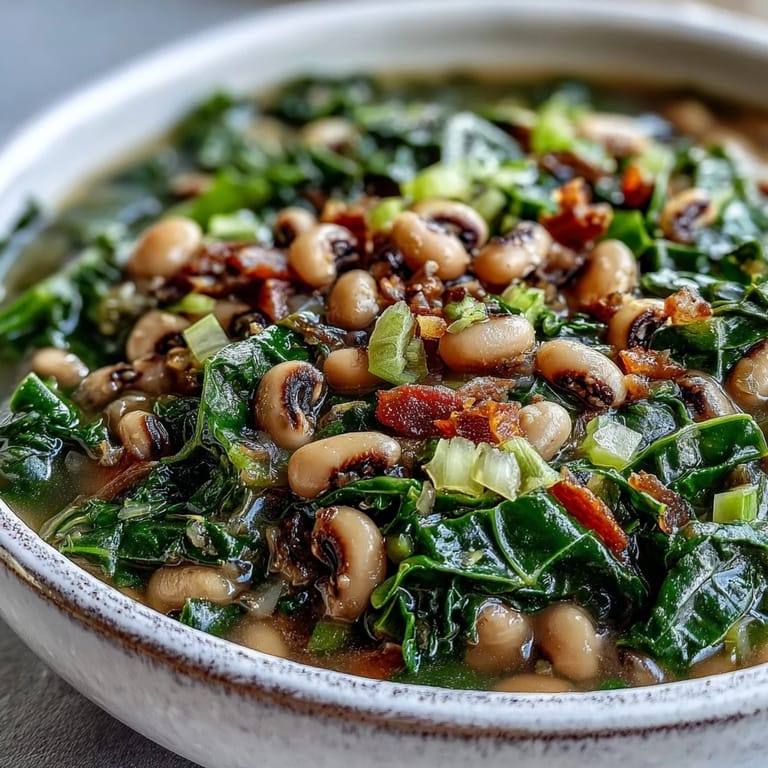
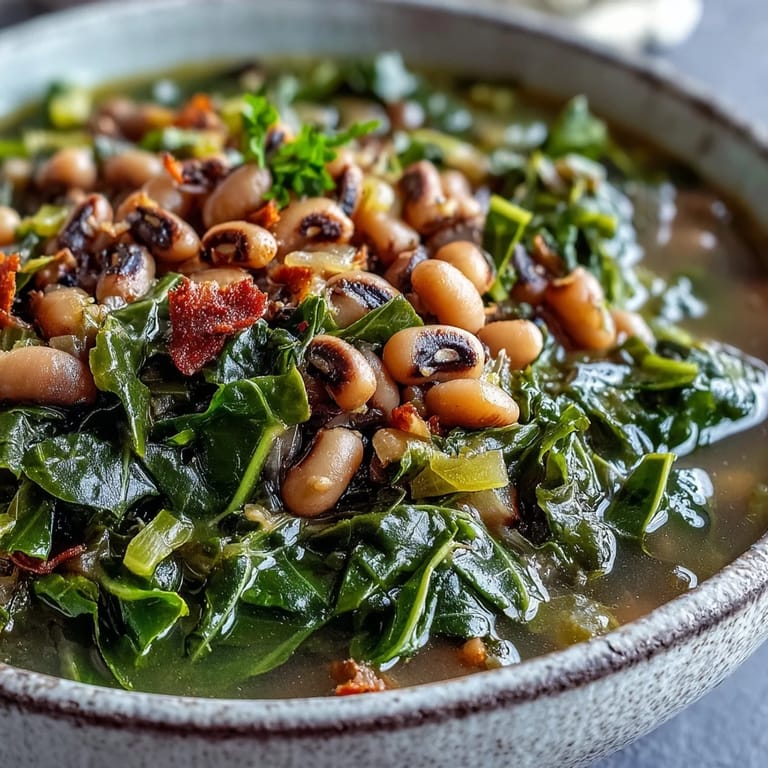
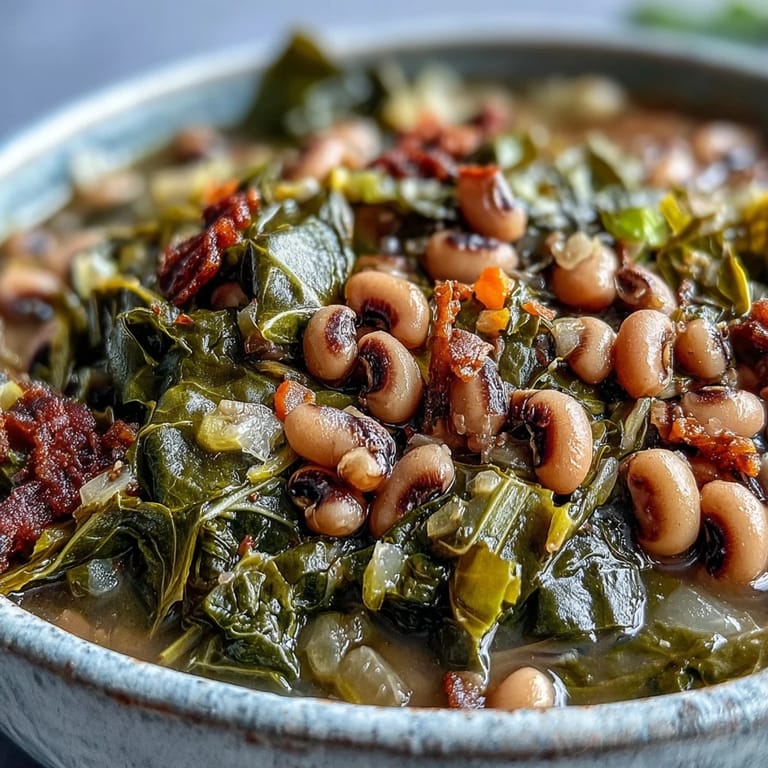
- After the initial cooking time, stir in your chopped collard greens and simmer uncovered for another 30 minutes. They'll go from bright green to deep olive, and they'll become silky and tender as they absorb all those savory flavors.
- Finish with brightness and seasoning:
- Stir in the apple cider vinegar, fish out the bay leaf and any ham hock (shred any meat clinging to it and stir it back in), then taste and adjust the salt and pepper. This final tasting is essential—you want to catch any flat notes before serving.
- Serve with cornbread and joy:
- Ladle into bowls, top with a wedge of warm cornbread, and pass the hot sauce around the table. Let people doctor their own bowls to their preference.
 Pin It
 The year my dad started adding a splash of hot sauce and declaring it 'the perfect thing to eat when everything outside is cold and messy,' I realized this dish had quietly become the thing we all looked forward to without saying it out loud. Some traditions sneak up on you that way.
The Story Behind the Tradition
Black-eyed peas have been welcoming in new years and new beginnings across the American South for generations, with roots in West African and African American culinary traditions. The superstition says eating them on New Year's Day brings prosperity and luck—and whether you believe in that or not, there's something powerful about gathering around a shared dish with that kind of history and intention behind it. When you cook this, you're not just making dinner; you're honoring something larger than yourself.
Why This Works as a Complete Meal
Black-eyed peas are a legume, giving you substantial plant-based protein, while the collard greens add iron, calcium, and vitamins that make this genuinely nourishing without feeling like a health food. Paired with cornbread, which adds carbohydrates and warmth, you have a balanced plate that satisfies deeply and keeps you full for hours. The broth ties everything together, making it easy to digest and comforting in the way that matters on a cold day.
Make It Your Own
The skeleton of this recipe is flexible enough to welcome your own touches without falling apart. I've seen people add diced tomatoes for brightness, swap in kale or mustard greens if that's what they have on hand, or stir in a pinch of cayenne for more heat. The point is the practice, not rigid adherence to a single version.
- If collard greens aren't available, mustard greens or kale work beautifully and cook down just as well.
- A splash of hot sauce stirred right into the pot just before serving adds complexity that dressing individual bowls can't quite match.
- Make this vegetarian without hesitation by using vegetable broth and skipping the meat—it's complete and satisfying exactly as it is.
 Pin It
 This is the kind of dish that teaches you something about cooking every time you make it—that building flavor happens in layers, that patience creates silkiness, that the best meals are the ones people want to come back for. Make it with intention, feed it to people you care about, and let it become your own tradition.
Recipe FAQs
- → Why are black-eyed peas and greens eaten on New Year's Day?
Black-eyed peas represent coins and collard greens symbolize paper money, making this combination a traditional Southern dish believed to bring prosperity and good fortune in the coming year.
- → Can I use canned black-eyed peas instead of dried?
Absolutely. Use three cans (about 15 ounces each) of drained and rinsed black-eyed peas. Reduce the initial simmering time to 20 minutes since canned peas are already tender.
- → What can I substitute for collard greens?
Kale, mustard greens, or turnip greens work well as substitutes. Each brings a slightly different flavor profile—kale is milder, while mustard and turnip greens have more peppery notes.
- → How long do leftovers keep in the refrigerator?
Leftovers store well in an airtight container for 4-5 days. The flavors actually deepen and improve overnight, making this an excellent make-ahead dish for busy weeks.
- → Is this dish freezer-friendly?
Yes, it freezes beautifully for up to 3 months. Cool completely before transferring to freezer-safe containers. Thaw overnight in the refrigerator and reheat gently on the stovetop.
- → How do I make this dish vegetarian?
Simply omit the ham hock or smoked turkey and use vegetable broth instead of chicken broth. The smoked paprika still provides a savory depth that mimics smoked meat flavors.