 Pin It
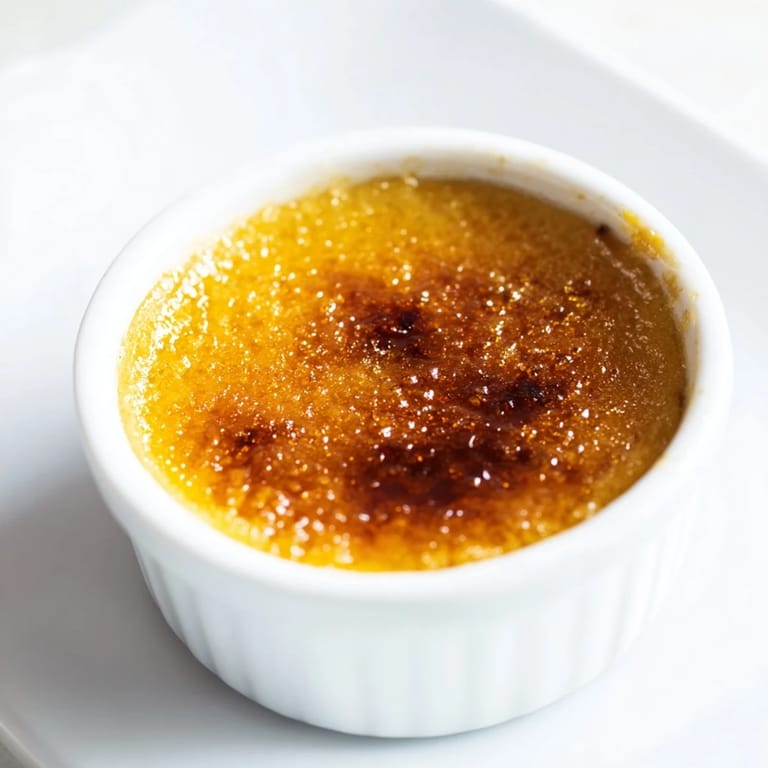
 The first time I made crème brûlée was actually an accident—I had heavy cream leftover from a dinner party and no plan for it. Something about cracking that caramelized sugar crust with a spoon feels like breaking through thin ice on a winter puddle, and the contrast between the cool custard and warm burnt sugar is pure magic.
I served these at a small dinner gathering last winter and watched my friend Sarah close her eyes after the first bite. She said it reminded her of a trip to Paris, which is funny because Id never even been to France at that point.
Ingredients
- Heavy cream: The higher fat content creates that luxurious silky texture that makes this dessert so special
- Egg yolks: Room temperature yolks incorporate better and prevent the custard from separating
- Granulated sugar: Half dissolves into the custard while the rest creates that signature glassy caramelized crust
Tired of Takeout? 🥡
Get 10 meals you can make faster than delivery arrives. Seriously.
One email. No spam. Unsubscribe anytime.
Instructions
- Heat the cream gently:
- Warm the cream over medium heat until it just begins to steam but never reaches a boil
- Whisk yolks and sugar:
- Beat the yolks and half cup sugar until the mixture turns pale yellow and falls from the whisk in thick ribbons
- Combine carefully:
- Drizzle the warm cream into the yolk mixture slowly while whisking constantly to prevent scrambling the eggs
- Strain for silkiness:
- Pour everything through a fine mesh sieve to catch any bits of cooked egg
- Prepare the water bath:
- Divide the custard among four ramekins and place them in a deep baking dish
- Add the water:
- Pour hot water into the baking dish until it reaches halfway up the sides of the ramekins
- Bake gently:
- Carefully slide the dish into the oven and bake until the centers are just set with a slight wobble
- Chill completely:
- Let the custards cool to room temperature before refrigerating for at least one hour
- Create the crust:
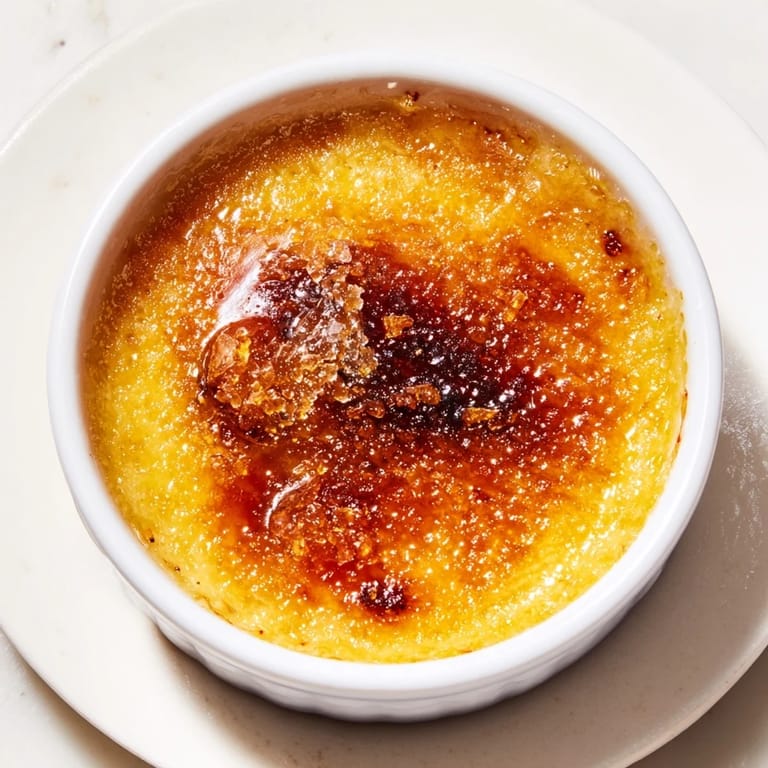
- Sprinkle one tablespoon of sugar over each chilled custard and torch until deep amber
- Let it harden:
- Wait one or two minutes for the sugar to transform into that satisfying crackable layer
 Pin It
 My neighbor asked for the recipe after trying it and could not believe there were only three ingredients. Sometimes the simplest things are the ones that stay with you longest.
The Water Bath Secret
The bain marie sounds fancy but its really just insurance against overcooking. The water moderates the oven heat so the custard sets gently without developing a rubbery texture or weird bubbles.
Getting That Perfect Crack
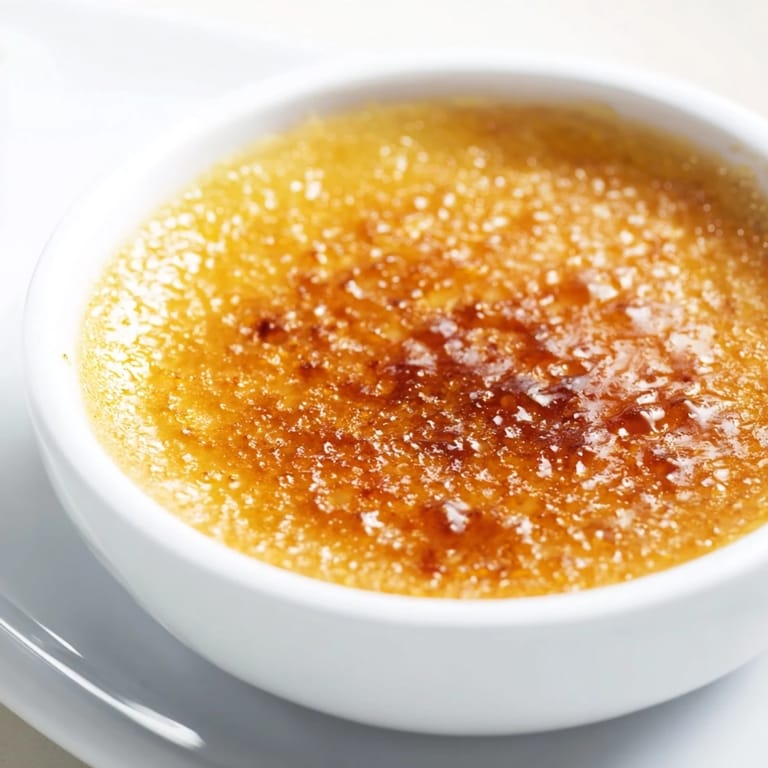
A kitchen torch gives you the most control over the caramelization process. You want to move the flame in small circles until the sugar melts and darkens evenly.
Make Ahead Magic
These actually taste better after chilling overnight because the flavors have time to meld and the custard becomes even more velvety.
- Keep the sugar topping for right before serving
- Avoid stacking the ramekins in the fridge
- Let them sit at room temperature for five minutes before torching
 Pin It
 There is something deeply satisfying about making something so elegant with so little. Good food does not have to be complicated.
Recipe FAQs
- → What makes the custard silky smooth?
Gently heating the cream and slowly mixing it into the egg yolks helps prevent curdling, resulting in a smooth custard texture.
- → How is the caramelized sugar crust achieved?
Sprinkling sugar evenly on top and caramelizing it with a kitchen torch or under a broiler creates the signature crisp topping.
- → Why bake the custard in a water bath?
The water bath ensures even, gentle cooking, preventing the custard from cracking or drying out.
- → Can additional flavors be added to the custard?
Yes, infusing the cream with vanilla bean or citrus zest before mixing adds subtle, aromatic notes.
- → How long should the custard be chilled?
Chill for at least one hour to fully set the custard and enhance its creamy texture.
- → What tools are needed for preparation?
A whisk, fine sieve, ramekins, a deep baking dish, and a torch or broiler for caramelizing are essential.